Welcome to KnowHow Daily!
Practical guides, money-saving tips, tech solutions, government benefits, and useful information for everyday life.
Welcome to KnowHow Daily!
Practical guides, money-saving tips, tech solutions, government benefits, and useful information for everyday life.

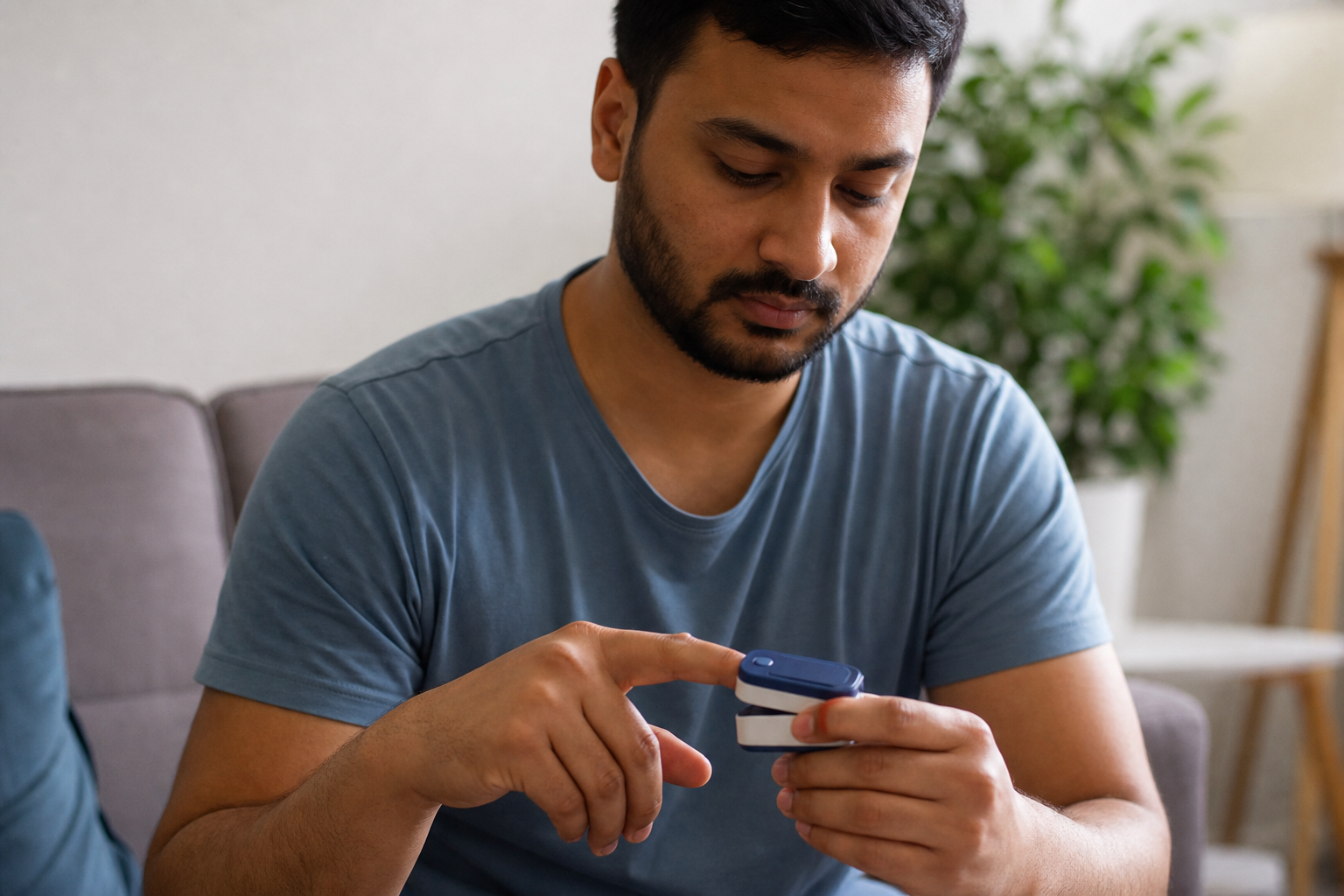
Learn how to choose a pulse oximeter by checking FDA clearance or Canadian licensing, fit, display usability, skin-tone limitations, and safe-use features.
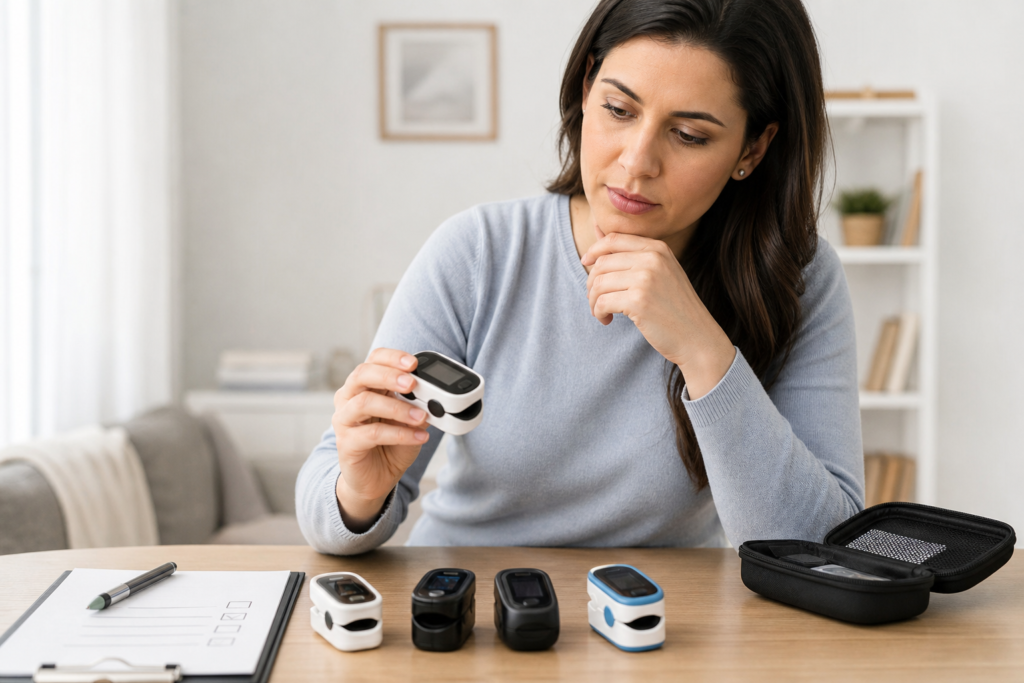
The best pulse oximeter for home use is not necessarily the one with the most features. Start with the device’s intended purpose, then check whether it fits the user’s finger, produces a readable display, and comes with clear instructions for interpreting readings.
If you plan to monitor a diagnosed lung or heart condition, or your clinician has asked you to check oxygen levels, choose a model intended for medical purposes. In the United States, a small number of over-the-counter pulse oximeters intended for medical use have been cleared by the FDA. Many inexpensive products sold online are instead general-wellness, sporting, or aviation products. Those products may estimate oxygen saturation, but they have not been reviewed by the FDA for clinical decision-making.
In Canada, look for a device with an active Health Canada medical-device licence. A product page that simply says “medical grade,” “professional,” or “FDA approved” is not enough by itself.
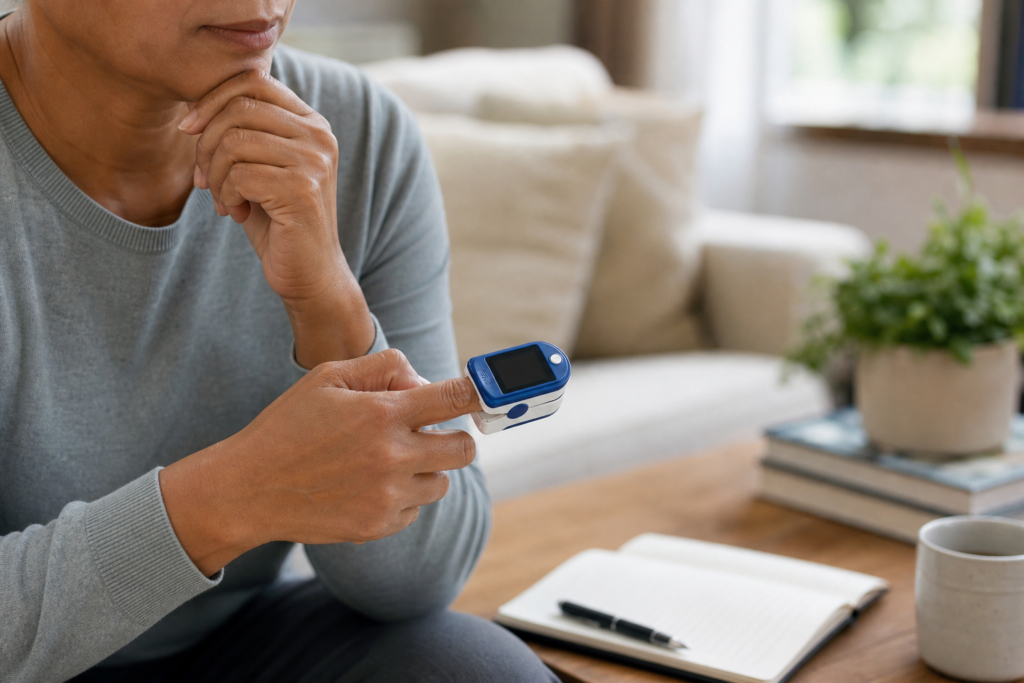
A pulse oximeter shines light through a fingertip or another measurement site to estimate oxygen saturation, shown as SpO2, and pulse rate. It is a noninvasive estimate, not a direct blood-gas measurement.
For many healthy people, oxygen saturation is commonly in the mid-to-high 90s, but a person’s usual level can be different because of lung disease, heart disease, altitude, or other medical factors. Your clinician’s instructions should take priority over a generic number printed on a package.
A pulse oximeter also does not explain why oxygen may be low. It cannot diagnose pneumonia, asthma, a heart problem, or another condition on its own. Think of it as a monitoring tool that may help identify a change—not as a substitute for symptoms, medical advice, or emergency care.
For a medical-purpose device, check the exact brand and model in the FDA’s 510(k) database. The listing should match the device name and manufacturer shown on the package or product page. A 510(k) clearance indicates that FDA reviewed the submission under the substantially equivalent pathway; it does not mean the device is perfect or suitable for every person.
Be cautious when a listing uses “FDA registered,” “FDA certified,” or “FDA approved” without identifying a specific clearance. Those phrases can be confusing or misleading. The important questions are whether the exact model is intended for medical use and whether the manufacturer provides proper labeling and instructions.
Search the FDA 510(k) Premarket Notification DatabaseCanadian shoppers can search Health Canada’s Medical Devices Active Licence Listing by device name, licence number, manufacturer, or device identifier. Match the model carefully. A licence for one product family does not automatically prove that every similar-looking device sold under another name is licensed.
Search Health Canada’s Medical Devices Active Licence ListingPulse oximeters use light, and the signal can be affected by skin pigmentation. FDA and Health Canada materials both recognize that readings may be less accurate for people with darker skin, particularly when oxygen levels are low. That does not mean every reading is wrong, and it does not mean one particular consumer device can be guaranteed to work better for everyone.
Instead, look for transparent manufacturer information about clinical performance, the populations included in testing, and the device’s intended use. Claims such as “works on all skin tones” deserve supporting details rather than automatic trust. If the manufacturer provides no meaningful information, contact the company before buying and ask how the model was evaluated across skin pigmentations.
Regardless of skin tone, do not use a normal-looking reading to override serious symptoms. A person can have concerning symptoms even when the displayed number appears reassuring.
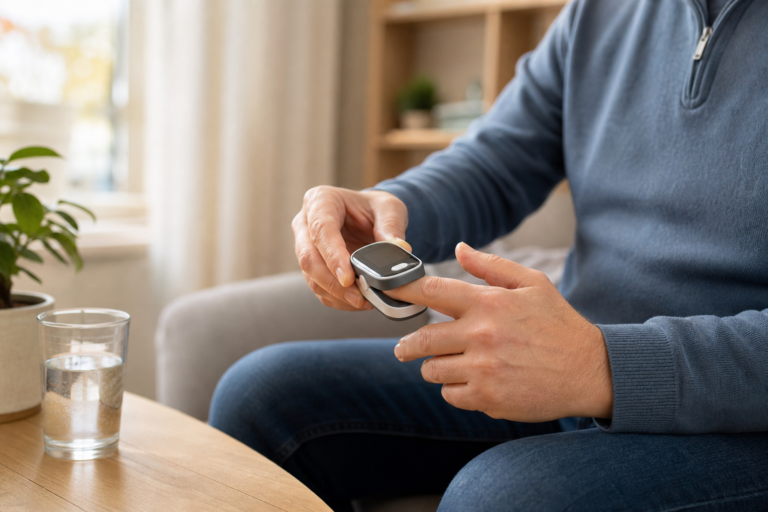
For most adults checking a reading at home, a fingertip clip is the simplest design. The sensor should sit securely without causing pain or being so loose that light enters around the finger. A device that is too small, too large, or designed for a different finger size may produce unstable or unreliable readings.
Ring, wrist, ear, forehead, and adhesive-sensor devices can be useful in specific situations, but they are not interchangeable. Their instructions may specify a particular body site, orientation, age range, or activity level. Choose one only when its intended use matches the person being monitored.
Before buying, check:
A clear display can make a bigger difference than Bluetooth, app integration, or multiple viewing modes. Look for large numbers, strong contrast, adjustable brightness, and an orientation that the user or caregiver can read easily. If the person has low vision, tremor, arthritis, or limited dexterity, consider whether the power button and clip can be operated without help.
Bluetooth or app-connected models may help with record-keeping, but they add another layer of setup, battery management, and privacy considerations. Do not pay extra for connectivity unless the user will actually use it and the app supports the phone, operating system, and sharing method required.
A pulse waveform or signal-strength indicator can help show whether the device is detecting a usable pulse. It is not proof that the oxygen number is accurate, but a number that keeps changing or appears without a stable signal deserves another measurement after correcting the conditions.
Even a properly selected device can display a misleading result if the measurement conditions are poor. For a home check:
Cold hands, poor circulation, movement, low blood pressure, nail products, excessive light, and a mismatched sensor can all interfere with a reading. Tobacco use and some medical conditions may also affect interpretation. If repeated readings do not make sense, stop relying on that measurement until you have corrected the problem or received professional guidance.
Seek urgent medical help for severe or worsening trouble breathing, chest pain or pressure, blue, gray, or white discoloration of the lips or face, confusion, fainting, or other serious symptoms. A falling trend can also be concerning, especially when it occurs with shortness of breath, a racing pulse, or unusual weakness.
Contact a health care provider if a reading is persistently lower than the range your clinician gave you, if the number is decreasing over time, or if the result conflicts with how the person feels. Do not delay care simply to keep trying different fingers or devices.
Before placing an order, use this short decision rule:
A. No. FDA clearance indicates that the device met the applicable review pathway for its intended use; it is not a guarantee of perfect accuracy for every person or situation. Skin pigmentation, low oxygen levels, cold fingers, poor circulation, movement, and other factors can still affect readings.
A. For occasional adult spot checks, a properly fitting fingertip model is usually the simplest option. Ring and wrist devices may make sense for a specific monitoring plan, but choose them only when the manufacturer’s intended use, sensor location, fit, and data-display method match the user’s needs.
A. Nail polish, artificial nails, and very long nails can interfere with some readings. When possible, remove polish from the selected finger or follow the manufacturer’s instructions for another measurement site.
A. Do not rely on the number alone. Sit still and repeat the measurement under better conditions, but seek urgent medical help for severe or worsening breathing trouble, chest pain, confusion, fainting, or blue, gray, or white discoloration of the lips or face.