Welcome to KnowHow Daily!
Practical guides, money-saving tips, tech solutions, government benefits, and useful information for everyday life.
Welcome to KnowHow Daily!
Practical guides, money-saving tips, tech solutions, government benefits, and useful information for everyday life.

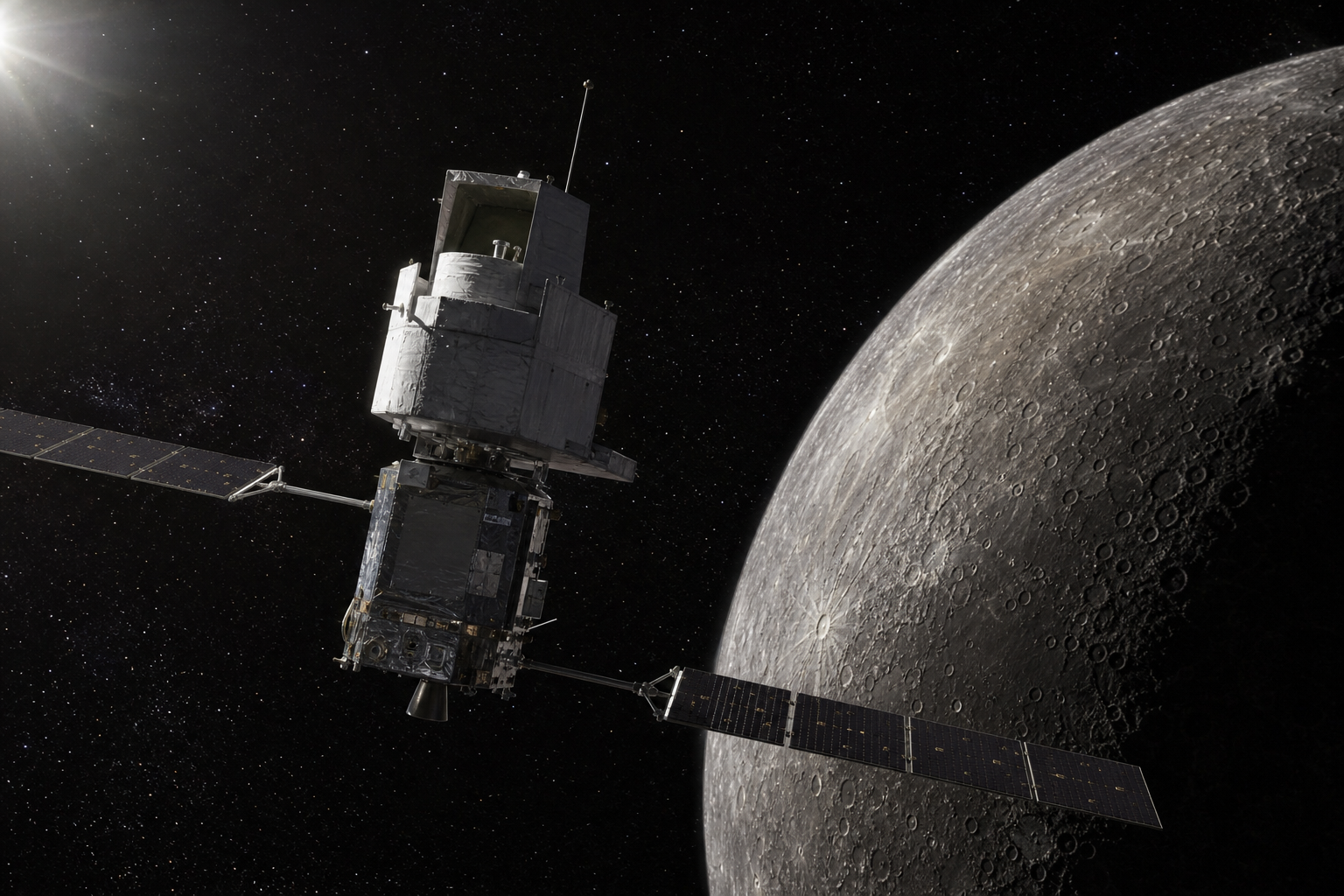
BepiColombo is scheduled to enter Mercury orbit on November 21, 2026. Here are the key mission milestones and the official ways to follow updates.
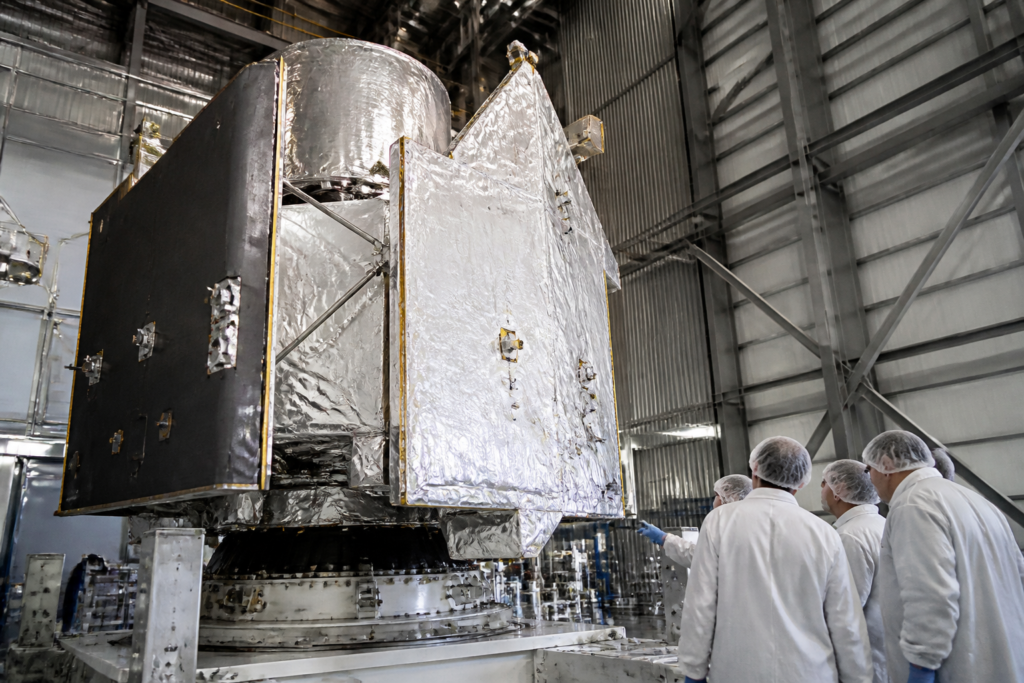
BepiColombo is scheduled to enter orbit around Mercury on November 21, 2026, after an eight-year journey through the inner Solar System. The milestone won’t look like a single spacecraft suddenly arriving and immediately beginning science observations. ESA’s Mercury Planetary Orbiter, or MPO, and JAXA’s Mercury Magnetospheric Orbiter, called Mio, will first reach Mercury together as a connected spacecraft stack.
That distinction matters because the mission’s arrival is a carefully staged sequence rather than one dramatic moment. After orbit insertion, the spacecraft will continue through separation, orbit-adjustment, and commissioning activities before the main science phase begins.
ESA and JAXA are working together on BepiColombo, which is designed to study Mercury’s surface, interior, magnetic field, exosphere, and interaction with the solar wind. It will be the first mission to place two spacecraft in orbit around Mercury at the same time.
Check ESA’s official BepiColombo arrival updates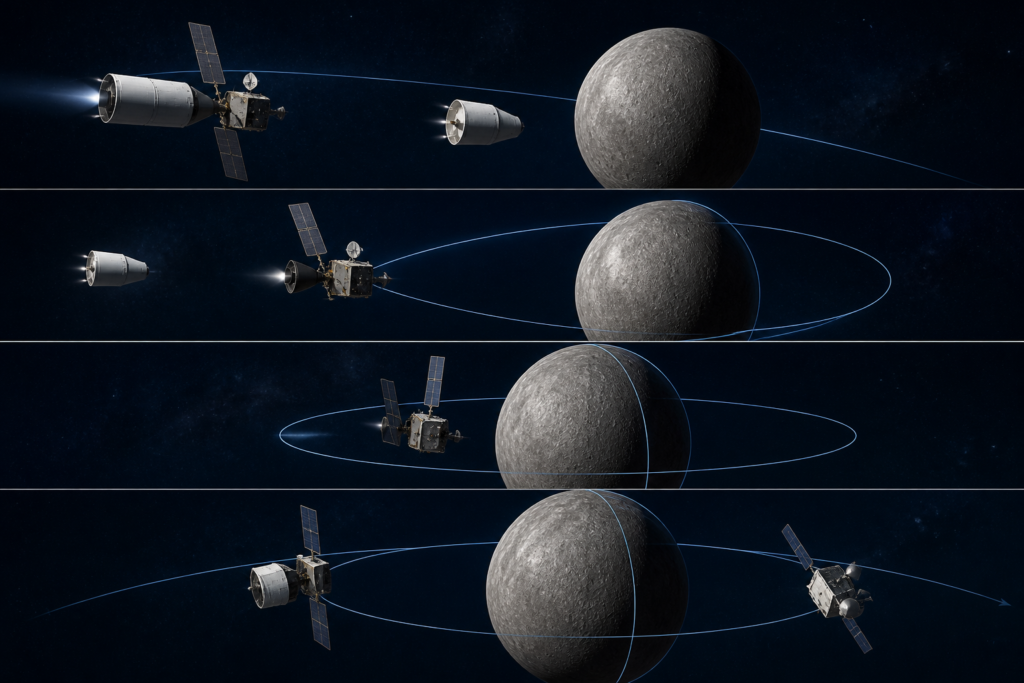
Here’s the current sequence readers should watch. ESA notes that the exact dates may change for operational reasons, so treat the schedule as the mission plan rather than a guarantee that every activity will happen on the listed day.
| Date | Milestone | What it means |
|---|---|---|
| September 3, 2026 | Mercury Transfer Module separation | The transfer module that provided most of the spacecraft’s power and solar-electric propulsion separated from the MPO–Mio spacecraft stack. |
| November 21, 2026 | Mercury orbit insertion | MPO and Mio are scheduled to be captured into a polar orbit around Mercury while still connected. |
| December 9–10, 2026 | MPO and Mio separation | Mio will be released into its planned elliptical polar orbit around Mercury. |
| December 16, 2026 | MOSIF separation | Mio’s protective sunshield is scheduled to separate from the remaining spacecraft configuration. |
| March 10, 2027 | MPO reaches its target science orbit | ESA’s MPO is expected to complete its orbit-lowering and adjustment sequence. |
| April 6, 2027 | Science operations begin | The mission is expected to move into its routine science phase, following spacecraft and instrument commissioning. |
The September separation has already begun the arrival phase, but it wasn’t the same as entering orbit around Mercury. After that event, the remaining MPO–Mio configuration continued toward the planet using MPO’s chemical propulsion system for trajectory adjustments.
Mercury is a difficult destination because a spacecraft traveling from Earth must lose a great deal of orbital energy to remain near the Sun’s powerful gravity. BepiColombo used solar-electric propulsion and a series of planetary flybys to gradually shape its trajectory. By the time it reaches Mercury, the spacecraft must still perform a complex sequence of burns and separations.
The spacecraft was built as a stack of separate elements. The Mercury Transfer Module, or MTM, carried the mission through most of its cruise and supplied solar-electric propulsion. The Mercury Planetary Orbiter carries ESA’s instruments, while Mio carries JAXA’s instruments and operates in a different orbit better suited to studying Mercury’s magnetosphere.
Because MPO and Mio have different scientific jobs and orbit requirements, they can’t simply remain attached indefinitely. After the initial capture at Mercury, mission controllers will release Mio and then continue adjusting MPO’s orbit. Additional commissioning work will be needed before the instruments can begin routine observations.
Orbit insertion will be a mission-control event, not a public viewing opportunity from North America. Mercury is too close to the Sun in the sky for BepiColombo to be watched directly from Earth, and the spacecraft will be millions of miles away. The useful signals for the public will be ESA updates, mission-control briefings, diagrams, animations, and confirmation that the spacecraft’s telemetry is healthy.
One detail to keep in mind: confirmation may not arrive at the exact moment a maneuver takes place. Radio signals take time to travel between Mercury and Earth, and mission controllers must receive and analyze spacecraft data before declaring a maneuver successful.
ESA has not published a guaranteed public broadcast schedule for every November and December arrival activity. If a livestream, briefing, or special broadcast is arranged, the mission’s official update page is the most dependable place to find the announcement.
The mission is international, but readers in Canada and the United States can follow it online without needing a special app or telescope. ESA’s mission pages are the primary source for milestone confirmations, schedule changes, imagery, and explanations from the operations and science teams.
Watch ESA’s official video coverageDecember is not the end of the mission’s arrival sequence. After Mio is released, ESA will continue maneuvering MPO toward its dedicated science orbit. The spacecraft and its instruments will also go through commissioning, which is the period when teams verify systems, configure instruments, and make sure they are ready for regular observations.
ESA currently lists April 6, 2027, as the planned beginning of the science phase. That does not mean every major result will appear on that exact date. Initial observations, instrument checks, calibration work, and early images may be shared at different times as the teams evaluate the data.
For readers following the mission, the most useful practical approach is to mark November 21, December 9–10, December 16, March 10, and April 6 on a calendar, then recheck ESA’s official updates as each milestone approaches. Operational dates can move, and official confirmation is more meaningful than an old schedule copied into a news post.
A. That is the current ESA mission date for Mercury orbit insertion. ESA also warns that exact dates may change for operational reasons, so readers should confirm the status through the official arrival-updates page as the date approaches.
A. Yes. MPO is operated by ESA and Mio is operated by JAXA. They travel together during the final approach and initial Mercury orbit insertion, then separate because each spacecraft needs a different orbit and scientific operating environment.
A. Not as a normal public skywatching event. The spacecraft will be far from Earth and Mercury is close to the Sun in the sky, so the practical way to follow the mission is through official ESA updates, broadcasts, images, and mission-control reports.
A. ESA currently lists April 6, 2027, as the planned beginning of the science phase. The spacecraft and instruments must first complete separation, orbit adjustments, commissioning, and system checks.