Welcome to KnowHow Daily!
Practical guides, money-saving tips, tech solutions, government benefits, and useful information for everyday life.
Welcome to KnowHow Daily!
Practical guides, money-saving tips, tech solutions, government benefits, and useful information for everyday life.


Learn what to do when a debt collector contacts you: verify the debt, send a dispute letter, protect your credit, and spot collection scams in the U.S. and Canada.

If a collector says you owe money, your first step is not to pay. First, determine whether the debt is real, whether it belongs to you, and whether the amount is accurate.
Ask for the collector’s full name, company name, mailing address, telephone number, name of the original creditor, account number if available, and the amount claimed. Do not provide your bank account number, credit card number, full Social Security number, or other sensitive information until you have confirmed that the collector is legitimate.
A real collection account can result from an unpaid credit card, medical bill, loan, utility account, rental balance, or other obligation. But scammers also impersonate collection agencies and may use real company names, urgent threats, fake case numbers, or demands for immediate payment by gift card, wire transfer, cryptocurrency, or payment app.
Threats of arrest, deportation, suspension of a driver’s licence, or immediate police action are major warning signs. A legitimate collector should be able to explain who they are, who the creditor is, and how to request information about the debt.
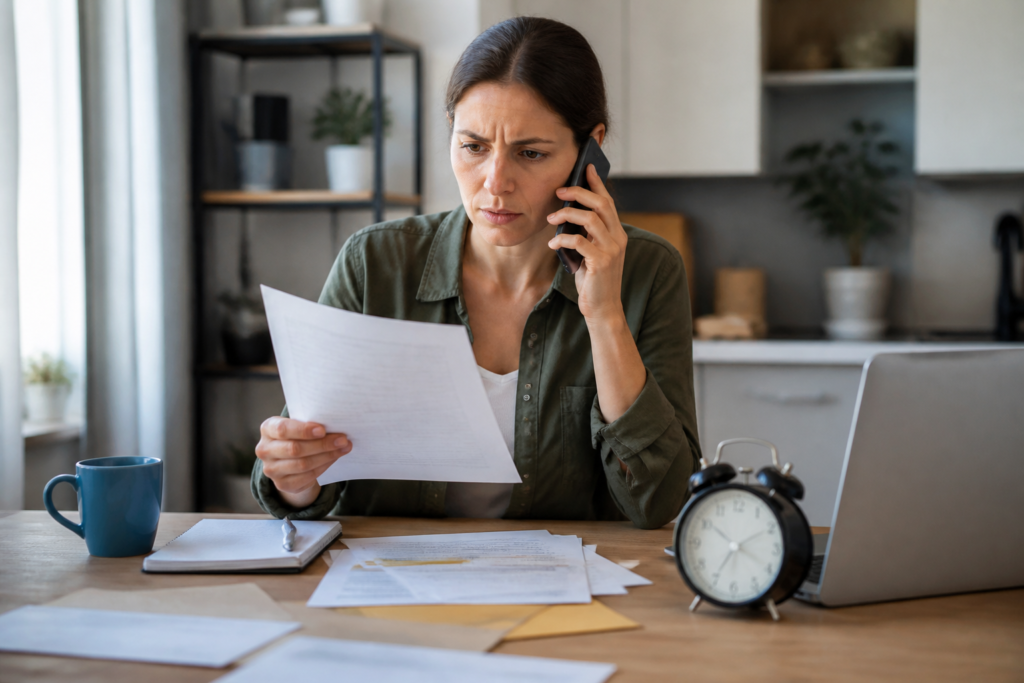
For debts covered by the federal Fair Debt Collection Practices Act, a debt collector generally must provide validation information in the initial communication or within five days of first contacting you. The notice should identify the collector and creditor, state the amount claimed, itemize changes such as interest, fees, payments, and credits, and explain how to dispute the debt or request information about the original creditor.
The validation notice should also state the end date of the validation period. If you dispute all or part of the debt in writing by that date, the collector generally must stop collection activity on the disputed amount until it sends verification or a copy of a judgment. You can also request the name and address of the original creditor if it is different from the current creditor.
The 30-day period is not a general deadline for every possible legal claim, and missing it does not automatically prove that you owe the debt. However, disputing within the stated period gives you important federal protections. Even if more than 30 days have passed, it can still be useful to dispute inaccurate information and request documentation.
Use the official Consumer Financial Protection Bureau debt-collection resources for sample letters and explanations of the federal process.
View CFPB debt collection resources and sample lettersYour letter does not need to be long. It should be clear, specific, and limited to what you need the collector to investigate. Send a separate letter for each disputed account unless the collector’s notice provides a permitted response form that covers multiple debts.
Include:
You can use wording such as: “I dispute this debt, in whole or in part. Please provide verification of the debt, including the name of the original creditor, the account information, the amount claimed, and documents showing that I am the person responsible for this obligation.”
If the amount is wrong, say what you believe is incorrect. If you already paid, attach a copy of a receipt or statement if you have one. If the account belongs to someone else, say that clearly and avoid guessing about how the error happened.
Keep the original documents. Make a copy of the letter and any attachments, then send the dispute using a method that lets you prove delivery, such as certified mail with a return receipt. If the validation notice offers an electronic dispute method, you may use it, but save a copy of your submission and any confirmation page or email.
In the U.S., a timely written dispute generally requires the collector to pause collection activity on the disputed amount until it provides verification. That pause does not erase the debt, prevent a lawsuit, or guarantee that the collector will agree with you.
Review whatever the collector sends. Verification may include information connecting you to the account, the original creditor, the amount claimed, and the collector’s authority to collect. The documents do not have to match one universal format, so focus on whether they reasonably address your dispute.
If the collector cannot support the claim, ask it to correct or close the account and confirm the result in writing. If the same account appears on your credit report, dispute the inaccurate information separately with each credit reporting company that lists it. The collector letter and the credit-report dispute are related but separate steps.
You can obtain your U.S. credit reports through the official AnnualCreditReport.com request page.
Request your official U.S. credit reportsA collection account may appear on a credit report, but the absence of an account does not prove that a collector’s claim is legitimate or invalid. Some debts may not be reported, and reporting agencies may contain errors.
Compare the collector’s notice with your own records, including account statements, payment confirmations, insurance explanations, medical bills, lease documents, and correspondence with the original creditor. Look for differences in the creditor name, account number, date, balance, and payment history.
When disputing a credit-report entry, identify the exact information that is inaccurate and include copies of supporting documents. Keep records of when you submitted the dispute and how the reporting agency responded.
The U.S. has a federal validation-notice and 30-day written-dispute framework for covered collection activity. State laws may provide additional protections, and the federal law does not apply to every creditor or every type of collection activity.
Canada does not have one nationwide rule that gives every consumer the same federal 30-day debt-validation period. Collection-agency rules are largely provincial or territorial, although federally regulated financial institutions have additional complaint and conduct requirements. The details can differ depending on where you live, who is collecting, and whether the debt was assigned or sold.
Canadian consumers should ask for the agency’s name, the creditor’s name, the amount claimed, and the account details. Review bills and bank statements, contact the original creditor through a trusted phone number or website, and tell both the agency and creditor promptly if the debt is not yours or the amount is wrong.
In Canada, collection agencies generally must identify themselves, provide information about the debt, avoid misleading or abusive conduct, and follow contact-time and communication rules that vary by province or territory. If the debt was sold to a collection agency, complaints generally go to the consumer-affairs office in your province or territory. If the collection department belongs to a federally regulated financial institution, start with that institution’s complaint process.
Use the Financial Consumer Agency of Canada’s guidance for the general federal overview, then check the appropriate provincial or territorial consumer-affairs office for local rules.
Read Canada’s official debt collector guidance Find your Canadian consumer-affairs officePause the conversation if the caller refuses to provide a mailing address, will not identify the creditor, demands payment immediately, or insists that you keep the call secret. Be especially careful if the caller asks for gift cards, cryptocurrency, wire transfers, unusual prepaid cards, or remote access to your computer.
Do not call a number supplied only in a suspicious text or email. Instead, locate the original creditor’s official contact information independently and ask whether the account was referred or sold. You can also verify whether the collection company is licensed or registered through the relevant state regulator or provincial consumer-affairs office.
If you believe the collector is using deceptive or abusive tactics, preserve voicemails, texts, emails, caller IDs, letters, payment demands, and a written log of dates and statements. In the U.S., you can submit a debt-collection complaint to the CFPB and report suspected fraud to the appropriate government agency.
Submit a U.S. debt-collection complaintA dispute letter is not a substitute for responding to a lawsuit. If you receive a summons, complaint, notice of hearing, or other court document, follow the response deadline printed on the papers and consider speaking with a consumer-law attorney or legal-aid organization.
Old debts require extra care. The time limit for filing a lawsuit can depend on the type of debt and the law where you live. Making a payment or acknowledging an old debt may affect your legal position in some jurisdictions, so get local legal advice before paying or agreeing to a plan when the account is several years old.
The safest decision is usually to verify first, document every step, and only discuss payment after you know who is collecting and what the records actually show.
A. Yes. Dispute the specific amount you believe is incorrect and request an itemization showing interest, fees, payments, credits, and the balance claimed. Include copies of supporting records, but keep the originals.
A. No. A dispute starts an investigation; it does not guarantee removal. If the information is inaccurate or cannot be supported, ask the credit reporting company and the furnisher to correct or delete it.
A. A dispute letter does not generally prevent a lawsuit. If court papers arrive, follow the response deadline and seek local legal advice. Do not assume that sending a letter replaces a formal court response.
A. You should still dispute inaccurate information and request documentation. However, some federal protections tied to a timely written dispute may not apply in the same way, so consider getting advice about your specific situation.
A. Not as one nationwide rule that applies uniformly across Canada. Collection-agency requirements and complaint procedures vary by province or territory, so check the rules where you live and contact the appropriate consumer-affairs office.












