Welcome to KnowHow Daily!
Practical guides, money-saving tips, tech solutions, government benefits, and useful information for everyday life.
Welcome to KnowHow Daily!
Practical guides, money-saving tips, tech solutions, government benefits, and useful information for everyday life.

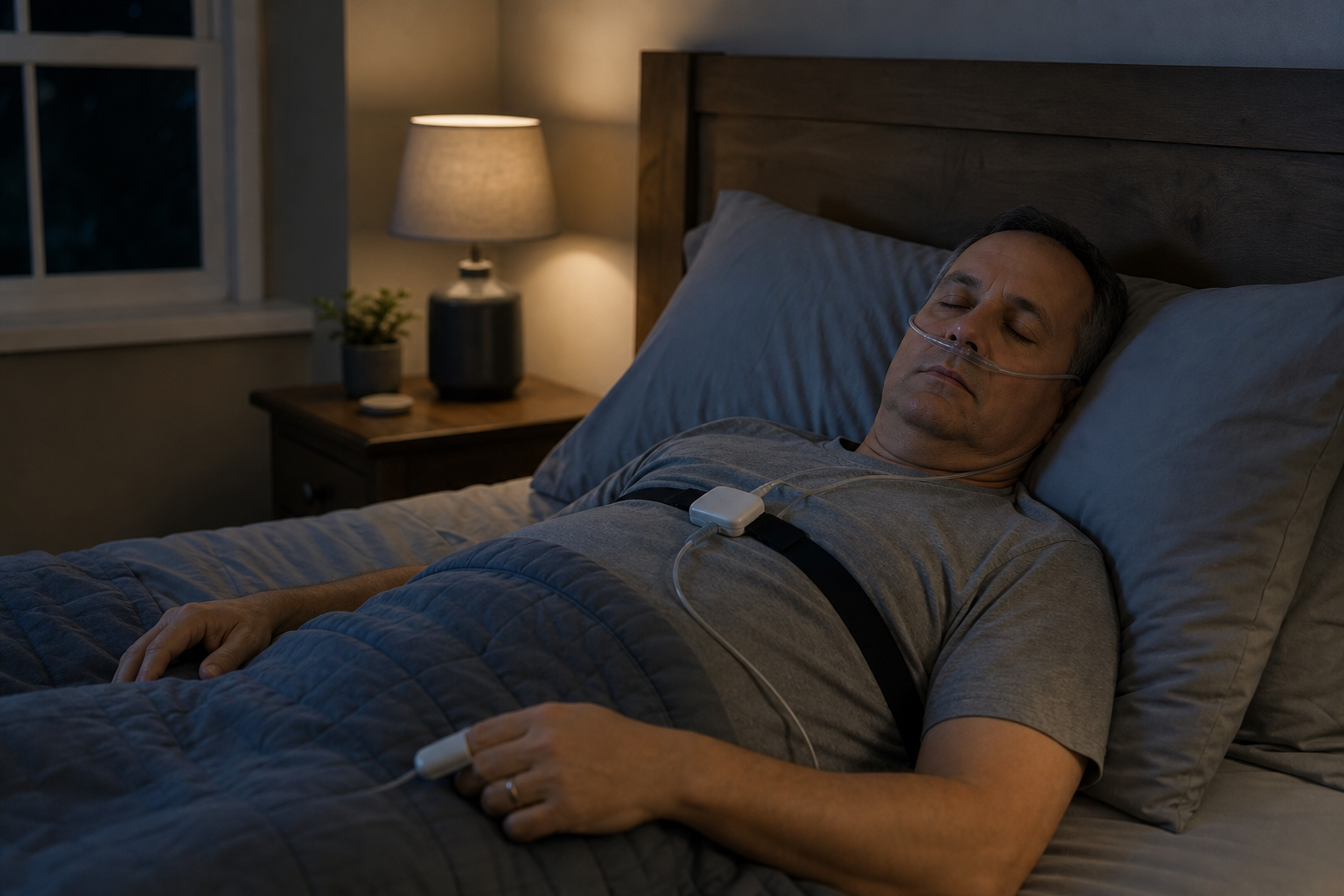
Compare a home sleep apnea test with an in-lab sleep study, including who may qualify, what each test measures, limitations, and what happens after a negative result.
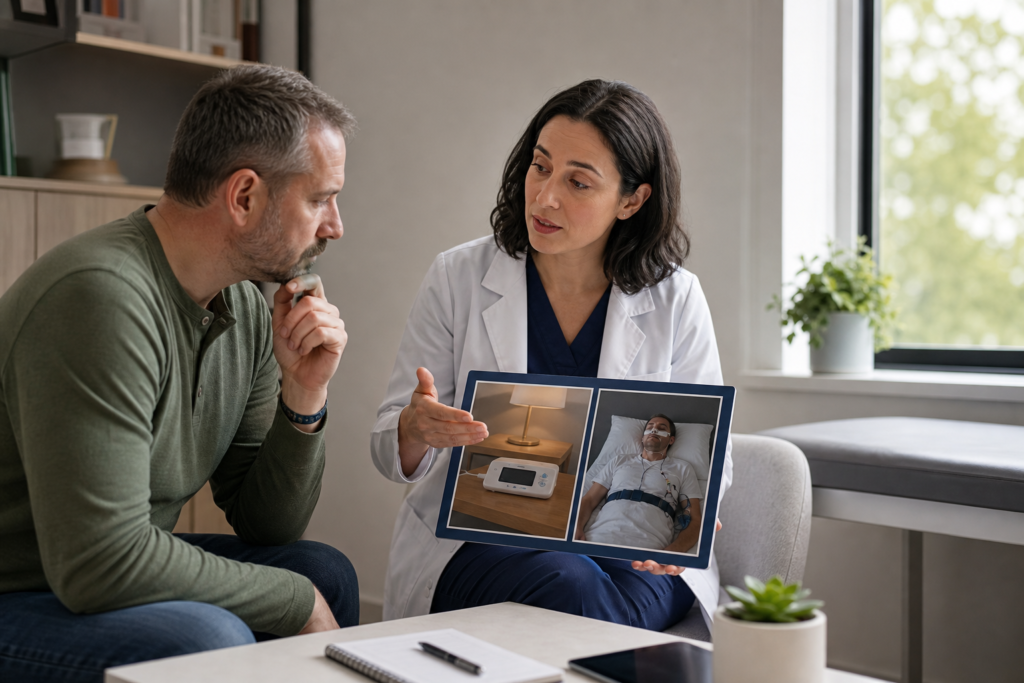
For many adults with symptoms that strongly suggest uncomplicated obstructive sleep apnea, a clinician-supervised home sleep apnea test can be a reasonable first diagnostic step. It is usually more convenient because you sleep in your own bed and use a portable monitor rather than spending the night in a sleep center.
An in-lab sleep study, formally called attended polysomnography or PSG, is the more complete test. It records brain activity and sleep stages along with breathing, oxygen levels, heart activity, body movements, and other signals. That extra information matters when your symptoms may have more than one cause or when another medical condition could affect your breathing during sleep.
The key distinction is this: a home test is designed mainly to detect obstructive breathing interruptions in selected adults, while an in-lab study can investigate a wider range of sleep and breathing disorders.
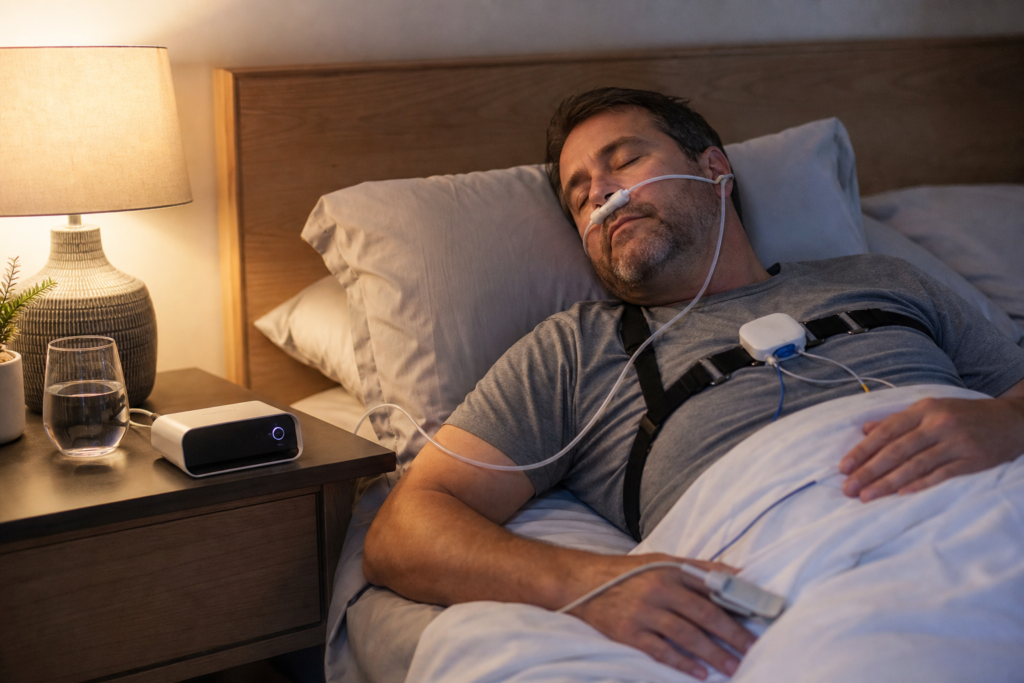
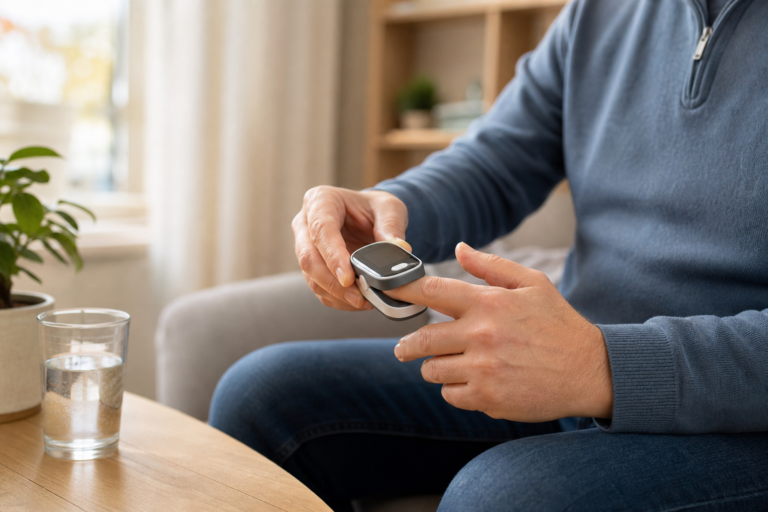
A home sleep apnea test, or HSAT, typically uses sensors that record airflow, breathing effort, blood oxygen levels, and sometimes heart rate, snoring, or body position. The device does not usually record brain waves, eye movements, or the full sequence of sleep stages.
That limitation affects how the results are calculated. A home device may divide breathing events by the total recording time rather than the exact amount of time you were asleep. If you lie awake for a long time, remove a sensor, or have a night that is unusually different from normal, the result may be less reliable.
HSAT is not a do-it-yourself diagnosis. The American Academy of Sleep Medicine says a medical provider should decide whether the test is appropriate after a clinical evaluation. Automatically generated numbers should not be used alone to diagnose sleep apnea or make treatment decisions; the recorded data needs qualified medical interpretation.
During an overnight PSG, a sleep technologist applies sensors to measure several body functions while you sleep. These may include brain waves, eye movements, muscle activity, heart rhythm, airflow, breathing effort, oxygen saturation, leg movements, and body position.
Because PSG can identify when you are actually asleep and can detect arousals, it can provide a more detailed picture than a typical home test. It may also help identify conditions such as central sleep apnea, periodic limb movements, unusual nighttime behaviors, or other causes of fragmented sleep.
Some sleep centers can perform a split-night study. The first part of the night is used for diagnosis, and if sleep apnea is clearly identified, the second part may be used to begin adjusting positive airway pressure settings. Whether that is appropriate depends on the clinical situation and the sleep center’s protocol.
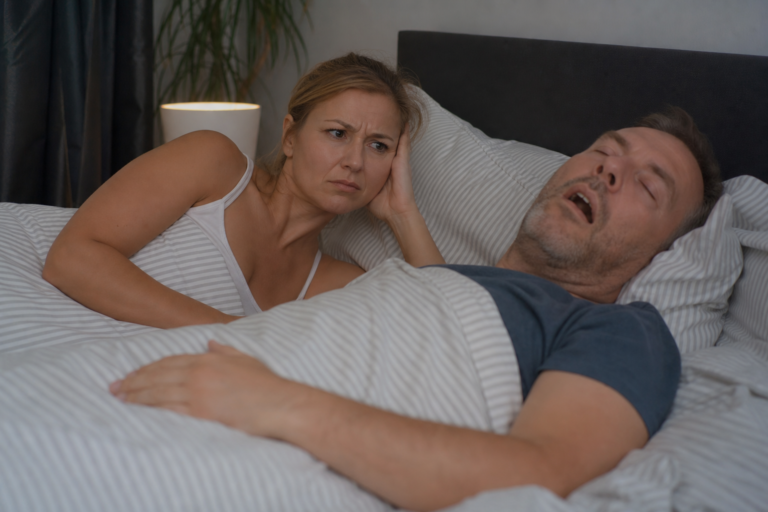
HSAT is generally considered for an adult who has symptoms and a high likelihood of moderate-to-severe obstructive sleep apnea without major complicating conditions. Common clues include loud habitual snoring, witnessed pauses in breathing, gasping or choking during sleep, excessive daytime sleepiness, and high blood pressure.
A home test may be especially practical when the main question is whether obstructive sleep apnea is present and there is no strong reason to suspect another sleep disorder. It can reduce the inconvenience of an overnight appointment and may be easier to schedule in some areas.
Even in this group, the test needs to be technically adequate and followed by a clinician’s review. A convenient test is not automatically a complete test.
Polysomnography is generally preferred over HSAT when a person has a condition that could make a home test less accurate or less safe. Situations that commonly favor an in-lab study include:
Children and teenagers generally require a different evaluation pathway. An adult home-test recommendation should not be applied to a child without advice from the child’s healthcare professional.
| Feature | Home sleep apnea test | In-lab polysomnography |
|---|---|---|
| Where it happens | At home, usually overnight | In an accredited sleep center or laboratory |
| Information collected | Usually breathing, airflow, oxygen, and effort signals | Breathing plus brain waves, sleep stages, heart activity, movements, and more |
| Best suited to | Selected adults with likely uncomplicated obstructive sleep apnea | People with complex symptoms, medical conditions, or an unclear diagnosis |
| Main advantage | Convenience and sleeping in your normal environment | More complete diagnostic information |
| Main limitation | May miss mild, positional, central, or non-breathing sleep problems | More time-consuming and may be harder to schedule |
A negative HSAT does not always mean you do not have sleep apnea. The result may be misleading if the device did not collect enough usable data, if you slept less than expected, or if your breathing problem is intermittent or not primarily obstructive.
If you continue to have loud snoring, witnessed breathing pauses, gasping, excessive daytime sleepiness, or other concerning symptoms after a negative home test, contact the clinician who ordered it. The American Academy of Sleep Medicine recommends polysomnography when an HSAT is negative, inconclusive, or technically inadequate and clinical suspicion remains.
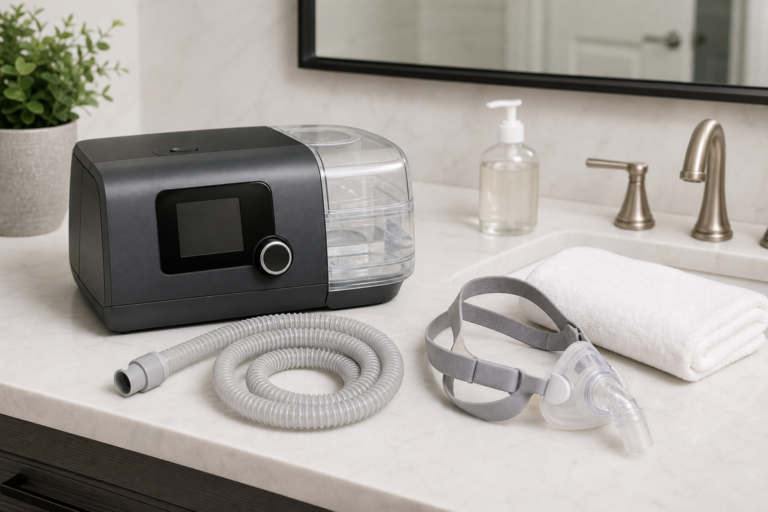
Do not start or stop CPAP, oxygen, sedating medication, or another treatment based only on an automatically generated home-test report. The result should be interpreted in the context of your symptoms, medical history, and examination.
In the United States, a healthcare provider generally evaluates your symptoms and risk factors, orders the appropriate test, and arranges interpretation through a sleep-medicine service or qualified provider. Insurance requirements, referral rules, and out-of-pocket costs vary by plan and state.
In Canada, access and coverage can vary by province and territory. Some systems use portable home monitoring for selected patients, while others may refer people to a sleep laboratory depending on symptoms, medical history, local resources, and wait times. A referral from a family doctor, nurse practitioner, or specialist may be required, and private testing may involve a fee.
Ask the ordering clinician which test is being requested, who will interpret it, how results will be explained, and what happens if the recording is incomplete or does not match your symptoms.
If you are falling asleep while driving, experiencing severe breathing difficulty, or having chest pain or other emergency symptoms, do not wait for a routine sleep test appointment. Seek urgent medical care and avoid driving while dangerously sleepy.
A. Usually not. Some consumer devices can estimate risk or record related signals, but they generally do not provide the full medical assessment needed to diagnose sleep apnea. A clinician should decide whether formal testing is needed.
A. An in-lab study collects more information and is better suited to complex cases. A properly selected and supervised home test can be useful for diagnosing uncomplicated obstructive sleep apnea, but it can miss other breathing or sleep disorders.
A. No. Sleep centers are used to people sleeping differently than they do at home. Tell the technologist if you are uncomfortable or unable to sleep. If the recording does not provide enough useful information, the clinician may recommend repeating it or using another test.
A. The apnea-hypopnea index, or AHI, estimates the number of breathing interruptions or reductions per hour of sleep. It is only one part of the evaluation. Symptoms, oxygen levels, the type of events, and your overall health also matter.