Welcome to KnowHow Daily!
Practical guides, money-saving tips, tech solutions, government benefits, and useful information for everyday life.
Welcome to KnowHow Daily!
Practical guides, money-saving tips, tech solutions, government benefits, and useful information for everyday life.

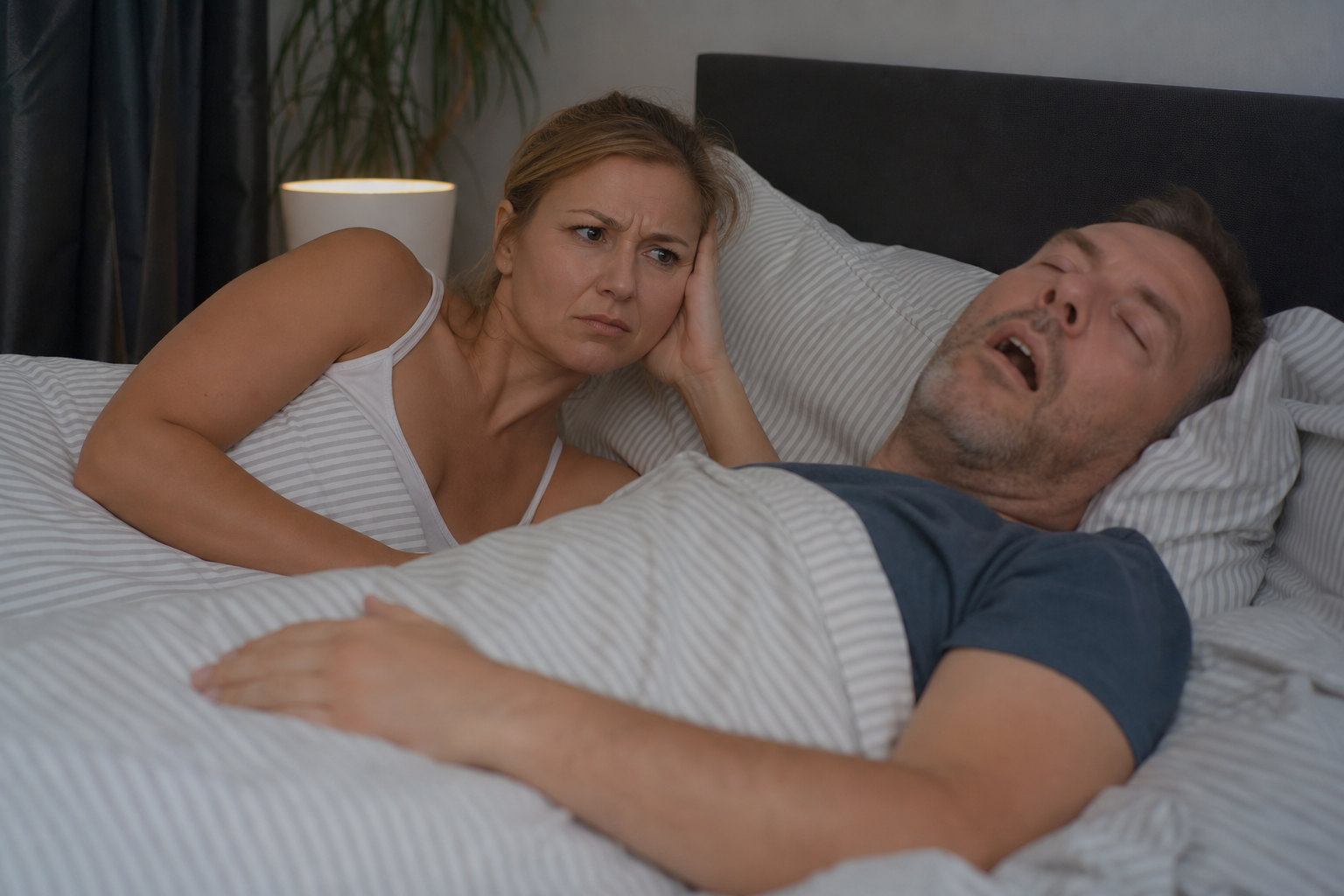
Learn which snoring and daytime symptoms may point to obstructive sleep apnea, how home testing works, and when to ask about an in-lab sleep study.
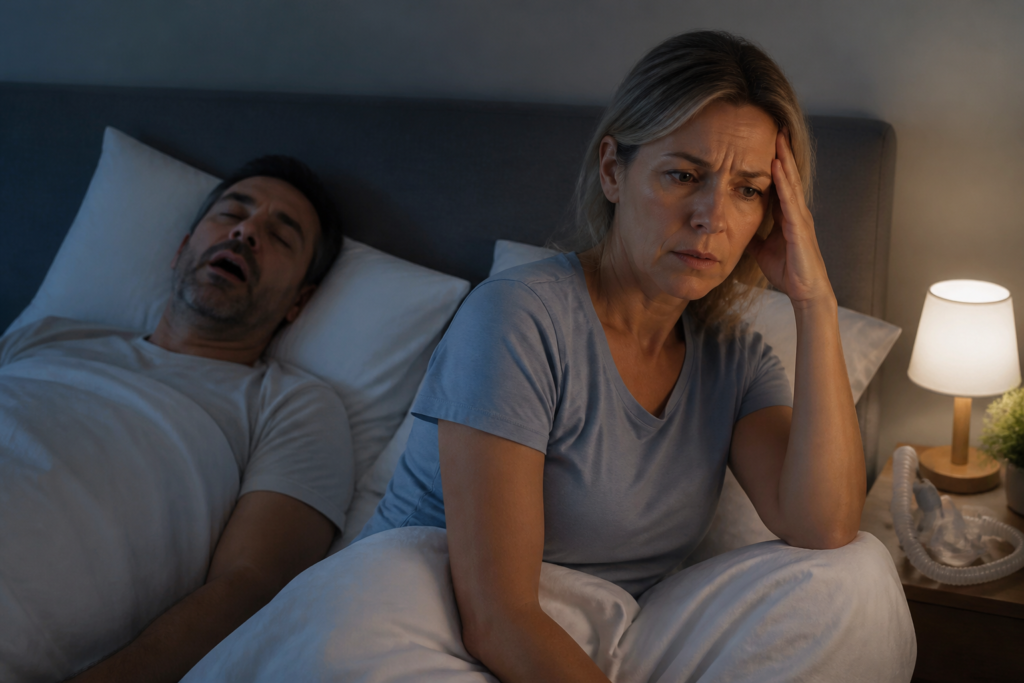
Snoring happens when air squeezes through a partly narrowed upper airway during sleep. It is common, and many people who snore do not have sleep apnea. The concern rises when snoring is loud and frequent or comes with signs that your breathing is repeatedly interrupted.
Obstructive sleep apnea, the most common form, occurs when throat tissues relax and temporarily block airflow. Breathing may stop or become very shallow, then restart with a snort, gasp, or choking sound. Those interruptions can happen many times during the night, even if you do not remember waking up.
The most useful distinction is this: snoring is a symptom, not a diagnosis. A sleep questionnaire or wearable may help estimate risk, but confirming sleep apnea requires a medical assessment and a sleep test.
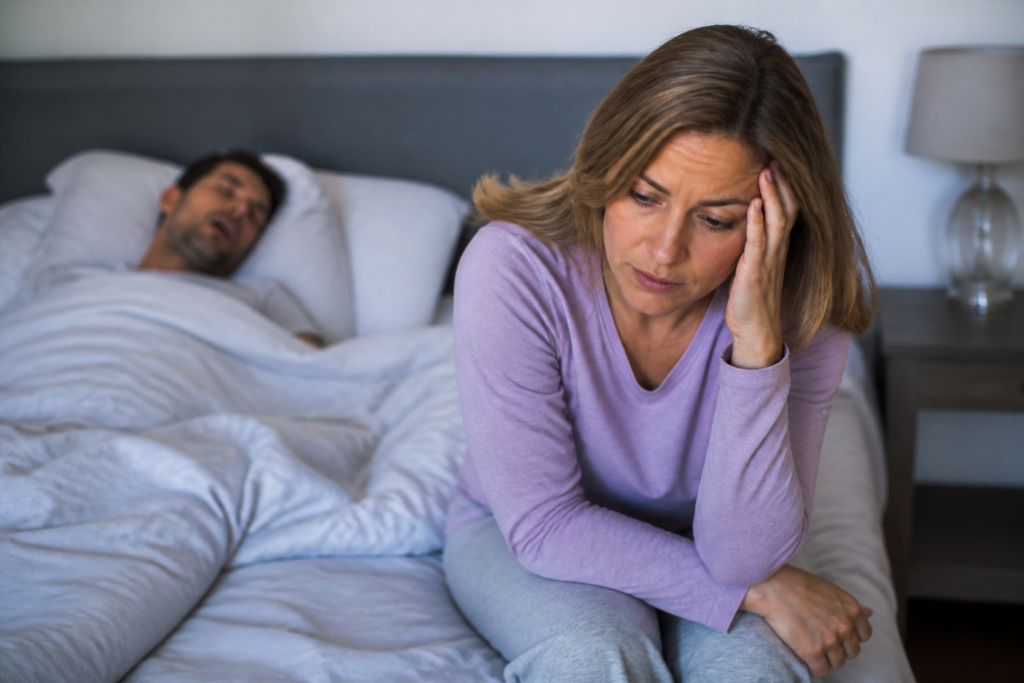
A bed partner may notice the nighttime signs before you do. Ask what they have observed, especially if you sleep alone and are unsure why you feel tired.
Women may be more likely to describe fatigue, insomnia, headaches, or mood symptoms rather than the classic pattern of loud snoring and gasping. That does not make those symptoms specific to sleep apnea, but it is one reason a less obvious presentation can be missed.
Risk is also influenced by factors such as excess weight, high blood pressure, family history, airway structure, aging, alcohol use near bedtime, and some medicines. Sleep apnea can occur in people who do not have these risk factors, so their absence does not rule it out.
A clinician usually starts with your symptoms, health history, medications, and a physical examination of areas such as the mouth, throat, and neck. You may be asked about daytime sleepiness, blood pressure, sleep habits, and whether someone has seen you stop breathing.
The diagnosis itself requires a sleep study. Depending on your health history and likelihood of obstructive sleep apnea, the study may be completed at home or in a sleep center.
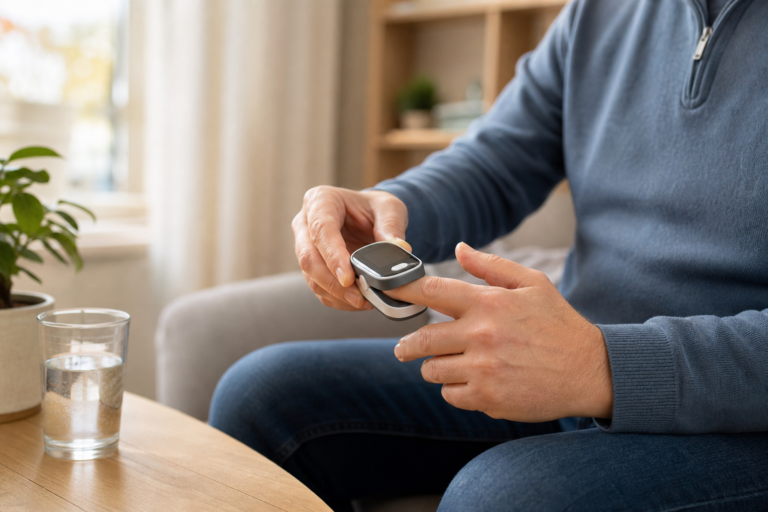
A home sleep apnea test, often called an HSAT, is a portable medical test that you use while sleeping in your own bed. The equipment may record signals such as airflow, breathing effort, blood oxygen level, and heart rate. The exact sensors vary by device.
Home testing can be a reasonable option for an adult whose symptoms suggest a higher risk of moderate-to-severe obstructive sleep apnea and who does not have medical conditions that make the test less reliable. It should be ordered by a qualified medical provider, not selected solely from an app result or an online questionnaire.
Home testing has limits. It generally cannot evaluate every sleep disorder, may not measure sleep stages in the same detail as a laboratory study, and can underestimate the severity of apnea if the recording includes time when you were awake. A clinician must interpret the results alongside your symptoms and medical history.
An overnight polysomnogram, or in-lab sleep study, records more types of information while you sleep. It may be recommended if a home test is negative, inconclusive, or technically inadequate but suspicion remains. It is also more appropriate when you may have another sleep-related breathing disorder, significant heart or lung disease, certain neuromuscular conditions, a history of stroke, chronic opioid use, or another complicated medical situation.
An in-lab study can also be useful when a clinician is concerned about milder sleep apnea or another condition that a home test would not assess well. The extra monitoring may include brain activity, eye movements, muscle activity, heart rhythm, breathing, oxygen levels, and body movements.
| Option | What it can do | What it cannot do on its own |
|---|---|---|
| Clinician-ordered home sleep apnea test | Collects physiological data during sleep to help evaluate suspected obstructive sleep apnea. | Replace medical interpretation or reliably assess every sleep disorder. |
| In-lab sleep study | Provides broader monitoring and can evaluate more complex or uncertain cases. | Guarantee that every night reflects your usual sleep. |
| Smartwatch, ring, phone app, or questionnaire | May identify patterns or suggest that you discuss symptoms with a clinician. | Confirm or rule out sleep apnea by itself. |
Consumer devices can be useful for noticing trends, but a reassuring score should not overrule loud witnessed breathing pauses, severe daytime sleepiness, or other concerning symptoms. Conversely, an alert does not establish that you have sleep apnea. Treat these tools as conversation starters, not diagnostic equipment.
Follow the instructions from the ordering provider and testing service. You may be asked to keep your usual sleep schedule, avoid changing prescribed medicines unless your clinician tells you to, and record any problems with the equipment. Do not interpret a device-generated result as a final diagnosis before the provider reviews it.
If the result supports obstructive sleep apnea, the clinician will discuss treatment options and whether additional testing is needed. If the result is negative but your symptoms continue, ask what the next step should be. A negative or incomplete home test does not always settle the question.
Sleep-study reports often include an apnea-hypopnea index, or AHI. This is the average number of breathing interruptions per hour of recorded sleep or recording time, depending on the test method. In adults, an AHI from 5 to under 15 is commonly described as mild, 15 to under 30 as moderate, and 30 or more as severe. Clinicians do not use the number in isolation; symptoms, oxygen levels, other findings, and overall health also matter.
If you are so sleepy that you might nod off while driving, do not drive until you can stay alert safely. Arrange another way to travel and contact a healthcare professional promptly. Seek urgent care for severe trouble breathing, chest pain, fainting, or symptoms that feel immediately life-threatening.
A. Yes. Snoring is common but not required. Some people mainly notice daytime sleepiness, morning headaches, insomnia, concentration problems, or witnessed breathing pauses. Other conditions can cause the same symptoms, so testing is needed to identify the cause.
A. No. A smartwatch, ring, app, or questionnaire may identify patterns that are worth discussing, but it cannot replace a clinician-ordered sleep study and professional interpretation.
A. Talk with the ordering clinician. The test may have been technically inadequate, may not have captured the problem, or another sleep or medical condition may be responsible. An in-lab study or additional evaluation may be appropriate.
A. Do not stop or change prescribed medication on your own. Ask the clinician or testing service whether any medicines, alcohol, caffeine, or sleep aids could affect your test and follow their specific instructions.