Welcome to KnowHow Daily!
Practical guides, money-saving tips, tech solutions, government benefits, and useful information for everyday life.
Welcome to KnowHow Daily!
Practical guides, money-saving tips, tech solutions, government benefits, and useful information for everyday life.


The FDA approved the Autus Size-Adjustable Valve for certain pediatric pulmonary valve patients. Here is what the approval means, what remains uncertain, and what families should ask.
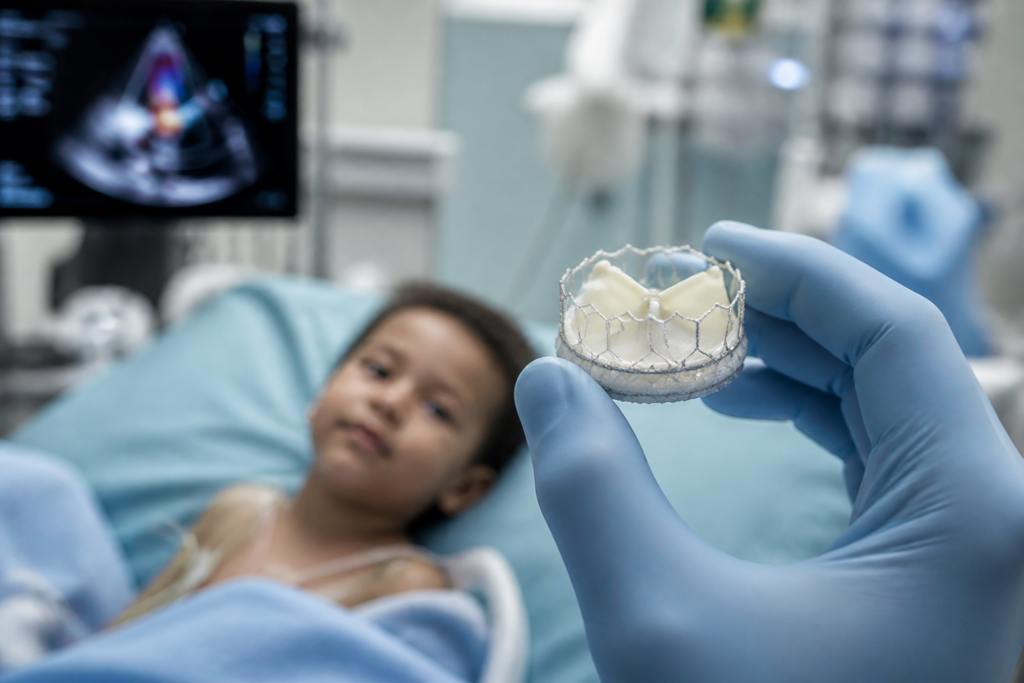
On October 1, 2026, the U.S. Food and Drug Administration approved the Autus Size-Adjustable Valve, a surgically implanted pulmonary heart valve intended for pediatric patients with congenital pulmonary valve disease who require pulmonary valve replacement.
The device is designed around a problem families and pediatric cardiology teams have faced for years: children grow, but an implanted valve does not. A valve that fits a toddler may eventually become too small, sometimes leading to another open-heart operation.
Autus is intended to be implanted at a smaller size and later widened through a catheter-based balloon procedure. The goal is to give the valve more room to accommodate a child’s growth and, in some cases, reduce the number of repeat surgeries. That is a meaningful possibility, not a guarantee for every child.

The Autus valve can initially be implanted at approximately 13 millimeters in diameter, a size intended to fit some toddlers and preschool-aged children. As the child grows, doctors may be able to expand the valve with a small inflatable tube, known as a balloon catheter. The valve can eventually reach up to about 22 millimeters, which is comparable to an adult-sized pulmonary valve.
The expansion is performed through a transcatheter procedure rather than another open-heart operation. Whether expansion is appropriate depends on the child’s anatomy, the valve’s function, imaging results, overall health, and the judgment of the treating congenital heart team.
The valve also uses polymeric material for its leaflets, the flaps that open and close to control blood flow. Traditional replacement valves often use animal-derived tissue. The FDA said Autus is the first U.S.-approved heart valve to use polymeric leaflets for any indication.
The FDA’s approval was based on a clinical study involving 62 pediatric patients at 12 U.S. sites. At the six-month follow-up, the first 60 patients had acceptable blood-flow performance through the right side of the heart and no more than mild leakage through the valve.
All patients in the study had a successful implantation procedure. The FDA reported no deaths, treatment-requiring blood clots, strokes, or other clot-related complications during the reported follow-up period.
There were still device-related events that families should understand. Three patients experienced a fracture in the valve frame, and two had reduced movement of one valve leaflet. None of those events caused symptoms in the patients described by the FDA. In addition, valve performance began to deteriorate in two children who started to outgrow the valve. Both valves were successfully expanded without invasive surgery, but the number of cases was very small.
These results support the FDA’s decision that the device’s benefits outweighed its known risks for the approved use. They do not establish how the valve will perform over a child’s entire growth period or how often later procedures will be needed.
FDA approval means the agency reviewed scientific evidence and found reasonable assurance that the device is safe and effective for its approved use. It does not mean the Autus valve is the best option for every child with congenital heart disease.
Pulmonary valve replacement decisions can depend on the child’s age, heart anatomy, prior surgeries, right-ventricle function, pulmonary artery structure, current symptoms, and the expected timing of future interventions. Some children may have anatomy that does not accommodate this valve. Others may have a different treatment option that their specialists consider more appropriate.
The approval also does not mean that every hospital will immediately offer the device. Access may depend on the availability of trained congenital heart surgeons, hospital protocols, product distribution, insurance arrangements, and whether the medical team believes the device is appropriate for a particular patient.
The most important unanswered questions involve durability and growth. The FDA said longer-term studies are being conducted to learn whether the polymeric leaflets continue to function well, how the valve frame behaves after expansion, and whether expansion consistently preserves good valve performance.
Families should also ask how many expansion procedures a valve may be able to undergo, whether a later procedure could still be necessary, and how doctors will monitor for leaflet movement, frame problems, leakage, narrowing, or changes in right-ventricle function.
The current evidence is early. Six-month findings can show whether a newly implanted valve is working acceptably, but they cannot replace years of follow-up in growing children. The FDA’s report specifically notes that the experience with valve expansion is limited.
A pediatric cardiologist or congenital heart surgeon can explain whether the Autus valve fits a child’s specific anatomy and treatment plan. Useful questions include:
Families should not change an existing treatment plan based only on the announcement. The appropriate next step is a discussion with the child’s own pediatric cardiology team, using the child’s imaging, surgical history, and current heart function.
The FDA approval applies to the United States. It does not automatically authorize the Autus valve for sale or routine use in Canada.
Health Canada uses its own medical-device licensing process. Canadian families should ask their cardiology team whether the device has a Canadian licence, whether it is available through an approved clinical study or special access pathway, and whether another locally authorized treatment is recommended.
As of October 3, 2026, the FDA announcement confirms U.S. approval, but it does not announce Canadian authorization. Canadian availability should be verified through the treating hospital and Health Canada’s medical-device records rather than assumed from the U.S. decision.
Check Health Canada's medical-device licence listingThe Autus Size-Adjustable Valve is an FDA-approved U.S. treatment option for a specific pediatric pulmonary valve population. Its ability to be expanded as a child grows could change how some specialists plan pulmonary valve replacement, but the long-term evidence is still developing. For families, the most useful action is to ask a congenital heart team whether the device’s approved use, known risks, and limited follow-up data fit the child’s individual situation.
A. No. FDA approval covers a specific pediatric pulmonary valve use, but candidacy still depends on a child’s anatomy, age, prior surgeries, heart function, and the judgment of a congenital heart team.
A. No. The valve is designed to be expanded as a child grows, which may reduce the need for repeat open-heart surgery in some patients. It does not guarantee that additional catheter procedures, surgery, or valve replacement will never be needed.
A. The FDA reported results from 62 pediatric patients, including six-month follow-up for the first 60 patients. The early findings were encouraging, but the number of patients and length of follow-up are limited, so longer-term durability remains uncertain.
A. Not automatically. U.S. FDA approval does not authorize routine sale or use in Canada. Canadian availability must be confirmed through the treating hospital and Health Canada’s medical-device licensing information.










FDA Infant Formula Standards Proposal: What Parents Need to Know About Nutrient Changes and the Comment Deadline