Welcome to KnowHow Daily!
Practical guides, money-saving tips, tech solutions, government benefits, and useful information for everyday life.
Welcome to KnowHow Daily!
Practical guides, money-saving tips, tech solutions, government benefits, and useful information for everyday life.

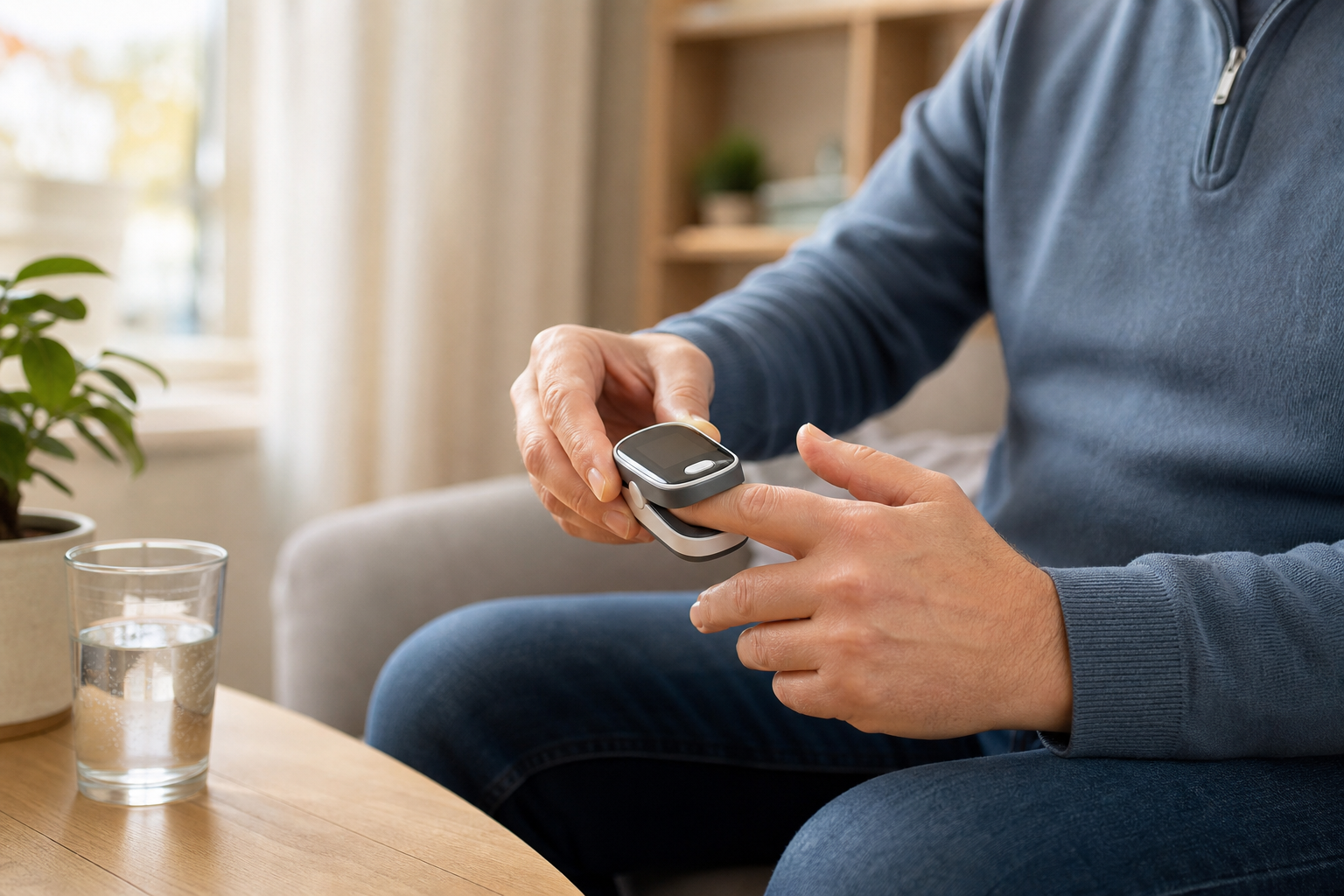
Learn how to choose a home pulse oximeter, take a more reliable reading, understand accuracy limits, and know when symptoms matter more than the number.
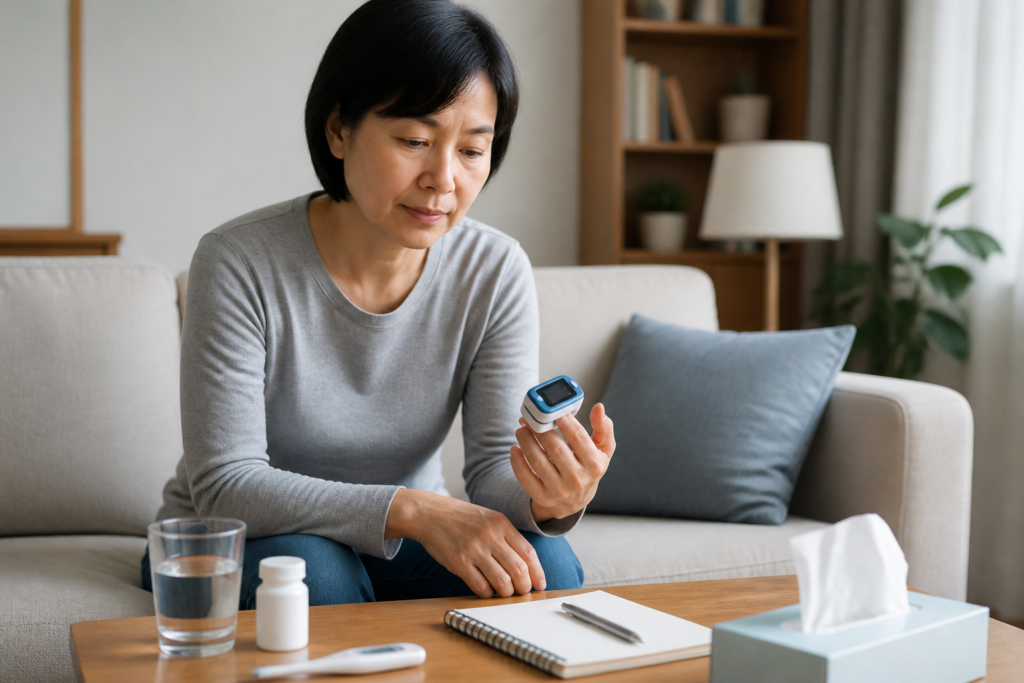
A pulse oximeter is a small device that clips onto a fingertip and estimates blood oxygen saturation, usually shown as SpO2, along with pulse rate. It uses light to estimate how much oxygen is being carried in the blood without drawing a sample.
For home monitoring, the most important distinction is this: a pulse oximeter gives an estimate, not a diagnosis. The number can be useful for watching a trend or following a care plan, but it should not overrule serious symptoms or replace advice from a healthcare professional.
Many healthy people have oxygen saturation readings between 95% and 100%, although an individual’s usual level may be lower because of lung disease, elevation, or another medical factor. If a clinician has given you a personal target range, use that plan instead of a generic number.
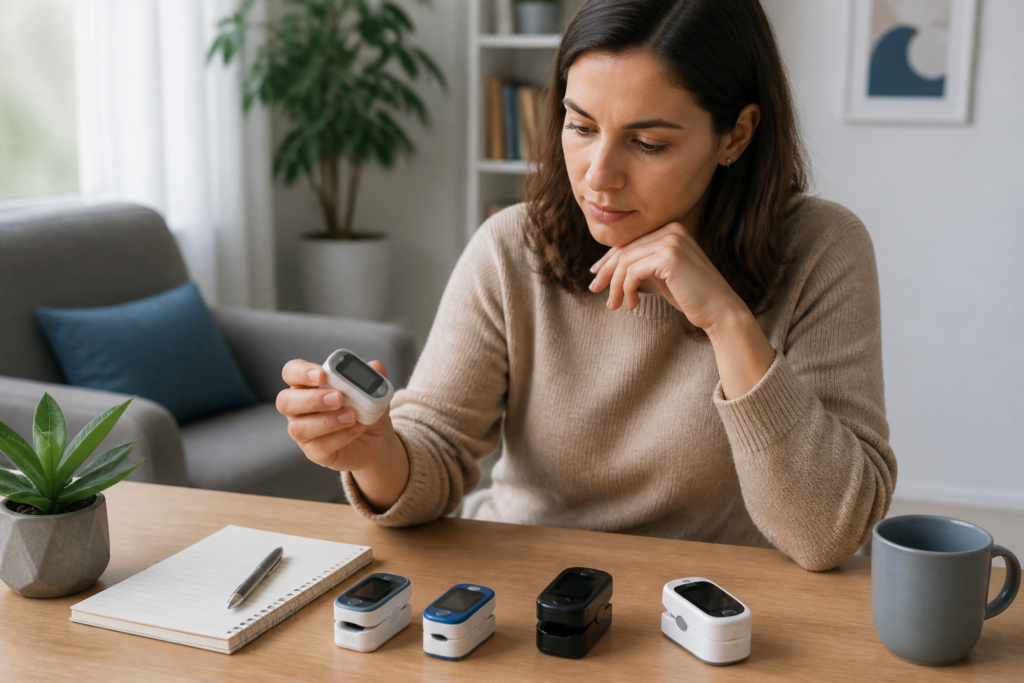
Look for a device clearly labeled for over-the-counter or home use and for non-continuous, spot-check monitoring. In the United States, “FDA registered” or “FDA certified” is not the same as FDA cleared or authorized. Registration generally refers to a manufacturer or facility listing and does not prove that a particular device has been reviewed for marketing.
Be cautious when a listing relies on a badge, certificate, or vague phrase such as “FDA approved” without naming the device, intended use, or manufacturer. A reputable seller should provide the exact model name, instructions for use, manufacturer contact information, and a return policy.
Check FDA clearance or authorizationIn Canada, look for a Canadian medical-device licence or ask the manufacturer for the licence information. A device sold in another country may not have the same regulatory status in Canada.
Search Canadian medical-device licencesThe sensor should fit your finger comfortably without being so loose that it moves. A bright, easy-to-read display is helpful if you are checking it at night or if a caregiver will read it. Rotating or adjustable displays can be convenient, but they do not make the oxygen estimate more accurate by themselves.
Read the instruction manual before buying if possible. It should explain the intended users, compatible finger sizes, how to clean the device, battery requirements, expected accuracy, and situations that may interfere with readings.
Most fingertip devices show SpO2 and pulse rate. Some also display a waveform, signal-strength indicator, or perfusion-related value. These features may help show whether the device is detecting a pulse, but they are not automatically medical decisions or proof of accuracy.
For most home users, dependable labeling, a proper fit, a steady signal, and readable numbers matter more than a long list of extra metrics.
When a number looks unusual, repeat the measurement carefully before drawing conclusions—unless you have severe symptoms that require urgent care.
Try another finger if the reading is unstable, but do not keep switching fingers to find the highest number. A single unusually high result should not reassure you if you feel significantly worse.
Several everyday conditions can interfere with the light signal or reduce blood flow at the fingertip. Cold hands, poor circulation, movement, an incorrect fit, bright ambient light, nail polish, artificial nails, and moisture can all affect a reading. Current tobacco use and some medical conditions can also complicate interpretation.
Skin pigmentation is another important limitation. The FDA and Health Canada have described evidence and ongoing concerns that pulse oximeters may be less accurate in people with darker skin pigmentation, particularly when oxygen levels are low. This does not mean every reading is unusable, but it does mean that symptoms, trends, and clinical assessment should not be ignored when the number appears reassuring.
Readings can also differ from a blood-gas measurement by several percentage points. Accuracy is generally less dependable at very low oxygen levels, which is one reason a device should not be used to decide that a person is safe when they look or feel seriously unwell.
| Reading or situation | Practical response |
|---|---|
| 95% to 100% for a person whose usual range is similar | Often falls within the commonly reported range, but continue to consider symptoms and the person’s medical plan. |
| A repeated reading around 92% or lower | Contact a healthcare provider for guidance, particularly if this is new or lower than usual. |
| 88% or lower, or a rapidly falling trend | Seek immediate medical attention. Do not delay because the device might be imperfect. |
| Any number with severe symptoms | Act on the symptoms. Trouble breathing, chest pain, blue or gray lips or face, confusion, fainting, or a person who is difficult to wake requires urgent emergency help. |
These thresholds are general information, not a personalized treatment plan. People with chronic lung disease, sleep-related breathing disorders, heart conditions, or prescribed oxygen may have different targets. Ask the treating clinician what range and action plan apply to you.
A pulse oximeter can be reassuring and still be wrong, especially when the reading does not match the person’s appearance or symptoms. Do not wait for a low number before seeking help if someone is struggling to breathe, has new chest pressure or pain, develops bluish or gray coloring, becomes confused, faints, or rapidly worsens.
For less severe concerns, contact a healthcare provider when readings are repeatedly below the person’s usual range, remain at 92% or lower, or are accompanied by increasing shortness of breath, weakness, or a worsening cough. Emergency services may be more appropriate than a routine appointment when symptoms are severe.
A. No. A 97% reading may fall within the commonly reported range, but it cannot rule out every serious problem. If someone has significant breathing trouble, chest pain, blue or gray lips or face, confusion, fainting, or rapid worsening, seek urgent help regardless of the display.
A. Not automatically. Wearable devices may estimate oxygen levels differently and may not be intended for medical monitoring. If you need home spot checks, choose a device whose labeling clearly states its intended use and limitations. Follow a clinician’s advice when monitoring a diagnosed condition.
A. Yes. Nail polish, artificial nails, very long nails, moisture, and poor sensor placement can interfere with the light signal. Remove nail products from the tested finger when practical and repeat the reading with a warm, still hand.
A. No, but skin pigmentation is a documented limitation that can affect performance, especially when oxygen levels are low. Treat the number as an estimate, pay attention to symptoms and trends, and contact a healthcare professional when the reading conflicts with how the person feels.