Welcome to KnowHow Daily!
Practical guides, money-saving tips, tech solutions, government benefits, and useful information for everyday life.
Welcome to KnowHow Daily!
Practical guides, money-saving tips, tech solutions, government benefits, and useful information for everyday life.

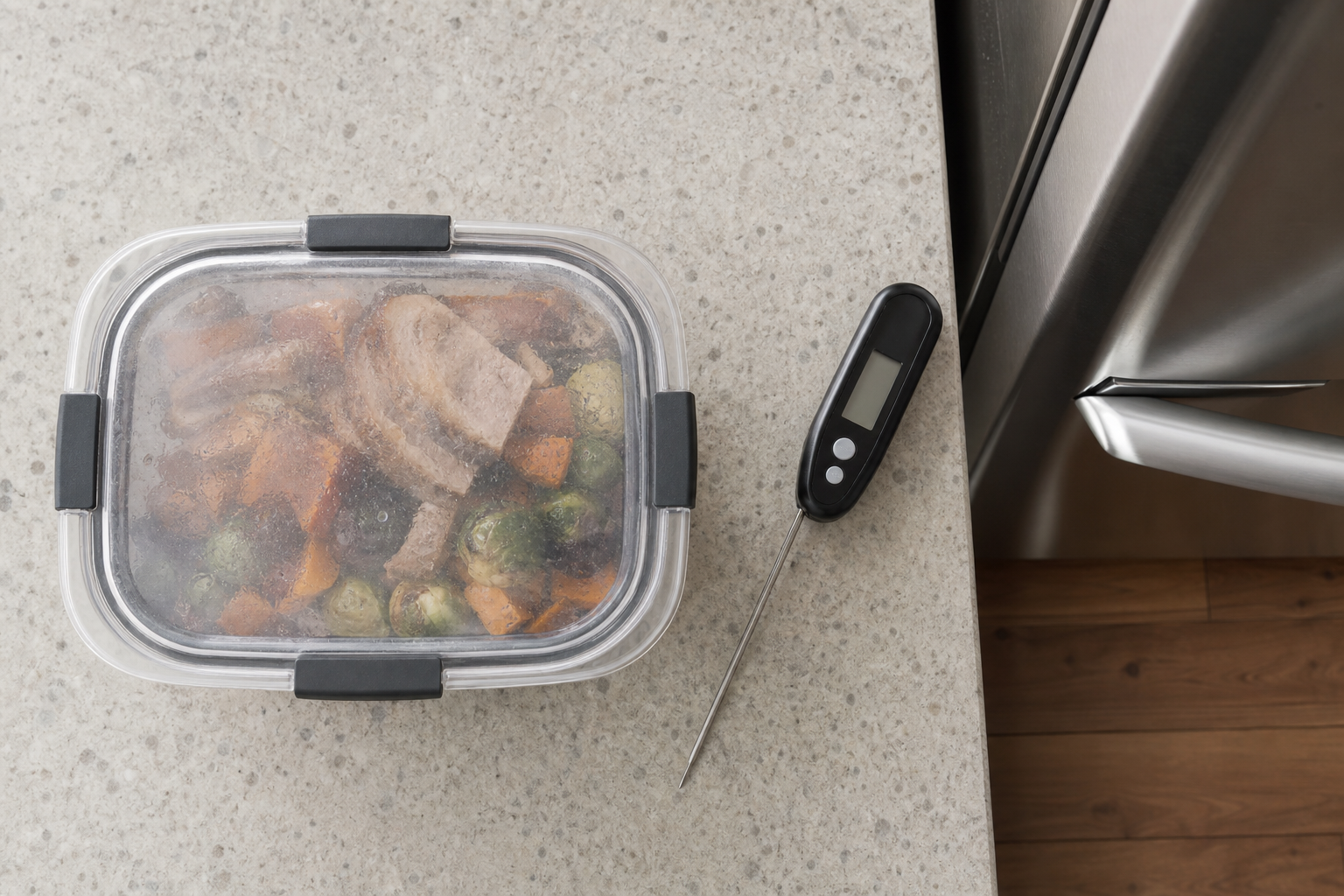
Learn how long leftovers, takeout, meat, dairy, and other perishable foods can sit out, plus safe refrigerator temperatures, reheating rules, and when to throw food away.
Most perishable foods should not sit at room temperature for more than two hours. That includes cooked leftovers, meat, poultry, seafood, eggs, dairy products, cut produce, prepared salads, takeout, and foods that normally need refrigeration.
When the air temperature is above 90°F (32°C), the safe limit drops to one hour. This shorter limit matters at outdoor gatherings, in hot kitchens, inside warm cars, and during summer meals.
The reason is bacterial growth. Food becomes especially risky in the temperature range between 40°F and 140°F (4°C and 60°C), often called the danger zone. Keeping food colder than 40°F or hotter than 140°F slows or limits the growth of many harmful bacteria.
The two-hour clock generally starts when food is removed from the refrigerator, oven, stovetop, cooler, or another appliance that is keeping it hot or cold. It applies to more than leftovers from dinner.
These limits are conservative because you usually cannot know exactly how warm the food became or how quickly bacteria multiplied. When the time is uncertain, throwing the food away is the safer choice.
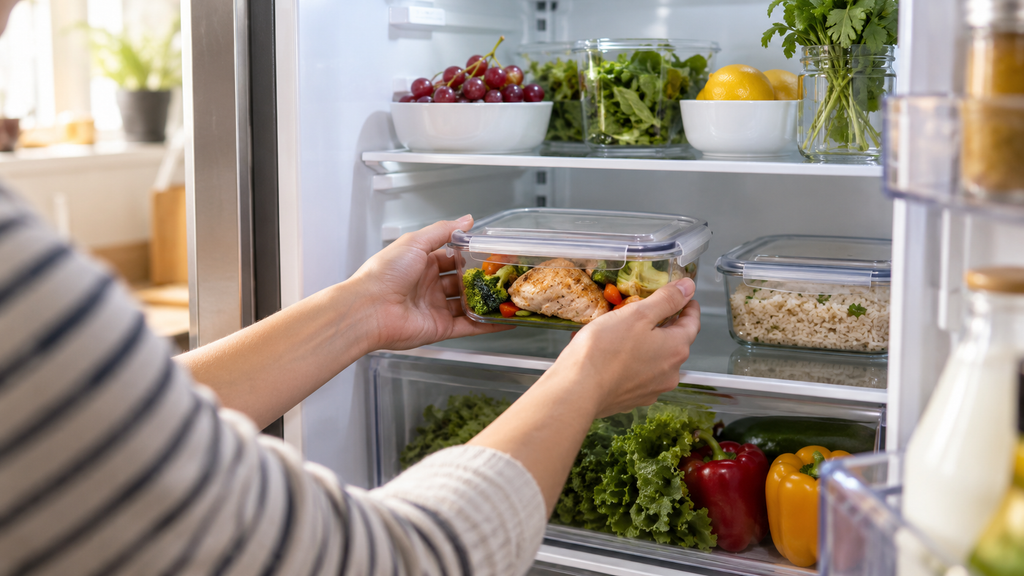
No. You do not need to leave a large pot of soup, a casserole, or a roast on the counter until it reaches room temperature. Waiting too long can keep the food in the danger zone for an extended period.
Instead, divide large amounts into shallow containers so they cool more quickly. Cut large pieces of meat into smaller portions, separate a large batch into several containers, and leave space around the containers so cold air can circulate. Once the food has stopped steaming heavily, cover it and store it in the refrigerator.
Keep the refrigerator at or below 40°F (4°C). An inexpensive appliance thermometer can help confirm that the refrigerator is actually cold enough, especially if the built-in dial does not show a temperature.
Refrigerate leftovers as soon as possible and use clean, shallow, covered containers. Marking the date on the container can help you keep track of how long the food has been stored.
U.S. guidance commonly recommends using refrigerated leftovers within three to four days. Health Canada also advises eating refrigerated leftovers within two to four days. If you will not use the food within that window, freezing it earlier is a better option than waiting until it is close to the limit.
When reheating leftovers, heat them to an internal temperature of 165°F (74°C). A food thermometer is more reliable than judging whether the food looks hot. In a microwave, cover the container, stir or rotate the food, and check more than one spot because microwaves can leave cold areas.
Bring soups, gravies, and sauces to a full boil while stirring. Reheat only the portion you plan to eat when possible, since repeated warming and cooling creates more opportunities for unsafe temperature changes.
| Situation | Safe temperature or limit |
|---|---|
| Refrigerator | 40°F (4°C) or colder |
| Freezer | 0°F (-18°C) or colder |
| Cold food held safely | 40°F (4°C) or colder |
| Hot food held safely | 140°F (60°C) or hotter |
| Most perishable food at room temperature | No more than 2 hours |
| Perishable food above 90°F (32°C) | No more than 1 hour |
| Reheated leftovers | 165°F (74°C) |
Safe cooking temperatures vary by food. In the United States, whole cuts of beef, pork, lamb, and veal generally reach at least 145°F (63°C) with a three-minute rest, ground meats reach 160°F (71°C), and poultry reaches 165°F (74°C). Health Canada’s cooking guidance uses similar temperatures, with leftovers reheated to 165°F (74°C).
Do not taste food to decide whether it is safe. Harmful bacteria may be present even when food looks, smells, and tastes normal. A sour smell, visible mold, unusual texture, leaking package, or bulging container is a clear reason to discard food, but the absence of those signs does not prove that food is safe.
This is especially important for cooked rice, pasta, meat, poultry, seafood, eggs, dairy-based dishes, casseroles, and prepared salads. These foods can support bacterial growth when left warm for too long.
Do not thaw meat, poultry, seafood, or frozen leftovers on the counter. The outside can warm into the danger zone while the center remains frozen.
Safe options include thawing in the refrigerator, in cold water, or in the microwave. If you use cold water, keep the food in a leak-proof package and change the water every 30 minutes. Food thawed in the microwave should be cooked immediately because parts of it may already have warmed.
Thawing in the refrigerator is the slowest option, but it keeps the food at a safer temperature and gives you more flexibility about when to cook it.
Anyone can become ill from unsafe food, but foodborne illness can be more serious for young children, adults age 65 and older, pregnant people, and people with weakened immune systems or certain medical conditions. For these groups, it is particularly wise to follow the time limits closely and avoid taking chances with food of uncertain age or storage history.
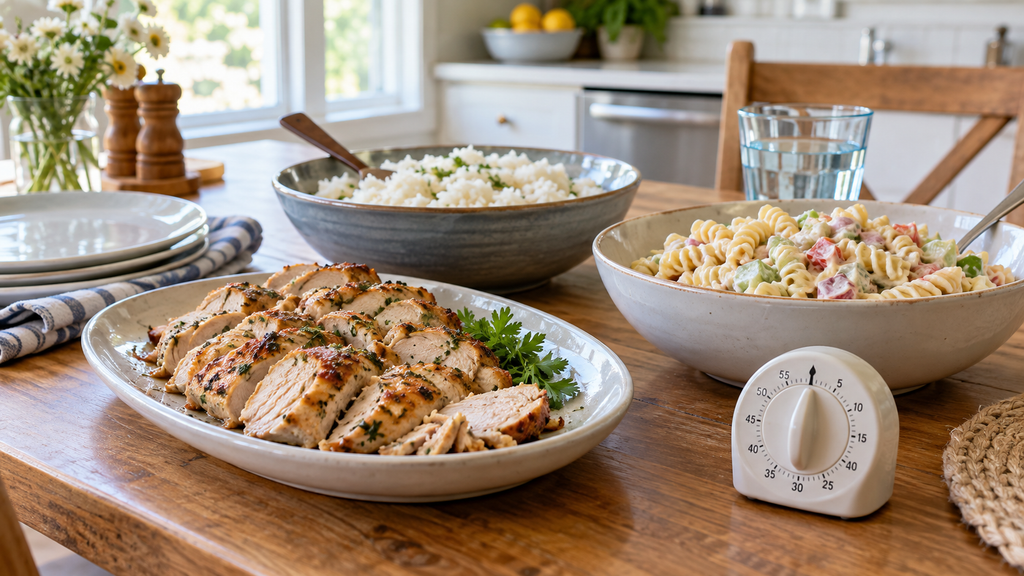
The practical rule is straightforward: if perishable food has been sitting out for more than two hours, or more than one hour in hot conditions, do not try to rescue it by reheating. Discard it and avoid relying on smell or appearance to make the decision.
A. No. Pizza with cheese, meat, or other perishable toppings should be discarded if it was left at room temperature overnight. Reheating may kill some bacteria, but it cannot reliably reverse all risks created by prolonged improper storage.
A. Yes. Do not leave hot food on the counter for hours. Divide large amounts into shallow containers so they cool faster, then refrigerate them promptly. Avoid placing a very large, tightly packed pot in the refrigerator because it may cool too slowly.
A. No. Smell, appearance, and taste cannot reliably detect harmful bacteria. If food has been left out too long or its storage history is uncertain, discard it rather than tasting it as a test.
A. Thaw it in the refrigerator, in cold water, or in the microwave. Food thawed in cold water or the microwave should be cooked promptly. Do not thaw perishable food on the kitchen counter.