Welcome to KnowHow Daily!
Practical guides, money-saving tips, tech solutions, government benefits, and useful information for everyday life.
Welcome to KnowHow Daily!
Practical guides, money-saving tips, tech solutions, government benefits, and useful information for everyday life.

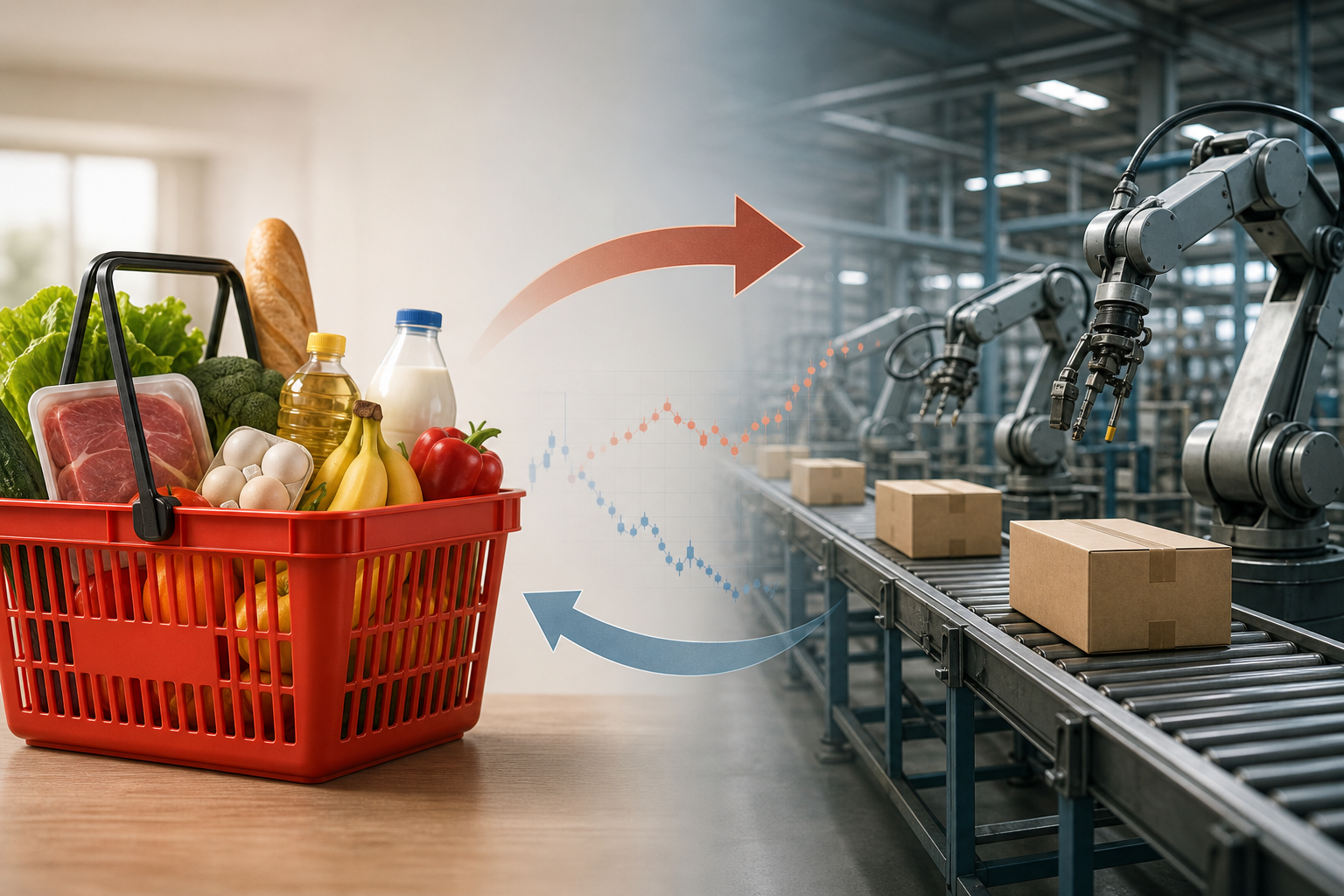
CPI and PPI measure different parts of inflation. Learn how each index works, why they can move differently, and which one matters for households and businesses.

The Consumer Price Index, or CPI, tracks how prices change for goods and services purchased by urban households. The Producer Price Index, or PPI, tracks how prices change for goods and services sold by domestic producers.
That difference in viewpoint is the key. CPI looks at inflation from the buyer’s side of a transaction. PPI looks at it from the seller’s side. Neither index is a complete measure of all inflation, and they are not interchangeable.
If you’re trying to understand why your groceries, rent, utilities, or medical bills are changing, CPI is usually the more relevant measure. If you run a business, negotiate a long-term contract, or want to understand pressure on production costs, PPI may be more useful.
The CPI measures changes in the prices consumers pay for a broad basket of goods and services. The basket includes categories such as food, housing, apparel, transportation, medical care, recreation, education, communication, and other personal expenses.
The U.S. Bureau of Labor Statistics collects prices from retail and service businesses in sampled urban areas. It also collects rent data from landlords and tenants. Spending weights are based on consumer expenditure data, so categories that represent a larger share of household spending have more influence on the overall index.
That weighting is why housing matters so much to the CPI. A change in rent or the estimated cost of housing can affect the headline index more than a similar percentage change in a smaller spending category.
The CPI includes consumer-paid sales and excise taxes connected with purchases. It does not include income taxes or investment prices such as stocks, bonds, and life insurance.
The most commonly discussed measure is CPI-U, the Consumer Price Index for All Urban Consumers. It covers more than 90 percent of the U.S. population. CPI-W covers urban wage earners and clerical workers and is used in some wage and benefit adjustments.
You’ll also hear about “core CPI,” which generally excludes food and energy. Core measures can make underlying trends easier to see because food and energy prices often move sharply. However, households still pay for food and energy, so excluding them doesn’t mean those costs are unimportant to your budget.
The PPI measures average changes over time in prices received by domestic producers for their output. It covers goods, services, construction, utilities, and many industries across the U.S. economy.
For example, PPI data can track prices received by manufacturers, farms, construction companies, transportation providers, wholesalers, and service businesses. Depending on the index, the price may relate to a product, an industry’s output, or a stage in the supply chain.
PPI is organized in several ways. Commodity indexes group products by what they are, while industry indexes focus on the output of particular industries. The Final Demand–Intermediate Demand system groups prices according to whether the buyer is making a final purchase or using the item as an input for further production.
Because PPI focuses on prices received by sellers, its prices can differ from the prices ultimately paid by consumers. Taxes, subsidies, distribution costs, retail markups, and changes in profit margins can all affect the gap between producer and consumer prices.
| Feature | CPI | PPI |
|---|---|---|
| Main viewpoint | Prices paid by consumers | Prices received by producers |
| Typical users | Households, workers, benefit programs, economists | Businesses, contract negotiators, economists, policymakers |
| What it covers | Consumer goods and services | Producer goods, services, construction, and industry output |
| Housing treatment | Includes rent and an owners’ equivalent rent measure | Tracks relevant producer or industry prices rather than household housing costs |
| Taxes and distribution | Includes certain consumer-paid sales and excise taxes | Producer and purchaser prices may differ because of taxes, subsidies, and distribution costs |
| Best question answered | How is the cost of living changing for consumers? | How are selling prices and production costs changing for businesses? |
It’s normal for CPI and PPI to rise at different rates or even move in opposite directions for a period of time. They cover different transactions, use different baskets, and respond to different forces.
Suppose the price of a raw material falls. A manufacturer may pay less for that input, causing a relevant PPI measure to decline. Retail prices may not fall right away because the retailer still has older inventory, transportation costs remain high, or the company uses the savings to rebuild its profit margin.
The reverse can happen, too. A business may face higher producer prices but absorb part of the increase rather than pass it on immediately. Competition, weak demand, long-term contracts, and pricing strategies can delay or reduce the effect on consumer prices.
Services create another important difference. Consumer prices include services such as rent, medical care, insurance, education, and personal services. PPI also covers many services, but it measures prices received by service producers and uses industry-specific classifications. The two indexes are not measuring the same service transaction from two perfectly matching sides.
Businesses often use PPI to monitor changes in the prices they receive or the costs associated with production. It can help a company identify whether an industry is experiencing broad pricing pressure or whether a change is limited to a particular product.
PPI is also used in some contracts. A long-term agreement may include an escalation clause that adjusts payments according to a specified producer-price index. The exact index matters: a general PPI measure may not be appropriate for a contract involving a specific material, service, or industry.
Companies may also use PPI data when preparing budgets, analyzing margins, comparing industry trends, or converting economic data into inflation-adjusted dollars.
For households, CPI is the better starting point for understanding changes in everyday expenses. It can help put news about inflation into context, although the national index will not match every family’s personal spending pattern.
A renter may feel inflation differently from a homeowner. A household that drives long distances may be more exposed to gasoline prices, while another household may spend more on childcare, medical services, or groceries. Personal inflation depends on what you buy and how often you buy it.
CPI data can also be relevant when employers, benefit programs, leases, or other agreements use an inflation adjustment. The applicable index and adjustment formula should always be checked carefully because a contract may use CPI-U, CPI-W, a regional index, or a specific category rather than the headline CPI.
PPI can provide clues about future consumer-price pressure, especially when producer prices rise across important parts of the supply chain. But it is not a guaranteed forecast of CPI.
Whether a producer-price change reaches consumers depends on several factors: the size of the change, how long it lasts, inventory levels, competition, labor costs, transportation, exchange rates, demand, and business profit margins. Some producer-price increases are absorbed by companies, while others are passed through quickly.
It’s better to think of PPI as one piece of information about upstream pricing pressure rather than a direct early version of CPI. CPI is the measure to use when the question is specifically about consumer purchasing costs.
Before relying on either index, check the exact series, geographic coverage, adjustment type, and time period. “Inflation” is not one single price change. The answer can differ depending on whose prices are being measured and which products or services are included.
A. Neither is universally better. CPI is the better measure for consumer purchasing costs and household budgets, while PPI is better for producer prices, industry conditions, and business pricing pressure.
A. Businesses may absorb higher costs, use existing inventory, face strong competition, or delay price changes. Distribution costs, taxes, demand, and profit margins can also prevent producer-price changes from appearing immediately in consumer prices.
A. CPI includes rent and an owners’ equivalent rent measure for owner-occupied housing. It does not treat the purchase price of a home as an ordinary monthly consumer purchase in the same way as rent.
A. Only if the contract specifies a PPI series and adjustment method that allows it. The parties should identify the exact index, reference dates, calculation formula, and treatment of revisions before applying an adjustment.