Welcome to KnowHow Daily!
Practical guides, money-saving tips, tech solutions, government benefits, and useful information for everyday life.
Welcome to KnowHow Daily!
Practical guides, money-saving tips, tech solutions, government benefits, and useful information for everyday life.

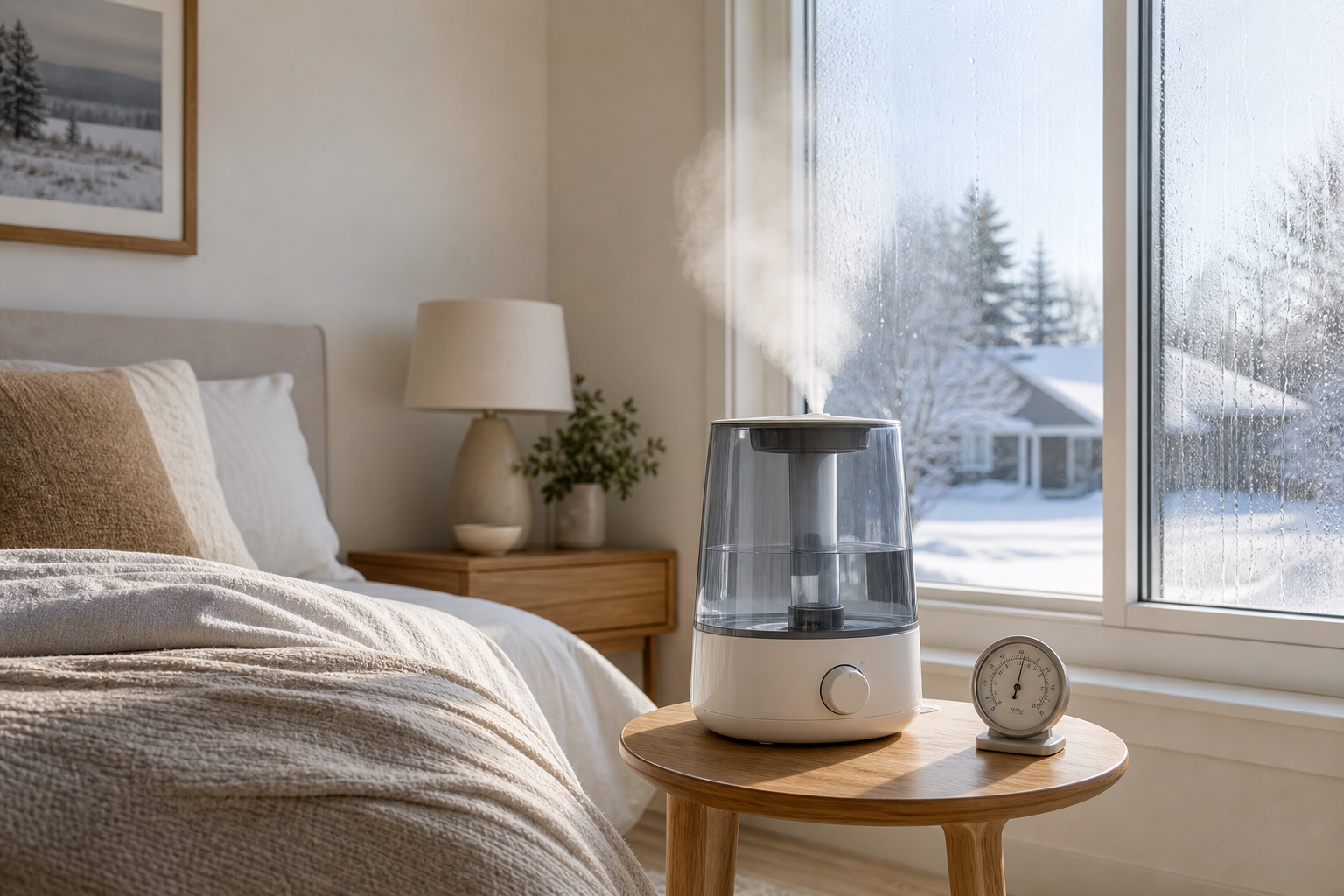
Learn how to choose a humidifier for dry winter air, compare cool-mist, evaporative, and steam models, and follow safer cleaning and humidity-control practices.
Choosing a humidifier isn’t mainly about finding the biggest tank or the highest mist setting. The better question is whether the unit can add moisture without making the room damp, spreading mineral residue, or becoming too difficult to clean regularly.
For most homes in the United States and Canada, aim to keep indoor relative humidity around 30% to 50%. A basic hygrometer can tell you whether you actually need more moisture. If you see condensation on windows, damp carpet, wet walls, or moisture collecting around the machine, turn the output down or stop using it.
The most important distinction is how each humidifier creates moisture. Ultrasonic and impeller models release a visible cool mist. Evaporative models use a fan and a wet wick or filter. Steam vaporizers heat water and release warm moisture. Those designs differ in noise, maintenance, mineral exposure, energy use, and safety.
| Type | How it works | Main advantages | Important trade-offs |
|---|---|---|---|
| Ultrasonic | High-frequency vibrations turn water into a fine mist. | Usually quiet, compact, and often energy-efficient. | Can disperse minerals and microorganisms from the tank if poorly maintained; low-mineral water may be needed. |
| Impeller cool mist | A rotating disk breaks water into droplets. | Cool output and generally simple operation. | Like ultrasonic models, it may disperse minerals and contaminants from standing water. |
| Evaporative | A fan moves air through a moistened wick, belt, or filter. | Typically limits mineral dispersal and naturally moderates output as room air becomes more humid. | Fan noise, replacement wicks, and regular filter maintenance can add ongoing cost. |
| Steam or warm mist | An electrical element or electrodes heat water to create steam. | Generally does not disperse substantial amounts of minerals into the air. | Hot water and steam can cause burns; heating water also uses more energy than some other designs. |
None of these types is automatically “the safest” in every home. A neglected evaporative humidifier can still grow microorganisms, and an ultrasonic model can be reasonable when it is cleaned consistently and operated with suitable water. The household’s maintenance routine matters as much as the technology.
For a bedroom, nursery, or apartment, an ultrasonic humidifier may be appealing because it is often quiet and small. The catch is that the mist can carry minerals from the water into the room. With hard tap water, that may leave a fine white dust on furniture and nearby surfaces. The tank can also become a source of microorganisms if water sits in it.
Use low-mineral water, such as distilled water, when the manufacturer allows or recommends it. You’ll also need to empty and refill the tank frequently and clean the unit according to the instructions. Distilled water can reduce mineral buildup, but it does not eliminate the need for cleaning.
Evaporative humidifiers are often a better fit for households that want less mineral residue or don’t want to buy distilled water regularly. The wick or filter captures minerals as water evaporates, although that filter becomes another part to inspect and replace. A fan also means the unit may be more noticeable at night.
Choose ultrasonic if quiet operation and compact size are your top priorities and you’re comfortable using suitable water and maintaining the tank. Choose evaporative if you want a more forgiving design for everyday use and don’t mind fan noise or replacement wicks.
Steam and warm-mist humidifiers boil or heat water before releasing moisture. Because the water is heated, these models generally disperse fewer minerals than ultrasonic or impeller units. They can be useful when mineral residue is a major concern.
The main drawback is safety. Steam and boiling water can burn a child who touches the machine, pulls it over, or reaches toward the outlet. Keep a steam unit well out of children’s reach, away from the edge of furniture, and on a stable, water-resistant surface. A cool-mist model is usually the safer choice for a child’s room when there is a realistic risk of contact with hot water.
Steam models may also use more electricity because they heat water. That doesn’t necessarily make them a poor choice, but it is worth considering if the humidifier will run for many hours each day.
Match the humidifier’s recommended room area to the space where you’ll use it. An oversized unit in a small bedroom can push humidity too high, while an undersized unit may run constantly without making much difference. Manufacturer room-size ratings are not perfectly comparable across brands, so treat them as a starting point rather than a guarantee.
A built-in humidistat is useful because it can turn the unit down or off as humidity rises. Even then, verify the result with a separate hygrometer. Place the humidifier on a stable, elevated, water-resistant surface with room for air to circulate around it. Keep mist away from walls, curtains, bedding, books, electronics, and wood furniture.
Start at a low setting and watch the room for several hours. If windows fog or nearby surfaces feel damp, the output is too high or the unit is too close to a cold surface. Humidity needs also vary by climate and building. In a cold Canadian winter, raising humidity too far can create condensation on windows and hidden moisture problems inside exterior walls.
Any humidifier with a water tank needs a routine. Standing water can support microbial growth, and scale can build up on internal surfaces. A humidifier that is difficult to take apart, rinse, and dry is likely to become a maintenance problem no matter how attractive its feature list looks.
For portable humidifiers, the U.S. Environmental Protection Agency recommends cleaning every third day. Scrub away scale, film, and deposits from the tank and water-contact surfaces. If you use a cleaning or disinfecting product, rinse the tank thoroughly with several changes of water so residue is not dispersed into the air.
Clean and dry the unit before storage. Replace or discard used wicks, filters, and demineralization cartridges as directed. When you bring the humidifier out again, clean it before refilling it.
Don’t add essential oils, fragrances, disinfectants, or medication to the tank unless the manufacturer specifically designed the model for that purpose. A product that is safe for a diffuser may damage a humidifier or release substances that were never intended to be inhaled.
Be cautious with models that promise health benefits beyond adding moisture. A humidifier may relieve discomfort caused by dry air, but it is not an air purifier, mold treatment, or replacement for medical care. If using a humidifier seems to trigger coughing, breathing problems, or other respiratory symptoms, stop using it and speak with a healthcare professional.
Choose an evaporative humidifier if you want a balanced option for a bedroom or living area and prefer to limit mineral dispersal. Choose an ultrasonic humidifier if quiet operation and compact size matter most, and you’re willing to use suitable water and maintain it carefully. Choose a steam humidifier if warm mist and lower mineral dispersal are priorities, provided you can keep hot surfaces and water safely away from children.
Whichever design you buy, purchase a hygrometer at the same time, keep humidity within a controlled range, and favor the model you’ll realistically clean every few days. That combination is more important than a larger tank, extra mist settings, or decorative features.
A. It depends on the humidifier and your local water quality. Tap water can contain minerals that build up inside ultrasonic and impeller models and may be dispersed into the air. Check the manual, and consider distilled or otherwise low-mineral water when the manufacturer permits it. Evaporative models are generally less likely to disperse minerals, but they still need regular cleaning.
A. A cool-mist design avoids the hot water and steam burn hazard associated with steam vaporizers. It is still not risk-free: keep the unit out of reach, prevent cords from becoming accessible, and follow the cleaning and water instructions carefully.
A. Use a hygrometer rather than relying only on how the air feels. Condensation on windows, damp surfaces, musty odors, or visible moisture around the humidifier are warning signs. Reduce or stop humidifier use if those conditions appear.
A. A humidifier adds moisture and may ease irritation associated with dry air, but it does not replace medical treatment or guarantee protection from infections. Poorly maintained humidifiers can worsen indoor-air problems by dispersing microorganisms or minerals.