Welcome to KnowHow Daily!
Practical guides, money-saving tips, tech solutions, government benefits, and useful information for everyday life.
Welcome to KnowHow Daily!
Practical guides, money-saving tips, tech solutions, government benefits, and useful information for everyday life.


Canada’s September 8, 2026 surtax can add 15%, 25% or 50% to certain U.S.-origin goods, even below de minimis thresholds. Here’s how to check your order.

Canada’s new measure can make some American products more expensive to import. Effective September 8, 2026, certain goods originating in the United States are subject to a surtax of 15%, 25% or 50% of their value for duty.
The key point is that this is not a blanket fee on every package from a U.S. website. The product must be covered by the official tariff list, and it must qualify as originating in the United States under Canada’s marking rules. The seller’s website address, the warehouse location and the shipping route can help explain how the parcel reaches Canada, but they do not by themselves determine whether the surtax applies.
The measure applies to commercial imports and personal online purchases. It can also apply when the goods are exported to Canada from another country, if the goods are U.S.-origin products.
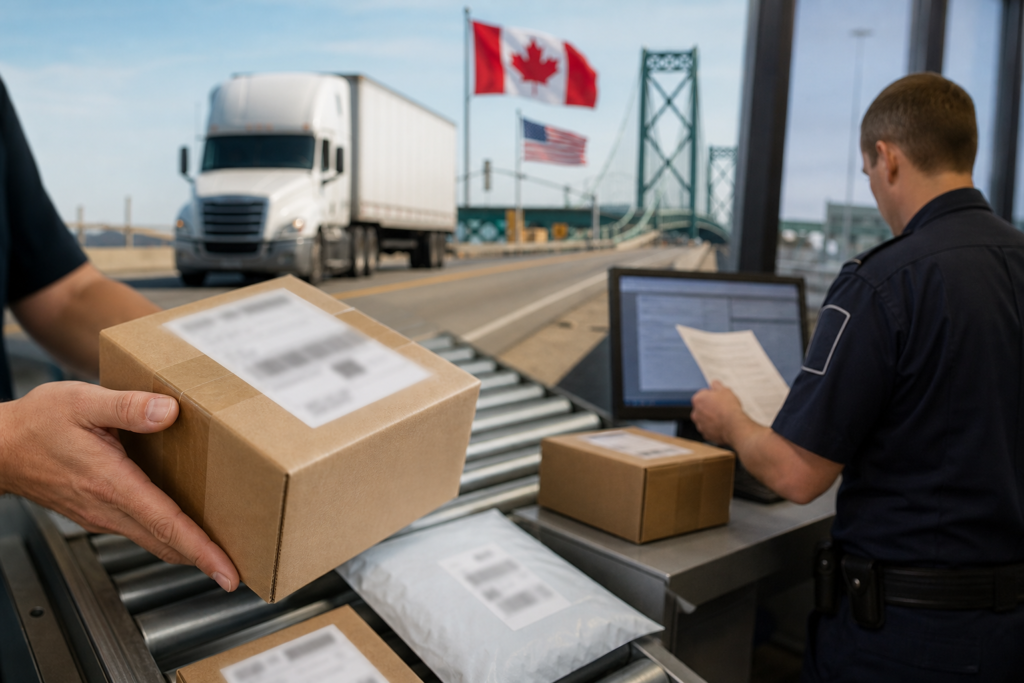
Before placing an order, check four details: what the product is, where it was made, where it will ship from and how it is classified for customs purposes.
The complete Canadian list is the best starting point, but its descriptions are indicative and must be read with the Customs Tariff and the product’s exact classification. If the purchase is for a business, the importer may need more detailed customs documentation than a casual consumer.
Read CBSA Customs Notice 26-23
There are two different ideas that are easy to confuse: country of origin and country of export.
Country of origin generally describes where the goods were made or otherwise acquired their applicable origin under customs rules. Country of export describes where the shipment begins its journey to Canada.
For example, imagine a U.S.-origin product stored in a European warehouse. If the item is covered by the Canadian surtax, sending it from Europe does not automatically remove the charge. CBSA’s September 7 notice says the surtax applies to covered U.S.-origin goods even when they are exported from a country other than the United States.
The same principle works in reverse. A product ordered from a U.S. retailer is not automatically U.S.-origin. The retailer may be selling goods manufactured elsewhere, and the customs treatment may depend on the actual product and its origin documentation.
The surtax is only one possible part of the landed cost. Depending on the product, shipping method and province, a Canadian buyer may also see ordinary customs duty, GST or HST, provincial tax, excise charges and a courier or postal handling fee.
| Charge | What it is | Who receives it |
|---|---|---|
| Surtax | A 15%, 25% or 50% charge on covered U.S.-origin goods | Canadian government through the import process |
| Customs duty | The ordinary tariff rate for the product, if applicable | Canadian government |
| GST/HST or other tax | Sales or import tax based on the applicable rules | Government, sometimes collected at checkout or at import |
| Brokerage or clearance fee | A private fee for customs processing by a courier or broker | Courier or customs broker |
CBSA states that GST is calculated on the value for tax, which includes the surtax even when customs duties are remitted. That means a covered item can produce a tax calculation that is higher than the product’s original customs value.
For a simplified example, if the value for duty is CAD 100 and the applicable surtax is 25%, the surtax would be CAD 25. Any applicable GST/HST calculation may then use a value that includes that CAD 25, along with any other amounts required under the import rules. The actual total depends on the product, province, shipping method and tax treatment.
Canada’s low-value shipment rules can reduce or remove ordinary duties and taxes for some small shipments. For courier shipments from the United States or Mexico, the existing framework generally provides duty and tax relief at different thresholds: shipments up to CAD 40 can qualify for duty and tax relief, shipments above CAD 40 and up to CAD 150 can qualify for duty relief while taxes still apply, and shipments above CAD 150 are generally subject to applicable duties and taxes.
Those thresholds do not create a blanket exemption from the new U.S. surtax. CBSA specifically says that the surtax applies to covered U.S.-origin goods even when the shipment qualifies for remission under the Postal Imports Remission Order or Courier Imports Remission Order.
Mail shipments follow different low-value rules, and exceptions apply to products such as alcohol, tobacco, publications and other regulated goods. A small parcel is therefore not automatically free of every import charge.
Check Canada’s low-value shipment thresholds
The notice includes several exceptions. The most relevant for shoppers is the transition rule for goods already in transit to Canada when the surtax took effect at 12:01 a.m. on September 8, 2026. The importer must be able to prove that the goods were already in transit and under a carrier’s control before the effective time.
Possible evidence includes shipping documents, a bill of lading, report-of-entry documents or cargo-control records. A checkout receipt by itself may not prove that the parcel was already in transit.
Other specialized exceptions cover certain goods returned after prior importation, some goods repaired or altered across the border, temporary imports by non-residents, and goods covered by specific customs programs. These exceptions are fact-specific and should not be assumed to apply to an ordinary online order.
If a parcel arrives with a charge that appears incorrect, separate the government assessment from the courier’s private fee. CBSA may review duties and taxes through its adjustment process, but it does not refund ordinary brokerage, shipping or handling fees charged by a courier.
Small businesses may face more paperwork than casual shoppers. Commercial importers must classify the goods, determine origin, calculate the surtax and account for it through the applicable commercial import process. The September 7 notice lists separate surtax codes for the 15%, 25% and 50% rates.
Businesses that regularly import covered products should review supplier origin statements, tariff classifications and customs-broker instructions before the first affected shipment. If classification or origin is genuinely uncertain, a binding advance ruling may provide more certainty than relying on a product page or a supplier’s informal description.
The practical decision rule is simple: do not ask only, “Is this package coming from the United States?” Ask, “Is this product covered by the Canadian list, and is it considered U.S.-origin under the customs rules?”
A. No. The surtax applies to specific goods that are covered by Canada’s tariff schedules and considered U.S.-origin. A product sold by a U.S. retailer may have been made elsewhere, while a U.S.-origin product shipped from another country may still be covered.
A. Not necessarily. CBSA says the surtax can apply to covered U.S.-origin goods even when the shipment qualifies for remission of ordinary customs duties, sales tax or excise tax under a postal or courier low-value program.
A. No. The surtax is a government import charge based on the value for duty. GST/HST is a separate tax, and brokerage or clearance charges are private fees charged by a courier or customs broker.
A. Covered goods that were already in transit to Canada and under a carrier’s control when the surtax took effect may qualify for the transition exception. You may need shipping or cargo documents to prove the shipment was already in transit.
A. CBSA does not refund private brokerage, shipping or handling fees. Contact the courier or broker about those charges. Government duties and taxes may be eligible for an adjustment through the applicable CBSA process.










FDA Infant Formula Standards Proposal: What Parents Need to Know About Nutrient Changes and the Comment Deadline