Welcome to KnowHow Daily!
Practical guides, money-saving tips, tech solutions, government benefits, and useful information for everyday life.
Welcome to KnowHow Daily!
Practical guides, money-saving tips, tech solutions, government benefits, and useful information for everyday life.

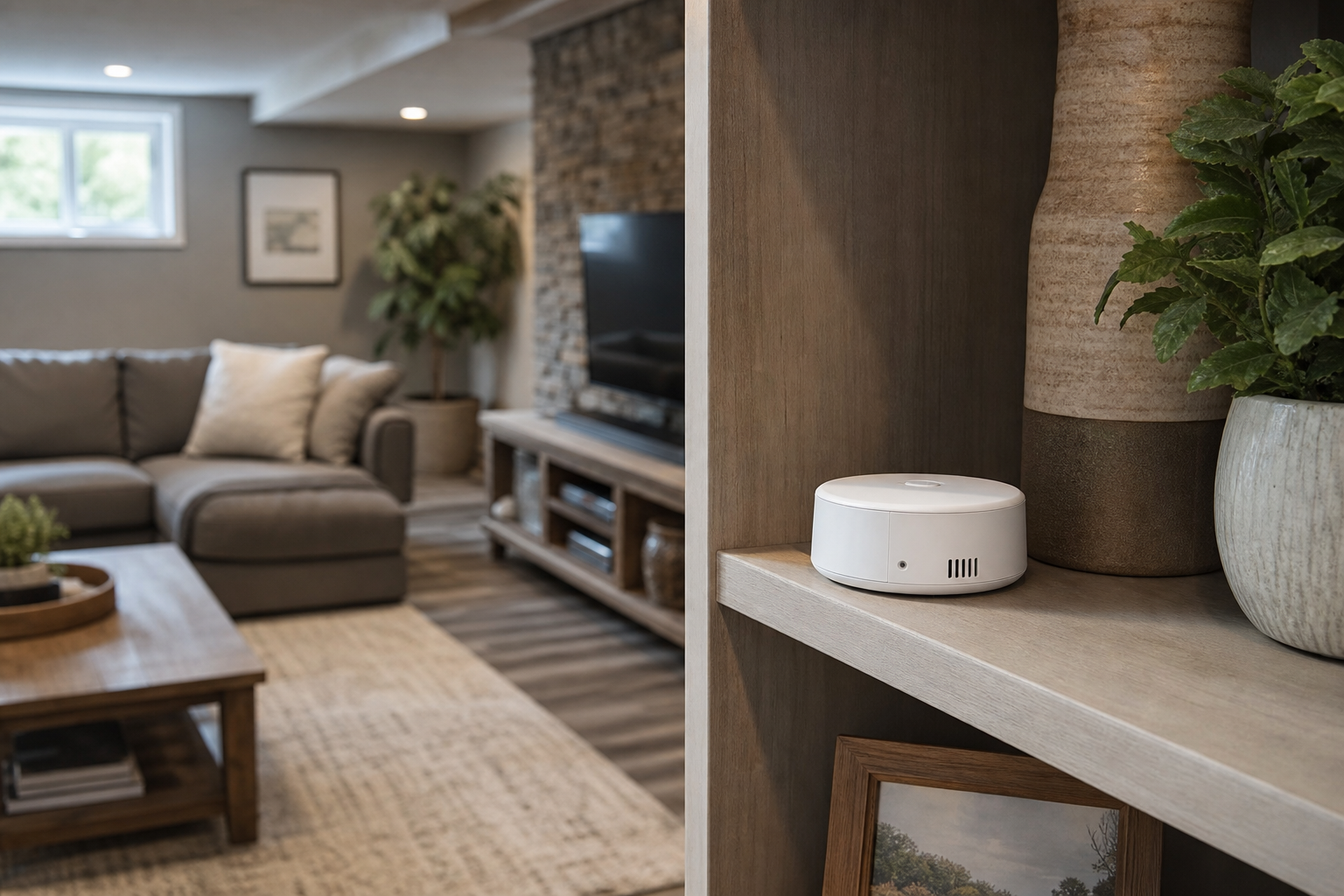
Learn how to test for radon in Canada and the U.S., choose between short- and long-term detectors, place a kit correctly, and respond to a high result.
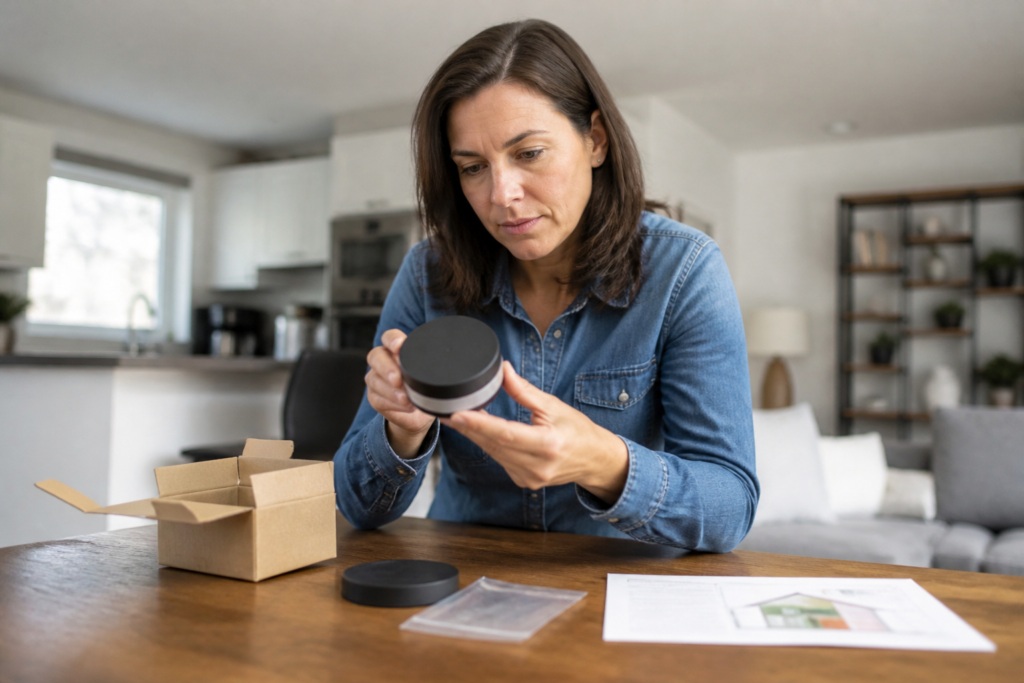
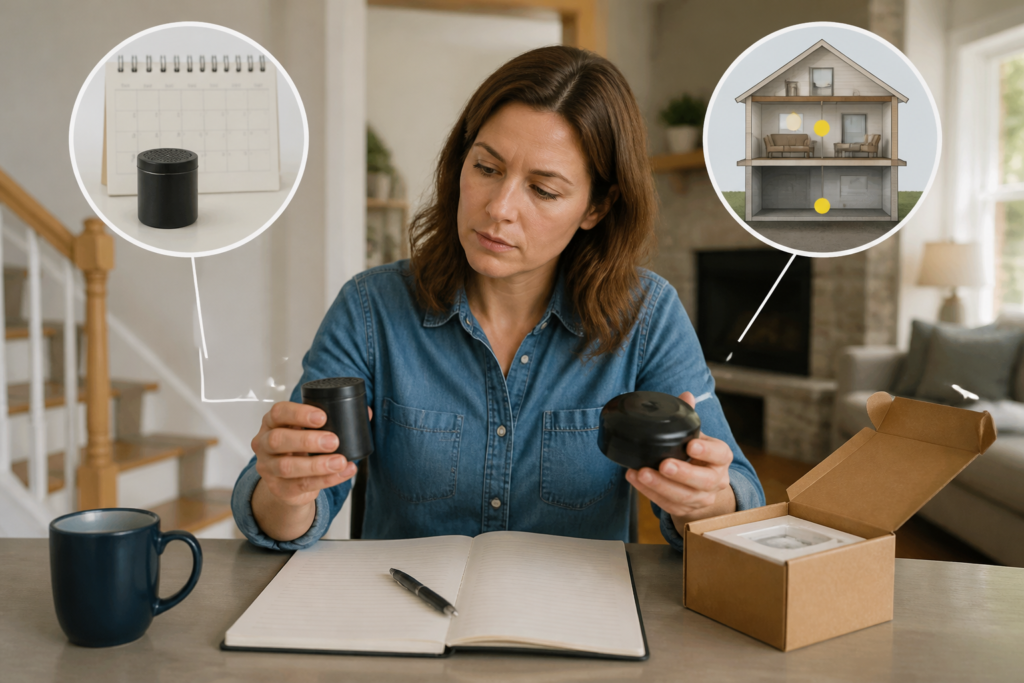
The best general approach is a long-term test placed on the lowest level of your home that people regularly use. Leave it in place for at least 90 days, or at least three months in Canada, then compare the long-term average with the guidance for your country.
A short-term test can be useful when you need an initial answer quickly, such as during a home purchase. It usually takes between two and 90 days in the United States, depending on the device, and many short-term kits run for two to seven days. The trade-off is that radon levels change from day to day and season to season, so a short test is less representative of your home’s annual average.
Radon is an invisible, odorless radioactive gas that can enter through cracks, joints, drains, sump openings, and other gaps where a home meets the ground. Testing is the only practical way to know whether your indoor level is elevated. A newer home, a home with radon-resistant construction, or a home that has already been tested should still be checked when circumstances change.
| Test type | Typical duration | Best for | Main limitation |
|---|---|---|---|
| Short-term kit | 2 to 90 days in the U.S.; commonly a few days | Getting an early indication or meeting a real-estate timeline | More affected by weather, ventilation, and short-term fluctuations |
| Long-term kit | More than 90 days | Estimating the home’s typical annual exposure | Results take longer |
| Electronic radon monitor | Usually used continuously for weeks or months | Watching trends and seeing a long-term average | Quality varies; the device must be suitable for long-term measurement |
Common passive devices include charcoal canisters, alpha-track detectors, and electret ion chambers. Electronic monitors actively sample or analyze the air and may show hourly, daily, and long-term averages. A live number on a screen can be helpful, but it does not replace a sufficiently long test when you are deciding whether the home needs mitigation.
In Canada, choose a long-term detector or electronic monitor that has passed Canadian National Radon Proficiency Program, or C-NRPP, performance testing. Health Canada does not endorse one approved device over another, so the key question is whether the model appears on the current approved list and can provide a valid long-term average.
Check approved Canadian electronic radon monitorsCanada: Find a radon test kit through Take Action on Radon
Choose the lowest level of the home where someone spends at least four hours a day. That may be a finished basement bedroom, family room, office, playroom, or the main floor if the basement is unfinished or rarely occupied.
Set the detector in the normal breathing zone, generally at least 30 centimeters, or about one foot, above the floor. Place it on a shelf, table, dresser, or other stable surface where children and pets cannot disturb it. Leave enough open space around the device for normal airflow.
Keep the detector away from:
Follow the instructions supplied with the specific kit if they are more restrictive. Do not move the detector during the test, and do not change your normal living habits simply to influence the result.
For a quick first check, follow the kit’s stated duration. U.S. EPA guidance says a short-term test should run for at least 48 hours, although some devices require longer. Avoid treating a two-day result as a complete picture of the home’s annual exposure.
For a more dependable decision, use a long-term test for more than 90 days. Health Canada recommends testing for three to 12 months and says at least 91 days should occur during the heating season when possible. Colder months can produce higher readings because homes are closed up more tightly and pressure differences can draw more soil gas indoors.
If a Canadian test runs for at least 91 days but has fewer than 91 heating-season days and the result is below 200 Bq/m³, Health Canada recommends testing again during the next heating season. If the result is already above 200 Bq/m³, take action rather than waiting for a second test to justify concern.
| Location | Guidance | What to compare |
|---|---|---|
| Canada | Take corrective action when the average annual level exceeds 200 Bq/m³. | The long-term average from a test lasting at least 91 days |
| United States | Fix the home at 4 pCi/L or higher. Consider reducing levels between 2 and 4 pCi/L. | The result from a long-term test or the average of appropriate follow-up short-term tests |
These numbers are not interchangeable without conversion. One pCi/L is approximately 37 Bq/m³, so the U.S. action level of 4 pCi/L is about 150 Bq/m³. Canada uses a higher national reference level of 200 Bq/m³, while also recognizing that there is no completely risk-free radon concentration.
Use the longest and most representative average your detector provides. Hourly spikes on an electronic monitor are not interpreted the same way as a long-term average. A result close to an action level also includes some measurement uncertainty, so a qualified professional can help when the reading is borderline or the test conditions were imperfect.
Do not panic, and do not assume opening windows for a few days solves the problem. Temporary ventilation can change a reading, but it is not a dependable mitigation system.
If your result is high, confirm that the test was placed correctly and that the device was used according to its instructions. In the U.S., a short-term result of 4 pCi/L or higher is generally followed by another test, often a second short-term test or a long-term test when time allows. In Canada, decisions should be based primarily on a long-term test of at least 91 days.
The next step is to contact a qualified radon mitigation professional. Mitigation commonly involves reducing soil gas entry and using a fan-assisted system to move radon from beneath the home to the outdoors, but the right design depends on the foundation, drainage, soil, and construction.
Canada: Look for a C-NRPP-certified radon mitigation professional.
United States: Start with your state radon program, then verify whether the professional is credentialed through a state process, the National Radon Proficiency Program, or the National Radon Safety Board.
Find U.S. radon testing or mitigation professionalsEvery home should be tested, including apartments, condos, homes above ground level, and properties that already have a mitigation system. Lower levels often have higher readings, but radon can vary significantly between neighboring homes and even between units in the same building.
Renters can ask the landlord or property manager whether a recent long-term test exists and whether the tested unit and floor match their living space. If not, a renter can ask about arranging a test or contact the relevant public-health or state radon program for local guidance.
Home buyers should not rely only on a neighborhood radon map. Maps describe broad potential, not the level in a particular house. If a seller provides an old, short, incomplete, or poorly documented test, a buyer may reasonably request a new test, especially if the basement will be occupied or the home has been renovated.
A. Yes. Radon naturally rises and falls, and short-term spikes can occur. For decisions, use the longest representative average your device provides rather than reacting to one hourly reading.
A. Test the lowest level where people regularly spend time. If an unfinished basement is not normally occupied, test the lowest lived-in level instead. If the basement will become a bedroom, office, or family room, test that space before changing its use.
A. Yes. Test again after mitigation to confirm that the system is working. Health Canada also recommends retesting homes with active mitigation systems every five years.
A. Not automatically. An approved electronic monitor can show trends and a long-term average, while a passive detector sent to a laboratory can provide a straightforward long-term result. Choose a device approved or recognized for the type and duration of test you plan to conduct.