Welcome to KnowHow Daily!
Practical guides, money-saving tips, tech solutions, government benefits, and useful information for everyday life.
Welcome to KnowHow Daily!
Practical guides, money-saving tips, tech solutions, government benefits, and useful information for everyday life.

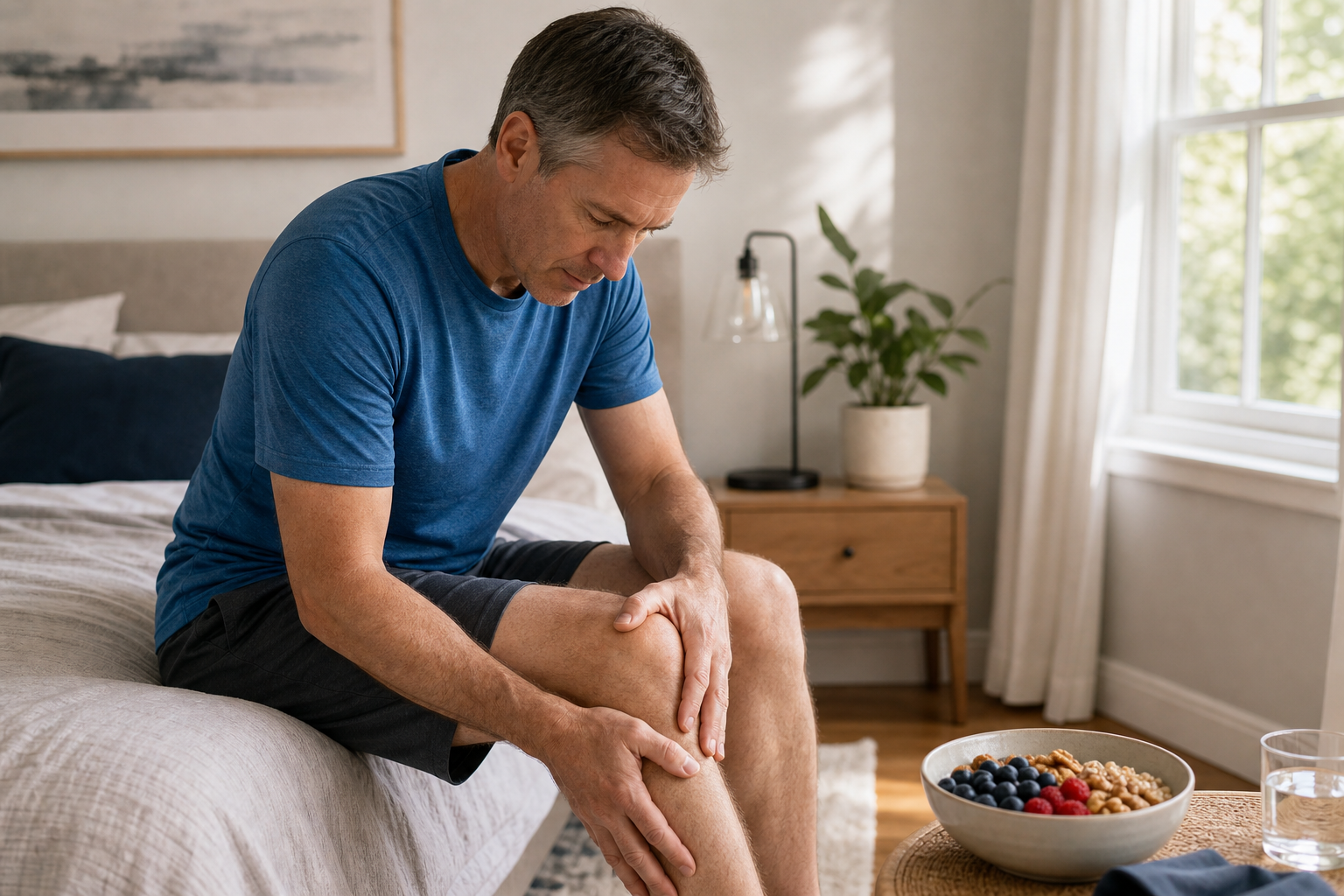
Learn why your knees may feel stiff in the morning and which foods, exercises, and supplements may help, plus warning signs that need medical attention.
Morning knee stiffness usually happens because the joint has been still for several hours. Fluid distribution, mild inflammation, muscle tightness, osteoarthritis, an old injury, or simply doing more activity than usual can all make the first few steps of the day uncomfortable.
The timing and pattern matter. Osteoarthritis commonly causes stiffness after sleep or inactivity that lasts less than about 30 minutes. Rheumatoid arthritis and some other inflammatory conditions are more likely to cause stiffness lasting longer than 30 minutes, often with swelling, warmth, fatigue, or symptoms affecting several joints.
That distinction is useful, but it is not a diagnosis. A knee that is suddenly very swollen, hot, red, unstable, or impossible to bear weight on should be assessed promptly. Seek urgent care for severe pain after an injury, obvious deformity, fever with a hot swollen joint, or calf swelling and shortness of breath.
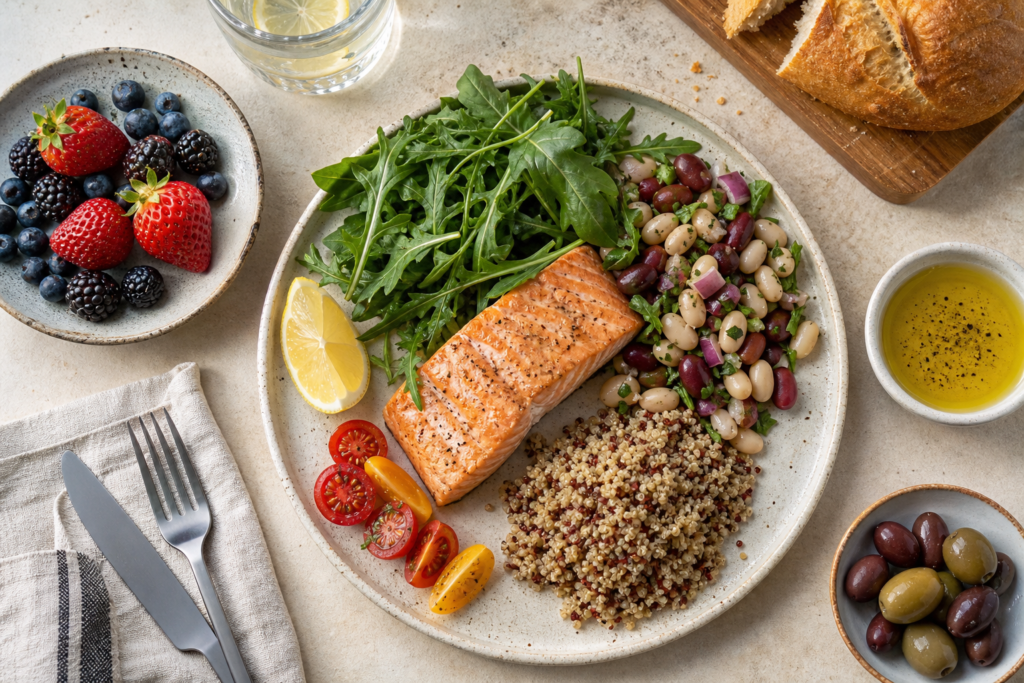
No single food can repair damaged cartilage or eliminate morning stiffness. The most practical approach is an overall eating pattern that supports a healthy body weight, cardiovascular health, muscle strength, and lower dietary inflammation.
A Mediterranean-style diet emphasizes vegetables, fruit, beans, lentils, whole grains, nuts, seeds, olive oil, and fish. It includes moderate amounts of poultry, eggs, and dairy, while limiting highly processed foods, sugary drinks, refined carbohydrates, and large amounts of processed or fatty meats.
Research on diet and knee osteoarthritis is still developing, but systematic reviews suggest that Mediterranean or otherwise nutrient-dense dietary patterns may be associated with slower worsening of symptoms. Benefits may come from several factors working together: more fibre and plant compounds, healthier fats, better blood sugar control, and easier weight management.
Fatty fish such as salmon, sardines, trout, and herring provide omega-3 fats. Walnuts, chia seeds, and ground flaxseed provide plant-based omega-3, although the body converts it less efficiently to the forms found in fish.
Omega-3-rich foods may be particularly relevant for people with inflammatory arthritis, although the evidence is not strong enough to treat them as a substitute for prescribed medication. For knee osteoarthritis, the evidence for omega-3 supplements is less clear.
Include adequate protein from foods such as fish, poultry, eggs, yogurt, tofu, beans, and lentils. Calcium- and vitamin-D-rich foods can support bone health, but taking extra vitamin D does not automatically relieve knee stiffness if you are not deficient.
If weight loss is appropriate for you, even a gradual reduction may reduce the load on the knees. Avoid crash diets, especially if you are older, underweight, recovering from illness, or taking medications that affect nutrition.

Complete rest often makes stiffness worse. Gentle movement increases circulation, warms the muscles around the knee, and helps you regain range of motion without putting a large load on the joint.
These movements should feel gentle. Mild temporary soreness can happen when you start a new routine, but sharp pain, increasing swelling, limping, or pain that lasts for hours afterward means you should reduce the intensity and speak with a health professional.
Walking, cycling, swimming, water exercise, tai chi, and gentle dancing are often easier on the knees than running or jumping. Start with five or ten minutes if you have been inactive, then add time gradually.
Adults are generally advised to work toward at least 150 minutes of moderate aerobic activity per week and muscle-strengthening activity on at least two days. You do not have to reach that amount immediately, and shorter sessions still count. Strengthening the quadriceps, hips, and core can improve support for the knee, but a physical therapist can tailor exercises if you have significant pain, weakness, or a previous injury.
Supplements are not automatically safer or more effective than standard care. Product quality, ingredient amounts, interactions, and the cause of your knee stiffness all matter.
| Supplement | What the evidence suggests | Important caution |
|---|---|---|
| Glucosamine and chondroitin | Studies of knee osteoarthritis have produced inconsistent results. Major guidelines disagree, and meaningful symptom relief is uncertain. | Ask a clinician or pharmacist first if you take warfarin, have diabetes, shellfish allergies, or multiple medications. |
| Turmeric or curcumin | Early studies suggest possible improvements in knee pain or stiffness, but higher-quality evidence is still needed. | Highly absorbable products may harm the liver and may interact with medications. Stop and seek advice if you develop unusual fatigue, dark urine, or yellowing of the skin. |
| Omega-3 supplements | May modestly help some rheumatoid arthritis symptoms, but evidence is weaker for osteoarthritis-related knee stiffness. | High doses can increase bleeding risk, especially with warfarin or other anticoagulants. |
| Vitamin D | Useful for correcting deficiency and supporting bone health, but it is not a general knee-stiffness treatment. | Excessive intake can be harmful. Consider testing or professional advice rather than taking high doses on your own. |
In Canada, look for a product licence number, known as an NPN, when buying a licensed natural health product. An NPN means Health Canada has issued a product licence; it does not guarantee that the product will work for every person.
Make an appointment if stiffness is persistent, worsening, or interfering with sleep, work, walking, or stairs. A clinician may need to assess osteoarthritis, rheumatoid arthritis, gout, bursitis, tendon problems, an old injury, or another cause.
Contact a healthcare professional sooner if stiffness lasts longer than 30 minutes most mornings, affects both sides of the body, or comes with visible swelling, warmth, redness, fatigue, fever, unexplained weight loss, or stiffness in the hands and feet.
Until you are assessed, keep a brief symptom record. Note how long stiffness lasts, whether the knee swells, what activities make it worse, whether both knees are affected, and which foods, exercises, or supplements you have tried. Bring a complete list of prescription medicines and supplements to your appointment.
A. No. Stiffness can also follow unusual exercise, an old injury, tendon or bursa irritation, prolonged sitting, or other medical conditions. The duration, presence of swelling, and other symptoms help determine whether an evaluation is needed.
A. Many people find gentle heat helpful for stiffness before movement, while a cold pack may be more comfortable after activity if the knee feels swollen. Protect your skin, use short sessions, and stop if symptoms worsen.
A. Do not assume it is safe. Glucosamine and combination joint supplements may interact with medicines, and product formulas vary. Ask a pharmacist or prescribing clinician before using one, particularly if you take warfarin or another anticoagulant.
A. Joint-friendly activity usually needs consistency rather than a single workout. Start at a tolerable level and increase gradually over several weeks. If pain is sharp, causes limping, produces substantial swelling, or keeps worsening, stop increasing the program and seek professional guidance.
A. An NPN is a Natural Product Number issued by Health Canada for a licensed natural health product. It identifies the licensed product and its approved conditions of use, but it is not a guarantee that the supplement will relieve your knee stiffness.