Welcome to KnowHow Daily!
Practical guides, money-saving tips, tech solutions, government benefits, and useful information for everyday life.
Welcome to KnowHow Daily!
Practical guides, money-saving tips, tech solutions, government benefits, and useful information for everyday life.

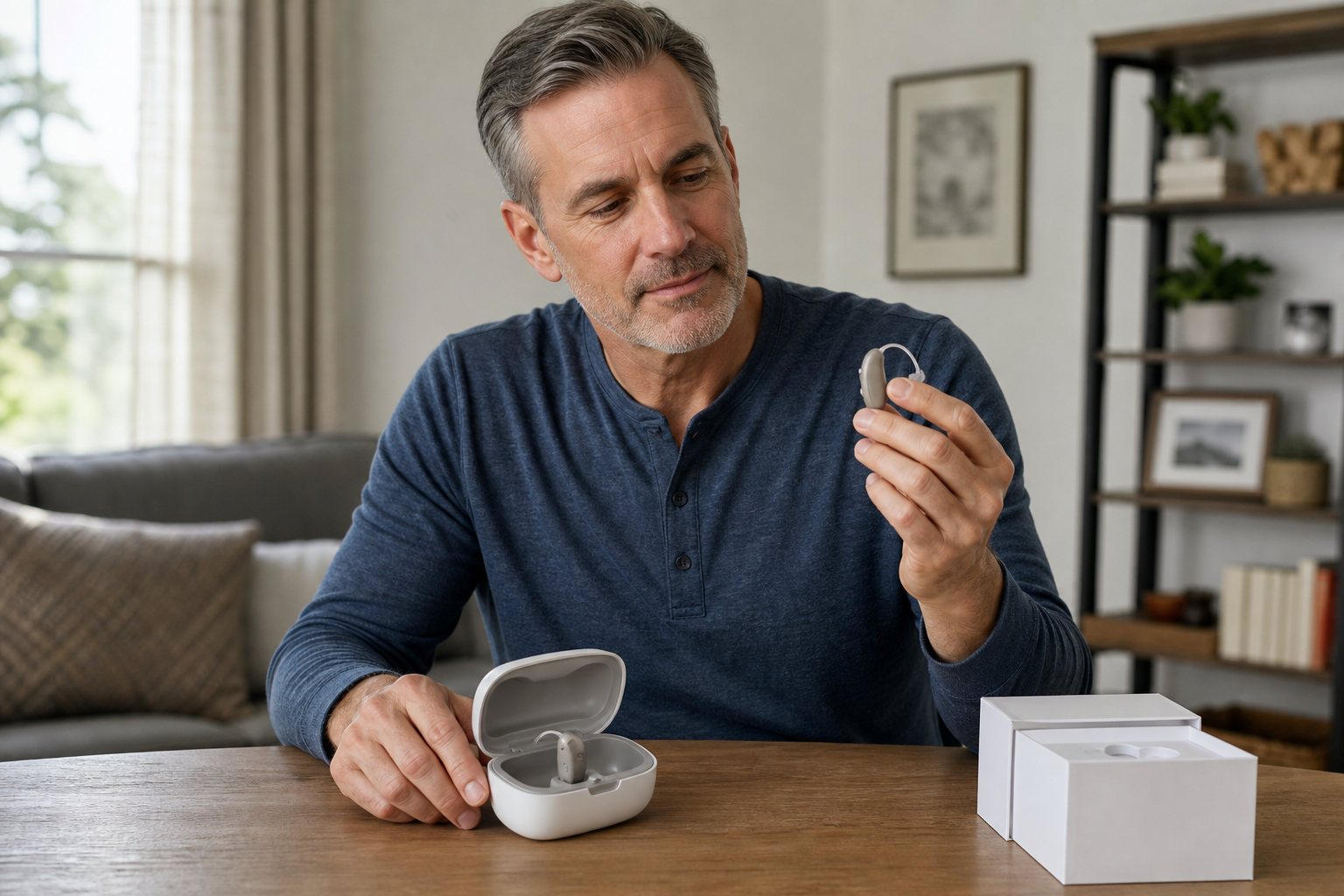
Learn how to choose an over-the-counter hearing aid, compare self-fitting features, understand return policies, and recognize when to see an audiologist or ENT.

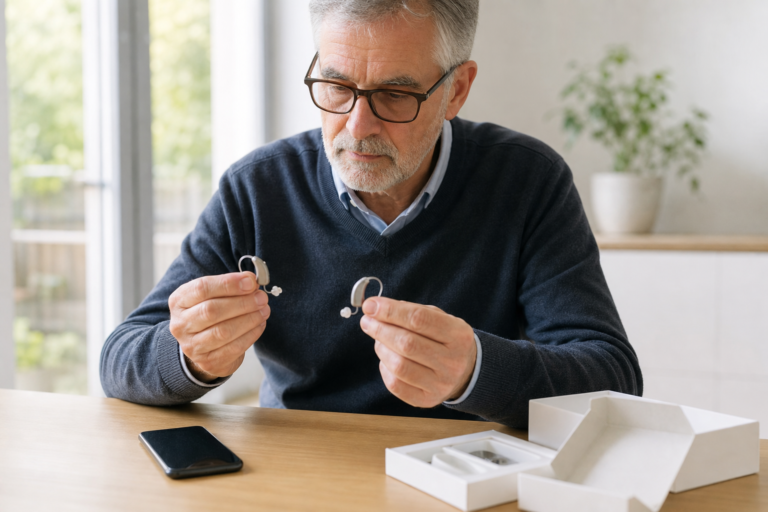
If conversations sound muffled, you keep turning up the television, or restaurants have become frustrating, an over-the-counter hearing aid may be worth considering. In the United States, OTC hearing aids are FDA-regulated medical devices for adults 18 and older with perceived mild to moderate hearing loss. You can buy them in stores or online without a prescription, medical exam, or audiologist fitting.
The key distinction is that “OTC” describes a regulated hearing-aid category—not every small amplifier sold online. A legitimate OTC hearing aid is intended to help compensate for hearing loss. It should be labeled as both an “OTC” product and a “hearing aid,” with consumer information about its intended users, controls, batteries, warnings, and return policy.
OTC hearing aids are not intended for children or adults with severe or profound hearing loss. If you cannot understand speech even in a quiet room or have difficulty hearing loud sounds such as engines, power tools, or loud music, an OTC device may not provide enough amplification.

These products can look similar, but they are not interchangeable.
| Product | Intended for | How it is obtained | Main trade-off |
|---|---|---|---|
| OTC hearing aid | Adults with perceived mild to moderate hearing loss | Directly from a retailer or manufacturer | You handle fitting, adjustments, and troubleshooting |
| Prescription hearing aid | People with a wider range of hearing losses and needs | Through a hearing healthcare professional, subject to applicable rules | Usually involves more professional support and potentially higher overall cost |
| PSAP | People with normal hearing who want extra volume in specific situations | Directly from retailers | It is not intended to treat hearing loss and is not regulated as a medical hearing aid |
A PSAP may be marketed as a “hearing amplifier,” “sound amplifier,” or “conversation enhancer.” That does not make it an OTC hearing aid. If you are shopping at Walmart, another big-box retailer, or an online marketplace, read the packaging and product description carefully rather than relying on the store category.
Most OTC hearing aids are air-conduction devices. They use microphones to pick up sound, process it, and send amplified sound through a speaker into the ear canal. The better models do more than simply make everything louder: they may let you adjust frequencies, reduce background noise, change listening programs, or complete a hearing assessment through an app.
There are two broad approaches to fitting:
Self-fitting does not mean the device has identified the medical cause of your hearing loss. It is a way to adjust amplification; it is not a substitute for an evaluation when symptoms suggest a medical problem.
Comfort matters because hearing aids work best when worn consistently. Compare the included ear tips, the shape of the device, how securely it sits, and whether you can insert and remove it easily. Smaller in-canal models may be less visible but can be harder to handle, while behind-the-ear designs may offer larger controls and easier maintenance.
Do not assume that a tighter fit is automatically better. A device that causes soreness, pressure, feedback, or skin irritation is unlikely to become a good long-term solution.
Check whether you can adjust the aid directly, through a smartphone app, or both. App-based controls can be convenient, but they may depend on phone compatibility, Bluetooth support, and a reliable charging routine. Direct buttons or a remote control may be more practical if you do not want to use a phone every time you enter a noisy environment.
Rechargeable hearing aids reduce the need to handle small batteries and can be convenient for daily use. Disposable batteries may be useful if you want to carry spares or avoid relying on a charging case. Compare battery life, charging time, replacement cost, and what happens if the battery loses capacity after extended use.
Bluetooth may allow phone calls, music, or television audio to stream directly to the hearing aids, but compatibility can vary by device and phone. Treat streaming as an extra feature, not proof that the hearing aid will work well for your hearing needs.
Useful listening programs may include quiet conversation, noisy restaurants, outdoor settings, or television. More programs are not necessarily better if they are difficult to select or do not make a noticeable difference.
The FDA does not require every OTC hearing aid manufacturer to provide a warranty. Return policies also vary, so read the terms before purchasing. Check how many days you have to return the device, whether opened or used products are eligible, whether shipping or restocking fees are deducted, and whether the policy applies to purchases made through a third-party marketplace.
Also look for repair coverage, replacement ear tips, filters, chargers, batteries, cleaning tools, and technical support. A low purchase price can become less attractive if essential accessories are expensive or difficult to obtain.
Some hearing changes deserve medical attention rather than a trial of a consumer device. Arrange prompt care with a physician, preferably an ENT when appropriate, if you have ear pain, fluid, pus, or blood; a suspected blockage or substantial earwax; vertigo with hearing loss; a sudden or quickly worsening change; hearing that fluctuates; noticeably worse hearing in one ear; or ringing in only one ear.
You should also consider a hearing evaluation if you struggle to understand ordinary speech in a quiet room, cannot hear loud sounds well, or have tried an OTC hearing aid and still cannot communicate safely. Hearing loss can sometimes be related to a treatable ear problem, and an OTC device may not address the underlying cause.
The FDA’s OTC hearing-aid category is specific to the United States. In Canada, shoppers should not assume that a product described as an “OTC hearing aid” in a U.S. listing has the same regulatory status or purchasing conditions in Canada. Health Canada maintains a database of licensed medical devices, and provincial rules may affect dispensing, fitting, reimbursement, and professional services.
Before buying a hearing aid from a Canadian seller or importing one, search the product or manufacturer in Health Canada’s Medical Devices Active Licence Listing. A listing does not tell you whether the device will suit your hearing loss, but it can help confirm whether the relevant medical device is licensed for sale in Canada.
Search Health Canada’s Medical Devices Active Licence ListingThe best OTC hearing aid is not necessarily the smallest, cheapest, or most feature-packed model. It is the one that is appropriate for your suspected level of hearing loss, comfortable enough to wear regularly, adjustable enough for your daily environments, and backed by a return policy that gives you a fair chance to evaluate it.
A. They are regulated medical devices when they meet the FDA’s OTC hearing-aid requirements, but safe use still depends on choosing a device for the appropriate level of hearing loss and following the instructions. Stop using one if it causes pain, injury, severe irritation, or a sudden worsening of hearing.
A. OTC hearing aids are not intended for severe or profound hearing loss. If you cannot understand speech in a quiet room or cannot hear loud sounds well, ask a hearing healthcare professional about testing and other options.
A. A hearing test is not required for an adult buying an OTC hearing aid in the United States, but it can help identify the type and amount of hearing loss and reveal problems that amplification alone may not fix. It is especially sensible when symptoms are one-sided, sudden, fluctuating, painful, or associated with dizziness.
A. An OTC hearing aid is a regulated medical device intended for adults with perceived mild to moderate hearing loss. A hearing amplifier may refer to a PSAP or another consumer product intended to make sounds louder, often without being designed or regulated to treat hearing loss.
A. Canada does not use the same FDA OTC category as the United States. Product availability and professional-service rules can differ, so check whether the specific device is licensed for sale in Canada and confirm the seller’s return, warranty, and support terms before buying.