Welcome to KnowHow Daily!
Practical guides, money-saving tips, tech solutions, government benefits, and useful information for everyday life.
Welcome to KnowHow Daily!
Practical guides, money-saving tips, tech solutions, government benefits, and useful information for everyday life.


Find the NASA Aerospace Battery Workshop 2026 registration deadlines, abstract requirements, Huntsville venue details, and a practical preparation checklist.
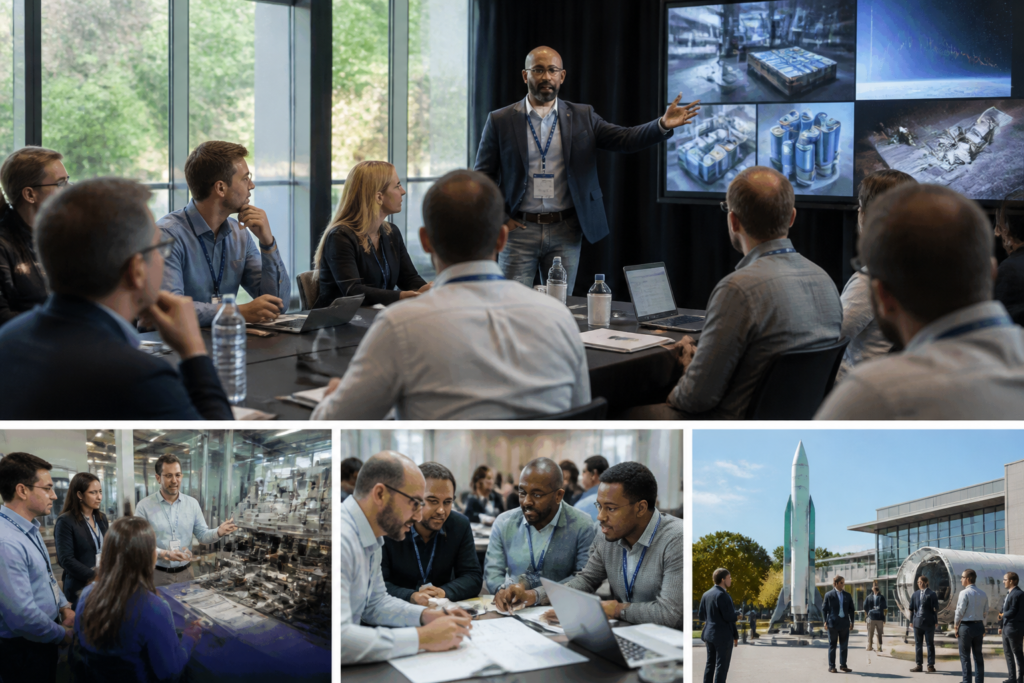
NASA’s 2026 Aerospace Battery Workshop is scheduled for November 17–19, 2026, in Huntsville, Alabama. The event will be held at the U.S. Space & Rocket Center and is open to participants from government, industry, and academia. Registration is required, and the deadline depends on your citizenship or residency status.
The most urgent date for international participants is October 2, 2026. U.S. citizens and lawful permanent residents can register until November 10, 2026. Anyone hoping to present should also prepare an abstract by October 16, but NASA makes clear that registration must be completed before an abstract will be considered.
That makes the safest approach straightforward: register first, then submit a complete abstract well before the October 16 deadline.

| Task | Deadline | Who it applies to |
|---|---|---|
| Workshop registration | October 2, 2026 | Non-U.S. citizens, including Canadian participants |
| Abstract submission | October 16, 2026 | Prospective presenters |
| Workshop registration | November 10, 2026 | U.S. citizens and lawful permanent residents |
| Workshop attendance | November 17–19, 2026 | Registered participants |
NASA’s announcement does not specify a cutoff time for these dates, so don’t wait until the final day if your registration, visitor-access coordination, travel documents, or abstract materials are still incomplete.
The official registration form asks for administrative and logistical information needed to coordinate attendance and visitor access. NASA also instructs participants to enter their name exactly as it appears on their driver’s license so access processing can be completed correctly.
Before opening the form, have the following information ready:
The form provides separate acknowledgments for U.S. citizens, lawful permanent residents, and people who are neither. Choose the statement that accurately describes your status. If you’re attending from Canada, you should use the non-U.S. citizen registration deadline unless you are also a U.S. lawful permanent resident.
Open the official NASA Aerospace Battery Workshop 2026 registration pageNASA’s abstract instructions are brief but specific. Abstracts are due October 16, 2026, and should be sent to Alex Price at Robert.a.price@nasa.gov. Each submission should include the presentation title, the authors and their affiliations, and the presenter’s full contact information.
NASA also states that workshop registration is required before an abstract can be considered. Registration alone does not guarantee that a submission will be selected for the program, so presenters should avoid treating the abstract deadline as a substitute for attendee registration.
NASA has not published a detailed word limit or formal template on the 2026 workshop page. If your abstract is based on proprietary, export-controlled, classified, or otherwise restricted work, confirm internally what can be shared before submitting it. The workshop page describes an audience that typically includes government agencies, aerospace contractors, battery manufacturers, and international participants in like-kind fields, but that description is not a substitute for your organization’s disclosure review.
The NASA Aerospace Battery Workshop focuses on practical aerospace battery development and operational experience. NASA says topics generally include state-of-the-art aerospace battery research and development, flight and ground test data, on-orbit operation, problem resolution, and related engineering issues.
That makes the event relevant to more than cell-chemistry researchers. Potentially useful contributions could come from teams working on battery management systems, thermal behavior, safety and fault response, qualification testing, life prediction, pack design, manufacturing quality, spacecraft power systems, or lessons learned from deployed hardware.
For a stronger submission, connect the technical work to an aerospace decision or challenge. Explain what was tested, modeled, observed, or improved, and make the practical significance easy to understand. A narrowly framed abstract with clear evidence is likely to be more useful to reviewers and attendees than a broad overview with few concrete results.
The workshop venue is the U.S. Space & Rocket Center at One Tranquility Base in Huntsville, Alabama. NASA identifies the venue separately from Marshall Space Flight Center, which hosts the annual workshop. The official venue address is listed as Huntsville, AL 35805.
Participants traveling from Canada or elsewhere outside the United States should begin travel and visitor-access planning early. NASA says the registration form is used to collect information needed to coordinate visitor access, and international participants face the earliest registration deadline. The 2026 page does not yet provide a full agenda, lodging block, transportation plan, registration fee, or detailed access instructions, so those details should not be assumed.
For U.S.-based attendees, the later November 10 registration deadline still leaves little room for last-minute corrections if visitor access or travel arrangements require follow-up. Registering earlier also gives presenters more time to resolve affiliation, contact, and badge-name issues.
The current confirmed status is that the workshop is scheduled for November 17–19, 2026, registration is open through the applicable deadlines, and abstracts are due October 16. NASA has not yet announced every logistical detail, so participants should monitor the official workshop page for updates rather than relying on older agendas or information from previous years.
A. Yes. NASA says you must be registered for the workshop before your abstract will be considered for inclusion in the program.
A. Canadian citizens fall under the non-U.S. citizen deadline, which is October 2, 2026. The workshop page does not identify a specific cutoff time, so early submission is the safer option.
A. Yes. NASA lists U.S. citizens and lawful permanent residents together and gives them a registration deadline of November 10, 2026.
A. Not on the current 2026 workshop page. NASA has confirmed the dates, venue, registration requirements, and abstract deadline, but a complete agenda and detailed lodging information have not been announced there.