Welcome to KnowHow Daily!
Practical guides, money-saving tips, tech solutions, government benefits, and useful information for everyday life.
Welcome to KnowHow Daily!
Practical guides, money-saving tips, tech solutions, government benefits, and useful information for everyday life.

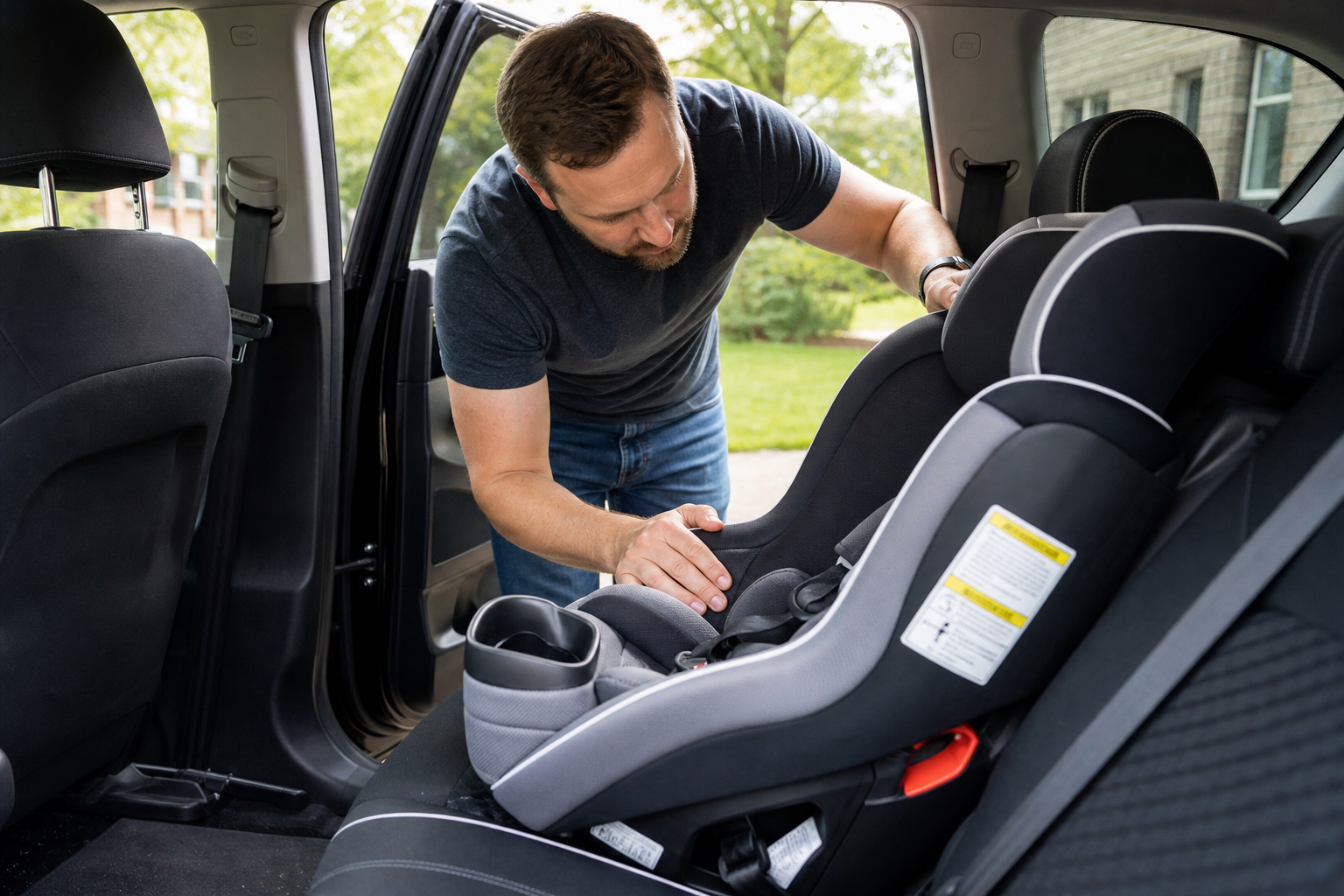
Buying a used car seat in Canada? Use this practical checklist to verify the National Safety Mark, crash history, recalls, expiry date, parts, manual and fit before you pay.
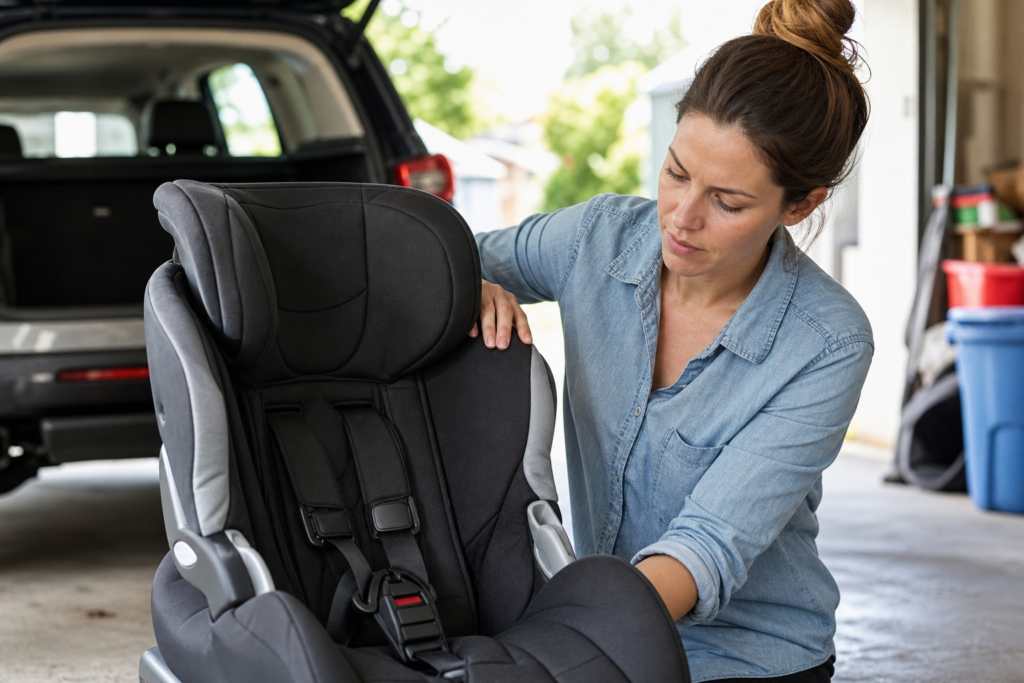
Sometimes—but only when you can verify the seat’s identity, history and condition. A car seat may look nearly new and still be unsuitable because it was involved in a collision, has been recalled, is past its manufacturer-stated useful life, lacks a critical part or was made for another country’s safety standards.
The most important distinction is this: clean is not the same as safe. For a second-hand seat to be worth considering, you should be able to confirm that it has a Canadian National Safety Mark, has never been in a crash, is not recalled, is within its useful life and includes every required part and instruction.
Health Canada says these checks apply whether the seat is bought at a garage sale, through a marketplace, from a second-hand store, in a personal sale or received for free.
Review Health Canada's second-hand car seat safety checklist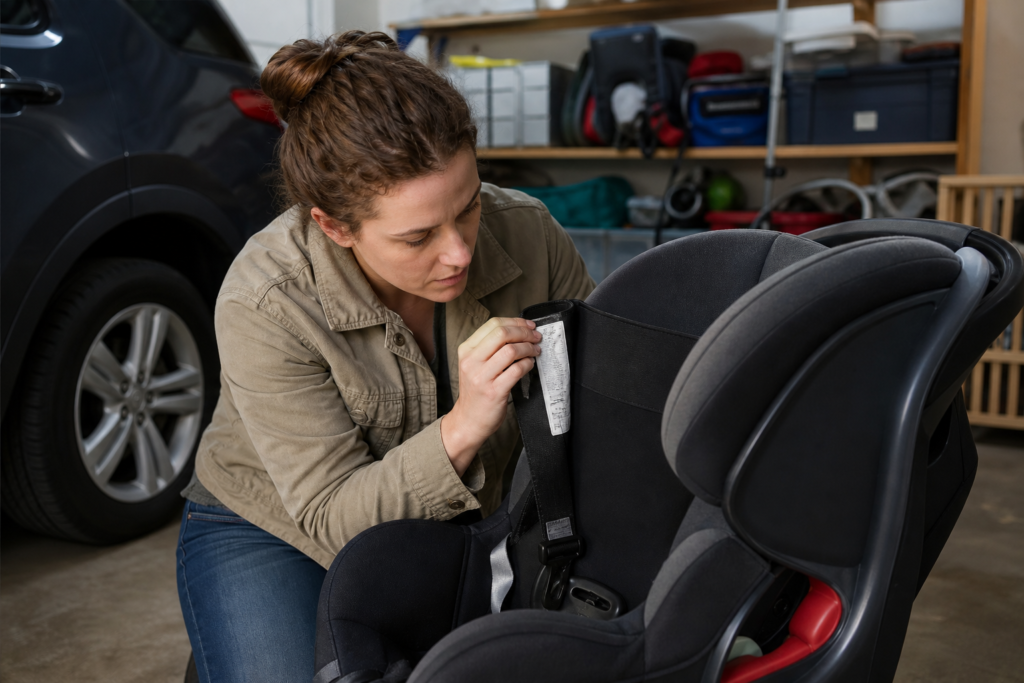
Look for the round National Safety Mark, usually attached to the side or back of the seat. It indicates that the restraint was certified to meet Canadian safety standards. A product information label should also identify details such as the manufacturer, model and date of manufacture.
Do not assume that a seat sold by a Canadian seller is approved for use in Canada. Seats imported from the United States or another country may not carry the Canadian mark. A U.S. certification label is not a substitute for Canada’s National Safety Mark, and Transport Canada says it is illegal to import, sell or use child car seats in Canada without the mark, with limited exceptions for certain custom restraint systems.
Ask the seller for clear photos of:
If the seller will not provide those photos, treat that as a reason to pass rather than a minor inconvenience.
Canada’s official guidance is straightforward: do not use a second-hand car seat if it has been in a vehicle during a collision, and do not buy it when the seller does not know its history.
Ask the seller directly:
A vague answer such as “I think it was fine” is not enough. You cannot reliably inspect a restraint and determine from appearance whether it has experienced damaging forces. The safest decision when the history is uncertain is not to buy it.
Most car seats and booster seats sold in Canada have an expiry date or useful-life date, even though Transport Canada does not require manufacturers to use one. The date may be printed on a label, molded into the plastic or explained in the manual.
Use the manufacturer’s date—not a general rule found in a marketplace listing. If the seat has no readable manufacture date, no useful-life information and no manual, contact the manufacturer before buying. If the manufacturer cannot confirm the date or model information, choose another seat.
There is an additional age concern for very old seats. Transport Canada says a seat made before January 1, 2012, may be illegal to advertise, sell or give away because it may not meet the latest safety standards. That makes an older listing particularly difficult to justify, even if the seat appears intact.
Search the exact manufacturer, model and approximate manufacture date in Transport Canada’s recall database. Do not rely only on a seller’s statement that the seat was “never recalled.” A recall or safety notice may apply to a particular production range, base, harness component or label—not every seat with the same product name.
Transport Canada’s child-seat notices can also cover issues that are not traditional crash-safety defects, such as incorrect expiry information, missing instructions, labelling problems or a required replacement part. If a recall affects the specific seat, find out whether the remedy was completed and whether the replacement part is included.
Bring the manual or download the correct one from the manufacturer before you inspect the seat. The manual is the reference for required components, approved cleaning methods, harness routing, recline positions, installation and child size limits.
Check each of these parts in person:
| What to check | What should happen | Walk away if… |
|---|---|---|
| Buckle | It latches and unlatches smoothly and stays closed when secured. | It sticks, opens unexpectedly, is cracked or is missing. |
| Harness | It tightens and loosens smoothly without fraying, cuts or damaged stitching. | Webbing is damaged, altered, twisted beyond repair or cannot be adjusted. |
| Chest clip | It closes easily and remains closed. | It is broken, loose, cracked or replaced with an unapproved part. |
| Shell and foam | The shell is intact and the energy-absorbing foam is present where the manual shows it. | There are cracks, deep damage, missing foam or unexplained repairs. |
| Anchoring system | Lower connectors, tether hardware and adjustment mechanisms work properly. | Connectors are missing, bent, damaged or incompatible with the model. |
| Base and accessories | The base, infant insert and other parts match the model and manual. | The seller is mixing parts from different seats or cannot identify them. |
Do not add aftermarket padding, head supports, covers or accessories unless the manufacturer specifically approves them for that model. A comfortable-looking modification can change how the harness fits or how the seat performs in a crash.
A seat can be genuine, undamaged and still be the wrong choice. Check the manufacturer’s height and weight limits against your child’s current size and expected use. A convertible seat, infant seat, combination seat and booster seat are designed for different stages.
You also need to confirm that it can be installed correctly in your vehicle. Check the vehicle owner’s manual for lower-anchor and tether locations, and use the car-seat manual for the permitted installation method. If possible, arrange to inspect the seat beside your vehicle before paying. A bargain is not useful if the seat cannot be installed securely or the child does not fit within the permitted range.
Provincial and territorial rules can differ, so check the requirements where the child will normally travel. The Canadian federal safety mark is not a replacement for following your province or territory’s child-restraint laws.
Use this sequence when meeting a marketplace seller or inspecting a garage-sale seat:
If any one of those steps fails, the practical answer is to walk away. Saving money on the purchase is not worth accepting uncertainty about a restraint that your child depends on in every trip.
A. Not unless it meets Canada’s requirements and carries the Canadian National Safety Mark. A U.S. certification label by itself does not make a seat legal for use in Canada.
A. The expiry or useful-life date comes from the manufacturer rather than a single federal Canadian expiration rule. Transport Canada recommends following the manufacturer’s instructions, so a seat past that date should not be used.
A. Ask the manufacturer for the correct manual using the model and date-of-manufacture information. Do not buy the seat if you cannot confirm the required parts, installation method and child size limits.
A. Only use cleaning methods and replacement parts approved by the manufacturer for that exact model. Do not substitute parts from another seat or use aftermarket components unless the manufacturer specifically approves them.