Welcome to KnowHow Daily!
Practical guides, money-saving tips, tech solutions, government benefits, and useful information for everyday life.
Welcome to KnowHow Daily!
Practical guides, money-saving tips, tech solutions, government benefits, and useful information for everyday life.

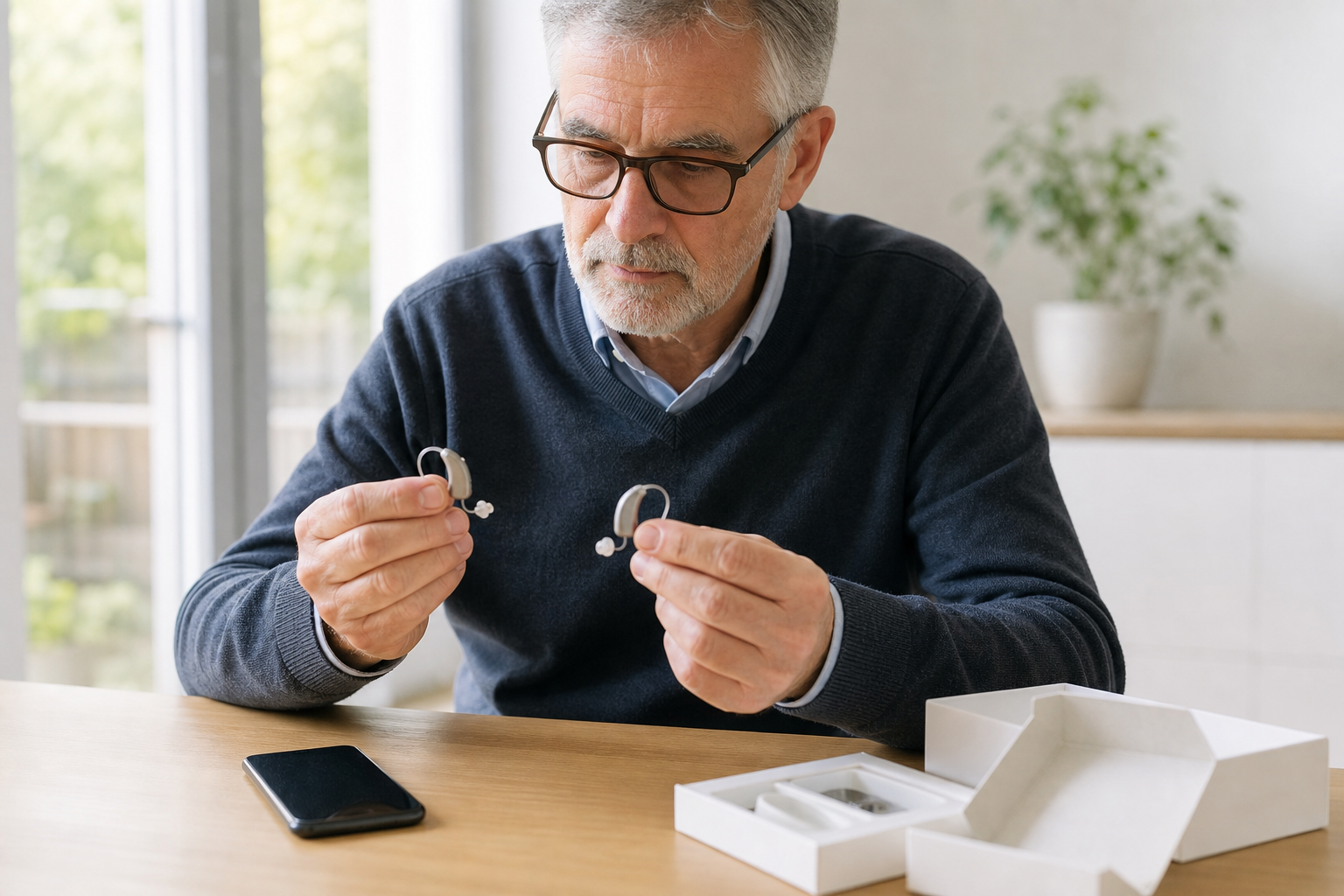
Learn how to choose over-the-counter hearing aids for mild to moderate hearing loss, compare fit and features, and recognize when medical care comes first.
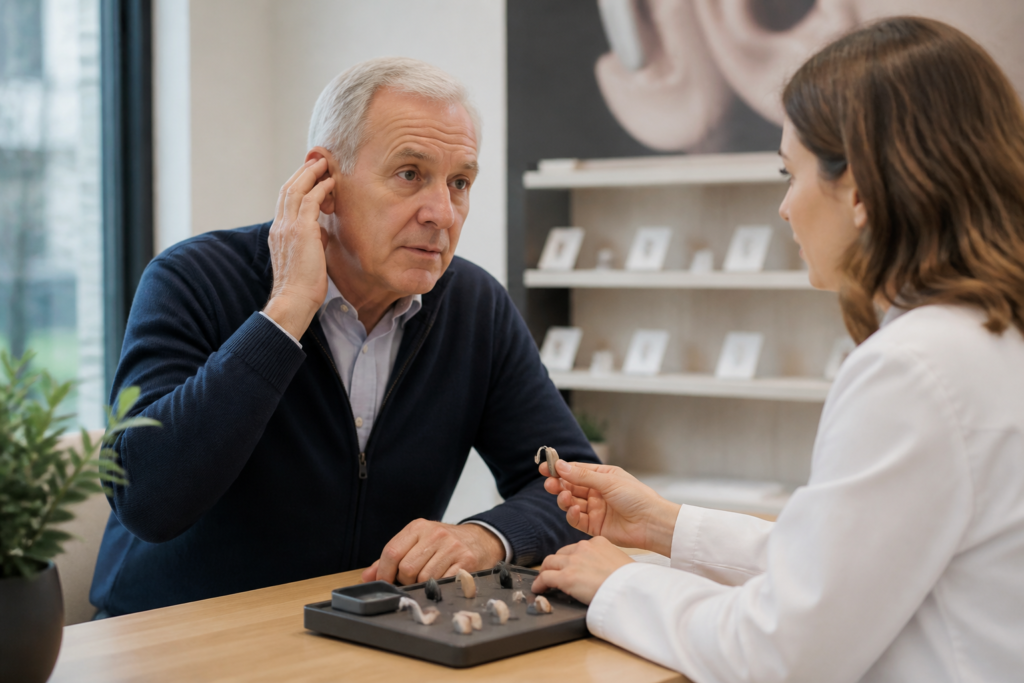
Over-the-counter hearing aids are designed for adults age 18 and older who believe they have mild to moderate hearing loss. In the United States, you can buy them online or in a store without a prescription, medical exam, or audiologist fitting.
That convenience doesn’t mean every hearing problem is a good match for an OTC device. These products are meant for situations such as struggling to follow conversations in restaurants or groups, turning up the television, having trouble on the phone, or finding that listening takes more effort than it used to.
The key distinction is this: an OTC hearing aid is a regulated medical device for hearing loss, while a personal sound amplification product, or PSAP, is an electronic product intended to make ordinary sounds louder for people with normal hearing in specific situations. A PSAP isn’t a substitute for a hearing aid.
U.S. shoppers: Read the FDA’s consumer guidance before comparing products.
Read the FDA’s official OTC hearing aid guidance
Hearing loss can sometimes be caused by earwax, infection, injury, fluid, or another condition that needs medical treatment. An OTC hearing aid may amplify sound without addressing the underlying problem.
Arrange a medical evaluation, preferably with an ear, nose, and throat specialist, if you have ear pain or discomfort, fluid, pus, or blood from the ear, a suspected blockage or heavy earwax, a deformed or injured ear, vertigo, or hearing that suddenly changed or keeps getting better and worse.
You should also get professional help if one ear is noticeably worse than the other or if you have ringing in only one ear. Sudden hearing loss is especially urgent and shouldn’t be treated as an ordinary shopping decision.
If you can’t understand speech even in a quiet room or you have difficulty hearing loud sounds such as traffic, power tools, engines, or loud music, an OTC device may not provide enough amplification. A hearing professional can determine whether prescription hearing aids or another treatment would be more appropriate.
Review official warning signs before buyingA hearing aid that feels uncomfortable is unlikely to become part of your daily routine. Compare behind-the-ear, in-the-ear, and in-the-canal designs, then check how the product handles different ear shapes and sizes.
Look for several dome or ear-tip sizes, clear fitting instructions, and a way to adjust the device if the fit causes whistling, pressure, or a blocked feeling. Smaller devices may be less noticeable, but they can also be harder to insert, remove, clean, or control.
Some OTC hearing aids use physical controls and preset programs. Others use a smartphone app, a hearing test, or self-fitting software to personalize amplification. Self-fitting features can be useful, but only if you’re comfortable using the app and your phone is compatible.
Before ordering, check whether the app works with your phone’s operating system, whether an account is required, and whether the hearing aid can still be used if the phone is unavailable. Also check whether the controls are large and straightforward enough for the person who will wear the device.
Think about where you most need help. Directional microphones may be useful when you’re facing one speaker in a noisy setting. Bluetooth connectivity may matter if you want to stream calls or audio, but compatibility can vary by phone and operating system.
Other practical questions include whether the device has separate programs for quiet and noisy environments, how much control you have over volume, and whether adjustments can be made without opening an app.
Rechargeable models can be convenient if handling small batteries is difficult. Battery-powered models may be easier to keep running during travel if you carry replacements. Compare charging time, expected battery life, charger portability, and the cost and availability of replacement batteries.
Ask how often filters, domes, wax guards, or other small parts need to be replaced. Earwax and moisture can affect performance, so clear cleaning instructions and accessible replacement parts matter more than a long feature list.
It can take time to adjust to amplified sound. Voices may initially seem sharp, background noise may feel more noticeable, and inserting the devices correctly may require practice. That’s why the return policy deserves careful attention before you pay.
Check the exact length of the trial or return period, whether the clock starts on the purchase date or delivery date, and whether you must pay return shipping or restocking fees. Confirm whether the seller accepts opened or worn devices and how refunds are issued.
The FDA doesn’t require manufacturers to provide a warranty. If a warranty is offered, find out what it covers, how long it lasts, whether accidental damage is excluded, and whether repairs are handled by the manufacturer or a third-party service. Also check whether remote support, programming help, and replacement parts cost extra.
Be cautious with marketing language such as “FDA registered” or “FDA certified.” Those phrases don’t mean the FDA recommends a particular product. The FDA regulates hearing aids, but it doesn’t choose the best model for your lifestyle or guarantee that a device will work equally well for every person.
| Option | Usually suited to | Main trade-off |
|---|---|---|
| OTC hearing aid | Adults with perceived mild to moderate hearing loss | You manage selection, fitting, adjustments, and troubleshooting |
| Prescription hearing aid | People who need individualized programming, professional fitting, or help with more complex hearing loss | Usually involves a hearing professional and may cost more |
| PSAP | People with normal hearing who want louder sound for a specific activity | Not intended to treat hearing loss and not regulated as a hearing aid |
An OTC product can be a reasonable starting point when your hearing difficulties match the intended use and you’re comfortable managing the device yourself. A prescription option may be a better fit if you need precise programming, have difficulty handling small technology, or want continuing professional support.
The “OTC hearing aid” category described in this article is a U.S. FDA category. Canadian shoppers shouldn’t assume that a product marketed under the U.S. category is automatically authorized or supported for sale in Canada.
When buying in Canada, verify that the device is legally marketed for the Canadian market, check the seller’s return and service terms, and look into provincial or private insurance coverage before ordering. Health Canada also advises consumers to use caution when buying medical devices online.
Search Health Canada’s active medical-device licence database Check Canada’s guidance for buying medical devices onlineIf you buy an OTC hearing aid, wear it consistently while you’re learning the controls and testing it in different environments. If it causes pain, irritation, injury, suddenly worsens your hearing, or doesn’t provide enough benefit, stop using it and contact the manufacturer or a hearing professional. Device injuries or malfunctions can also be reported to the FDA.
Report a hearing-aid problem to the FDAA. No medical or audiological examination is required for U.S. adults age 18 and older who believe they have mild to moderate hearing loss. A hearing evaluation can still be useful because it identifies the type and degree of hearing loss and may reveal a problem that needs medical treatment.
A. No. OTC hearing aids are regulated medical devices intended to help adults with perceived mild to moderate hearing loss. Personal sound amplification products are electronic devices intended to make sounds louder for people with normal hearing in particular situations, such as hunting or birdwatching.
A. Use the manufacturer’s stated trial period and follow its return instructions. Adjustment can take time, but you shouldn’t continue wearing a device that causes pain, injury, significant irritation, or a sudden worsening of hearing. Check the return deadline before opening the package.
A. One-sided hearing loss deserves professional evaluation before you rely on an OTC device. It can have causes that need medical assessment, and the FDA lists noticeably worse hearing in one ear and ringing in only one ear among reasons to seek medical care.