Welcome to KnowHow Daily!
Practical guides, money-saving tips, tech solutions, government benefits, and useful information for everyday life.
Welcome to KnowHow Daily!
Practical guides, money-saving tips, tech solutions, government benefits, and useful information for everyday life.

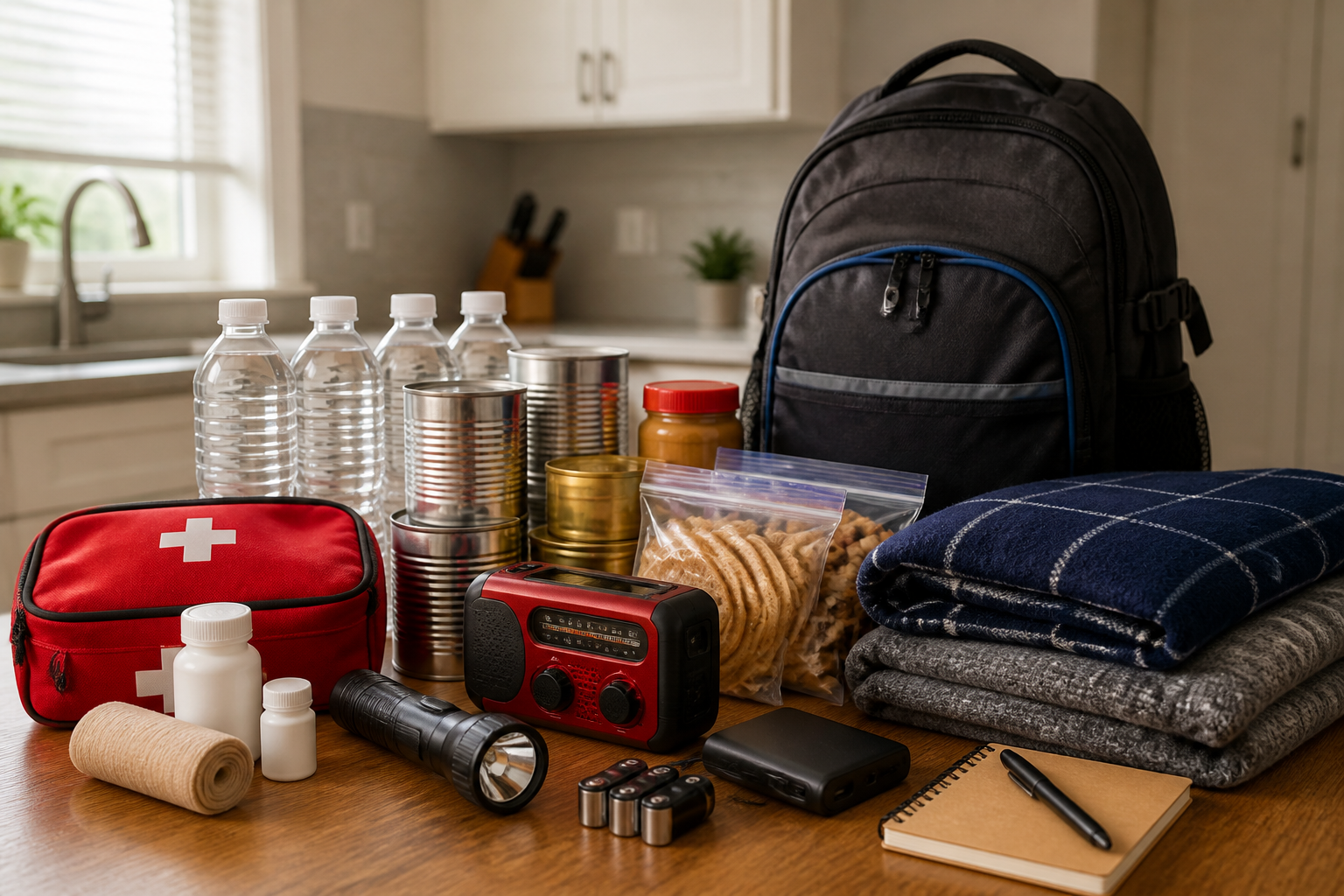
Use this practical emergency kit checklist to prepare for power outages, severe weather, and evacuations in the United States and Canada.
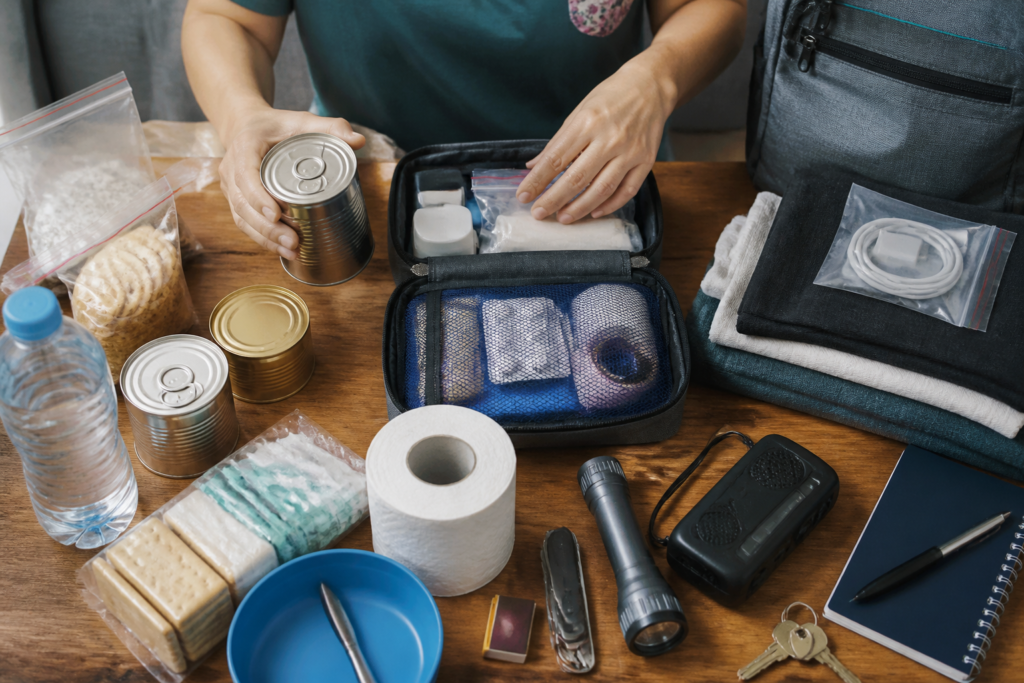
The best emergency kit is not a giant pile of survival gear. It is an organized set of ordinary supplies that helps your household manage without power, tap water, phone service, or a quick trip to the store.
For most households, start with enough supplies for at least 72 hours. Build one main kit for the home, then add a portable grab-and-go bag and a smaller kit for each vehicle. FEMA says a basic kit should include water, food, lighting, communications, first aid, sanitation supplies, tools, and items for the specific needs of family members and pets.
The main distinction to remember is this: a shelter-in-place kit can be larger and more comfortable, while an evacuation bag must be light enough to carry quickly. You need both.
View the official FEMA emergency kit checklist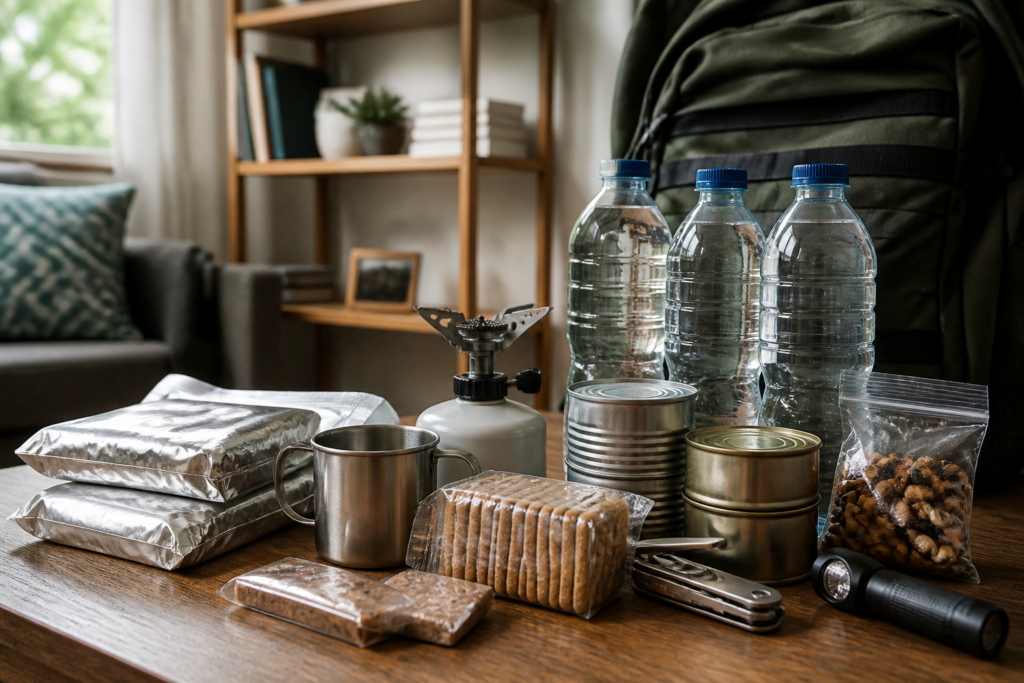
Water is the first item to calculate because it is heavy, easy to underestimate, and difficult to replace during an outage or evacuation.
In the United States, FEMA guidance commonly uses at least one gallon of water per person per day for drinking and sanitation. In Canada, the federal emergency kit checklist recommends two litres per person per day for drinking, cooking, and hygiene, while also advising households to add more when possible. Children, nursing parents, older adults, people who are ill, pets, and anyone living in hot conditions may need additional water.
For a three-day minimum, a two-person U.S. household would plan for at least six gallons. In Canada, the checklist baseline is 12 litres for two people. These figures are starting points, not limits.
Choose foods your household already eats: canned meals, nut butter, crackers, shelf-stable milk, energy bars, dried fruit, and ready-to-eat items are easier to use than supplies nobody wants to touch. Rotate older food into normal meals and replace it before it expires.
When the lights go out, three problems usually appear together: you need to see, charge essential devices, and receive reliable information.
Headlamps are particularly useful because they leave both hands free for stairs, repairs, carrying water, or helping children. Keep at least one flashlight where it can be reached without searching in the dark.
In the United States, a NOAA Weather Radio can provide alerts when cellular service or internet access is unavailable. In Canada, the WeatherCAN app and local broadcast media can provide weather alerts, but a radio is still useful when internet and mobile networks are unreliable.
Check official U.S. weather alertsA basic first aid kit should handle minor cuts, scrapes, blisters, burns, and common discomforts. It is not a substitute for emergency medical care, but it can help when roads are blocked or clinics are overwhelmed.
Ask a pharmacist or healthcare professional how to plan for medicines that require refrigeration, regular monitoring, or uninterrupted access. People who use oxygen, powered mobility equipment, communication devices, or other essential technology should keep backup power and a written plan.
Do not forget household members who are easy to overlook during routine shopping. Include comfort items for children, mobility aids, spare batteries, service-animal supplies, and food that meets allergies or medical diets.
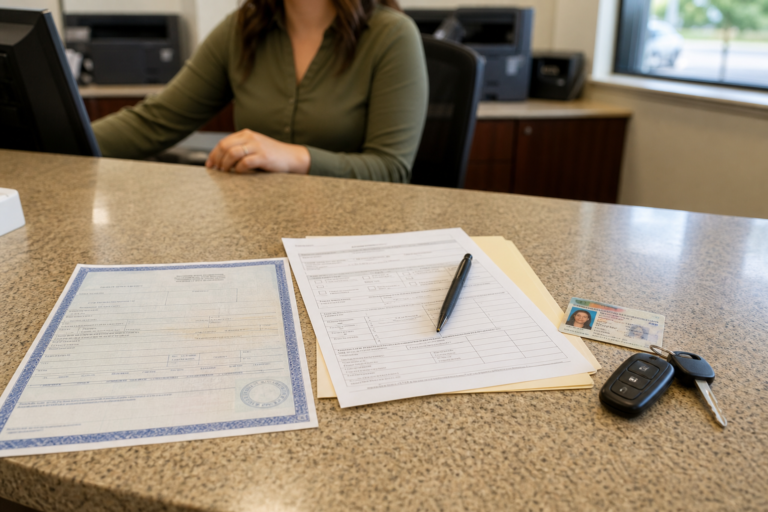
During a disaster, the items that prove who you are, where you live, and what you own can be as useful as food and batteries. Store copies in a waterproof container and, if appropriate, in a secure digital location that household members can access.
Only include tools your household knows how to use. For example, a wrench may help shut off a utility, but only if you know which valve or switch is safe to operate. Never use a generator, grill, camping stove, or fuel-burning heater indoors, in a garage, or in another enclosed space because of carbon monoxide poisoning risk.
One container rarely works for every emergency. Separate your supplies according to how you are likely to use them.
| Kit | Purpose | Useful contents |
|---|---|---|
| Home kit | Support several days without power or running water | Bulk water, food, sanitation supplies, blankets, tools, documents, and household-specific equipment |
| Grab-and-go bag | Leave quickly for a shelter, hotel, or safer location | Water, snacks, medications, identification, charger, flashlight, change of clothes, hygiene items, and basic first aid |
| Vehicle kit | Handle a breakdown, road closure, or unexpected delay | Blanket, water, snacks, first aid supplies, flashlight, phone charger, reflective item, seasonal clothing, and basic tools |
Your car kit should match the climate and roads where you drive. Winter conditions may require warm layers, gloves, traction aids, and a shovel. Hot regions may require extra drinking water, sun protection, and cooling supplies. Do not leave medications, pressurized containers, or temperature-sensitive items in a vehicle for long periods without considering the local temperature.
A generic checklist is only the starting point. Walk through a normal day at home and ask what would become difficult if the power, water, internet, or roads were unavailable.
Canada’s federal checklist advises reviewing supplies at least once a year and using the spring and fall time changes as reminders. That is also a practical schedule for replacing expired food, batteries, water, medications, documents, seasonal clothing, and pet supplies.
You do not need to buy everything at once. Build the kit in stages so it is affordable and easy to maintain.
Also complete a household emergency plan before a crisis happens. Decide where to meet, how to contact one another, who can collect children, and where pets will go. Keep a printed copy with the kit in case phones or internet service are unavailable.
Create a household emergency planIf local officials tell you to evacuate, take the instruction seriously and leave early when possible. Grab the portable bag, medications, identification, chargers, water, food, pet supplies, and a way to receive updates. Wear sturdy shoes and weather-appropriate clothing.
Do not wait until roads are crowded to start gathering supplies. Know at least two routes away from home, keep your vehicle fueled or charged, and make arrangements for anyone who cannot use stairs or travel independently. If there is time and it is safe, follow official instructions for shutting off utilities. Never put yourself at risk to collect belongings.
In the United States, use official local emergency alerts, Ready.gov resources, FEMA alerts, and National Weather Service warnings. In Canada, rely on local and provincial or territorial authorities, Alert Ready messages, WeatherCAN, and official emergency-management updates. Social media can help distribute information, but it should not replace instructions from emergency authorities.
A. For the United States, FEMA commonly recommends at least one gallon per person per day for drinking and sanitation. Canada’s federal checklist uses two litres per person per day for drinking, cooking, and hygiene. Add more for pets, medical needs, hot weather, children, and longer disruptions.
A. Not usually. Keep a larger home supply, lightweight grab-and-go bags, and smaller vehicle kits. Separating them makes it easier to shelter at home, leave quickly, or manage an unexpected roadside delay.
A. Review it at least once a year, and twice a year is better. Replace expired food, water, medications, batteries, documents, and seasonal items. Recheck the kit after household changes such as a move, new baby, new pet, or new medical equipment.
A. Fuel-burning stoves, grills, heaters, and generators must be used outdoors and away from doors, windows, and air intakes. Never use them inside a home, garage, basement, shed, tent, or other enclosed space because carbon monoxide can build up quickly. Follow the manufacturer’s instructions and local safety guidance.