Welcome to KnowHow Daily!
Practical guides, money-saving tips, tech solutions, government benefits, and useful information for everyday life.
Welcome to KnowHow Daily!
Practical guides, money-saving tips, tech solutions, government benefits, and useful information for everyday life.

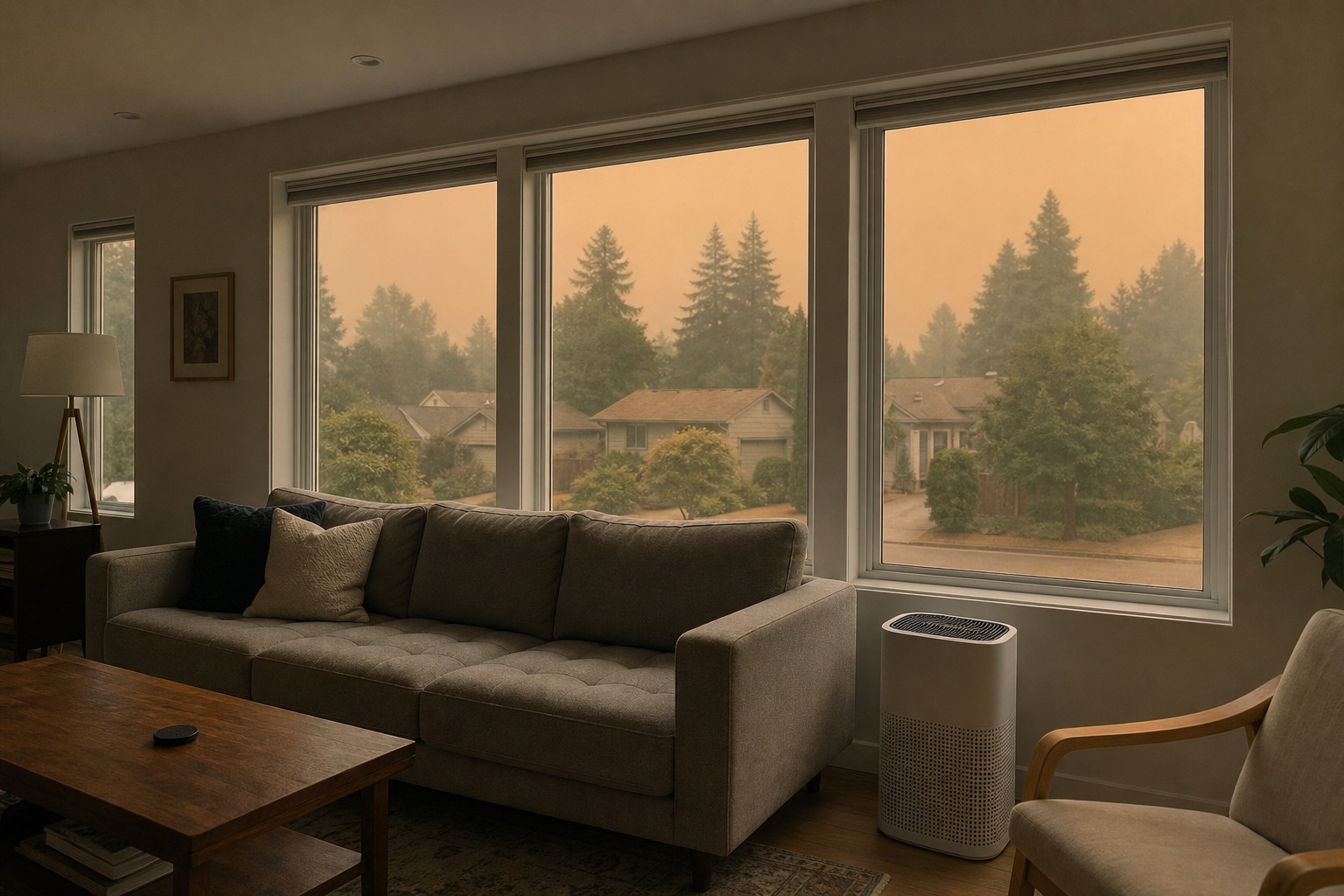
The EPA’s 2026 wildfire smoke guide explains how to check air quality, reduce exposure, create a cleaner-air room, and protect children and at-risk adults.
The U.S. Environmental Protection Agency’s updated 2026 wildfire smoke guide is mainly written for public-health officials, but its practical advice is useful for anyone who may spend time in smoky air. The June 2026 edition adds a collection of public fact sheets covering preparation, indoor air filtration, cleaner-air rooms, children, at-risk groups, pets, ash, heat, and smoke sensors.
The key message is straightforward: reduce the amount of smoke you breathe. That usually means checking local air conditions before spending time outside, moving strenuous activity indoors or postponing it, and making one part of your home as clean and comfortable as possible.
One distinction matters more than the rest: staying indoors does not automatically mean you are protected. Smoke can enter through open windows, doors, ventilation systems, and gaps in the building envelope. Indoor activities such as frying, grilling, burning candles, or using other sources of particles can also make the air worse when windows are closed.
Wildfire smoke contains fine particles known as PM2.5, along with gases and other pollutants. These tiny particles can travel deep into the lungs. Smoke may cause eye, nose, and throat irritation, coughing, wheezing, shortness of breath, and worsening asthma or other heart and lung conditions.
The 2026 guide organizes the response around three decisions:
The EPA’s new fact sheets make those decisions easier to apply. Instead of treating wildfire smoke as a single emergency message, they break the problem into specific situations, including caring for children, protecting people with chronic conditions, improving HVAC filtration, and setting up a cleaner-air room.
In the United States, use the AirNow Fire and Smoke Map or your state, local, or Tribal air-quality agency. The map can show current smoke conditions, forecasts, and the Air Quality Index, commonly called the AQI. The AQI is a guide to health risk, not a guarantee that every person will react in exactly the same way.
People with asthma, chronic obstructive pulmonary disease, heart disease, or other conditions may need to reduce exposure earlier than a healthy adult. Children, older adults, pregnant people, and outdoor workers can also face greater risk or greater exposure.
In Canada, the equivalent starting point is the Air Quality Health Index, or AQHI. During wildfire smoke events, Canada adjusts the index so that fine-particle pollution has a stronger role in the hourly reading. Quebec uses the Info-Smog system rather than the national AQHI presentation.
For a simple household rule, treat worsening air-quality readings as a signal to shorten outdoor time, avoid strenuous exercise, and move vulnerable family members into cleaner indoor air. If you develop significant trouble breathing, chest pain, confusion, severe wheezing, or other emergency symptoms, seek urgent medical care.
A cleaner-air room is not a perfectly sealed medical environment. It is a practical room where you reduce the amount of smoke entering and use filtration to lower indoor particle levels.
Choose a room that can be closed off from the rest of the home, ideally with few windows and doors. Keep windows and exterior doors closed while smoke is present. If your heating or cooling system has a fresh-air intake, use the system’s recirculation setting when appropriate so it does not continually draw smoky outdoor air inside.
A portable air cleaner can help reduce fine particles in the room where people spend the most time. If your home has central HVAC, make sure the filter is installed correctly and replaced or maintained according to the manufacturer’s instructions. A filter cannot help if the system is not moving air through it, and a portable cleaner only works in the space where it is operating.
Try to avoid adding particles indoors. During a smoke event, skip frying, grilling, indoor smoking, candles, incense, and other activities that create smoke or fine particles. If the room becomes too hot to occupy safely with windows closed, look for a local cooling or clean-air space instead of simply opening the windows during the worst smoke.
Children breathe more air in relation to their body size and may spend more time being physically active, so smoke can affect them quickly. The EPA and CDC recommend taking extra care with children who have asthma or chronic health conditions. During poor air quality, children may need to stay indoors more often, reduce vigorous activity, and follow an existing asthma or respiratory-care plan.
Adults with heart or lung disease should plan ahead rather than waiting for symptoms. Keep prescribed medicines available, know how to contact a healthcare provider, and discuss smoke-event plans with a clinician if symptoms are difficult to control.
Outdoor workers face a different problem because simply staying indoors may not be possible. Employers and workers should follow applicable workplace guidance, adjust strenuous tasks where possible, take breaks in cleaner air, and use a properly fitted NIOSH-approved respirator when appropriate. Respirators can reduce exposure to particles, but they do not remove every gas in wildfire smoke and do not replace evacuation instructions or other emergency guidance.
| Situation | Practical response |
|---|---|
| The air looks hazy but the AQI or AQHI is still low | Check the official forecast and watch for changes, especially if someone at home is sensitive to smoke. |
| Smoke levels are rising | Move exercise indoors, close windows and doors, switch ventilation to recirculation when appropriate, and run available filtration. |
| A child or adult with asthma develops symptoms | Follow the person’s medical action plan and contact a healthcare provider if symptoms are unusual, worsening, or difficult to control. |
| The home is hot with windows closed | Use air conditioning if available or identify a cooler cleaner-air location. Do not sacrifice safe temperatures for a sealed room. |
| You must work or travel outside | Reduce time and exertion where possible, monitor symptoms, and follow local workplace and public-health instructions. |
The health advice is broadly similar in both countries: reduce exposure, monitor local conditions, protect indoor air, and take extra care with people who are more vulnerable. The main difference is the information system you use.
In the United States, the EPA points households toward AirNow and the Fire and Smoke Map, along with state and local air-quality agencies. In Canada, residents should use the federal AQHI system, WeatherCAN information, provincial or territorial alerts, and local public-health instructions. The numbers and categories are not interchangeable, so do not compare a U.S. AQI reading directly with a Canadian AQHI reading.
The most useful part of the 2026 EPA update is its practical focus. You do not need to change everything in your home at once. Start by knowing the local air conditions, reducing outdoor exposure, and creating one cleaner indoor space that your household can use when smoke gets worse.
A. No. Indoor air is usually cleaner than outdoor air when windows and doors are closed, but smoke can enter through gaps and ventilation systems. Cooking, candles, smoking, and other indoor particle sources can also make conditions worse.
A. Not necessarily. A portable air cleaner is most useful when smoke levels are elevated and you can keep it running in a closed room where people spend significant time. It should be sized and operated according to the manufacturer’s instructions.
A. No. They are different systems with different scales and methods. U.S. residents should use the AQI and AirNow resources, while Canadian residents should use the AQHI, provincial or territorial alerts, and local public-health advice.
A. No. A properly fitted NIOSH-approved respirator can reduce exposure to fine particles when you must be outside, but it does not remove every gas in smoke and does not replace limiting exposure, improving indoor air, or following evacuation instructions.








FDA Infant Formula Standards Proposal: What Parents Need to Know About Nutrient Changes and the Comment Deadline