Welcome to KnowHow Daily!
Practical guides, money-saving tips, tech solutions, government benefits, and useful information for everyday life.
Welcome to KnowHow Daily!
Practical guides, money-saving tips, tech solutions, government benefits, and useful information for everyday life.

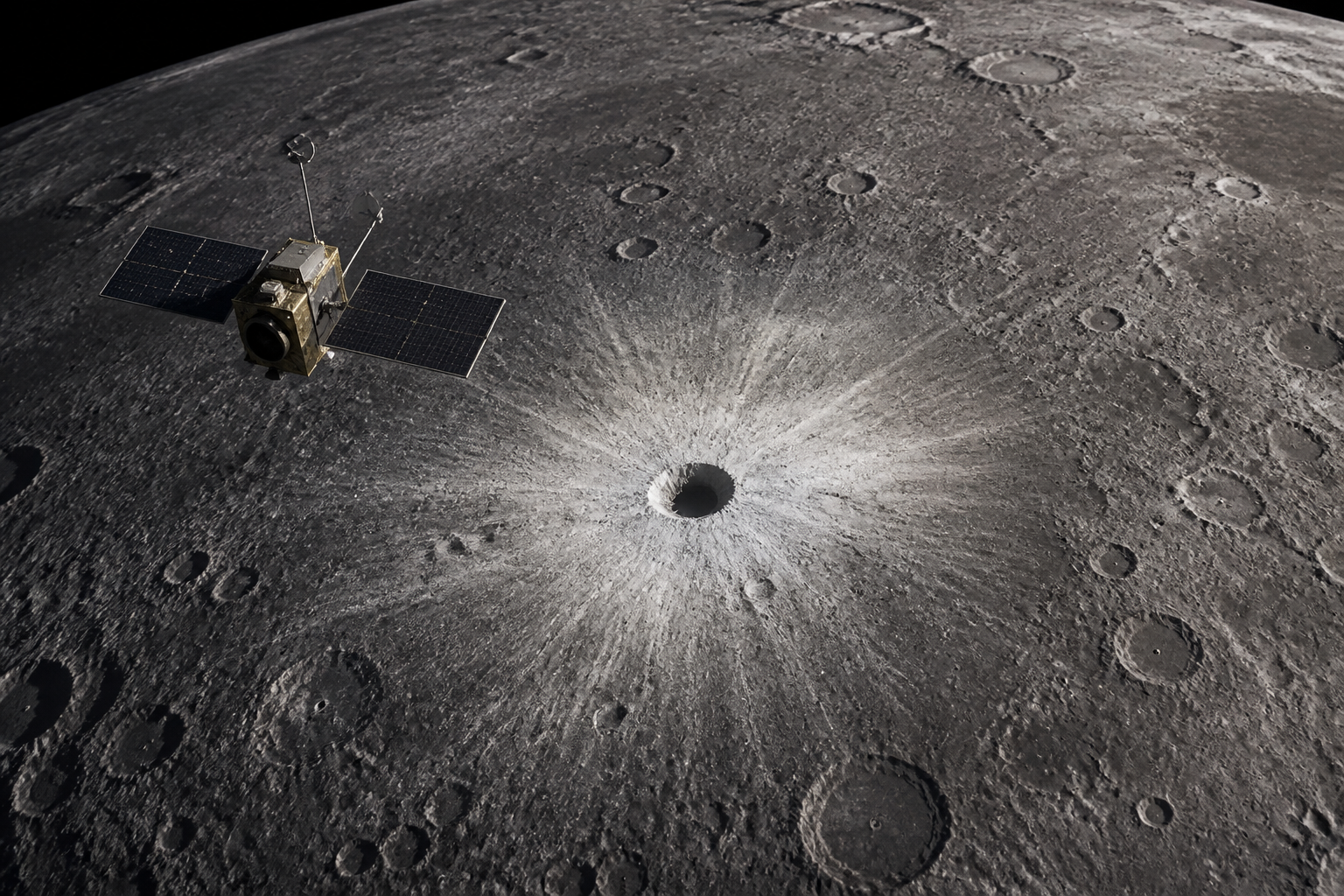
NASA’s Lunar Reconnaissance Orbiter found McGetchin, a rare new Moon crater formed in 2024. Here’s how scientists found it and why its cold spot matters.

NASA announced on September 16, 2026, that its Lunar Reconnaissance Orbiter had identified a newly formed lunar crater named McGetchin. The crater is about 728 feet, or 222 meters, across and roughly 141 feet, or 43 meters, deep. That makes it the largest crater formed and discovered during the spacecraft’s time studying the Moon.
The impact itself happened much earlier. By comparing images taken before and after the change, scientists narrowed the formation window to between April 11 and May 22, 2024. The discovery matters because large, fresh lunar impacts are uncommon, and the surrounding damage gives researchers a rare look at how the Moon’s surface responds to a major collision.
NASA reported the finding alongside two papers published in Science Advances. One study examined the crater and its ejecta, while another used temperature measurements to investigate a broad cold area around the impact site.
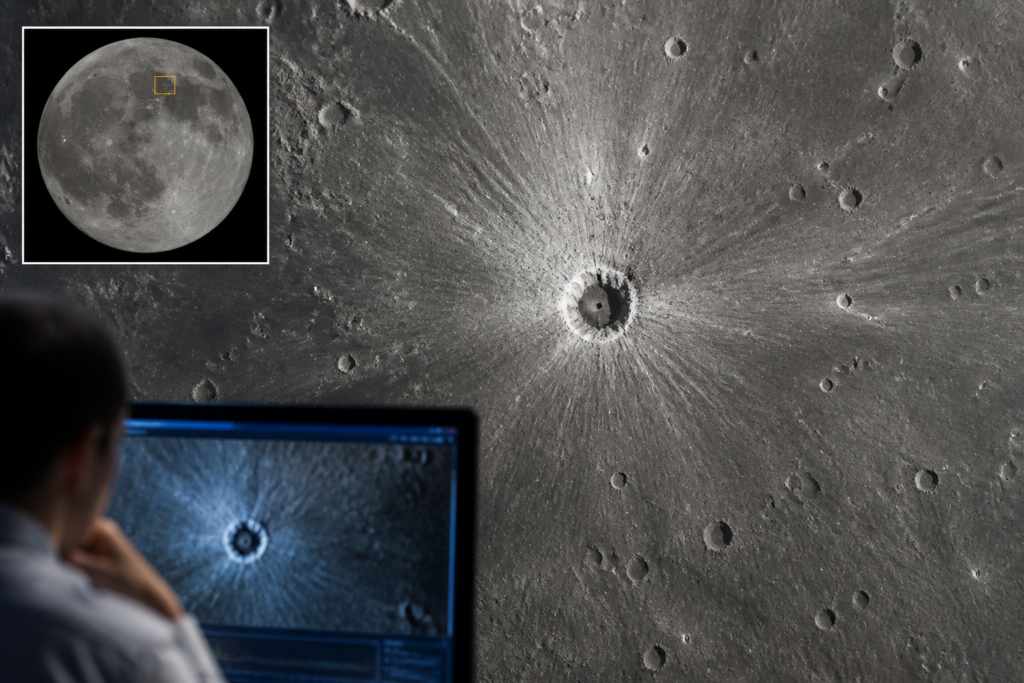
McGetchin sits near the eastern edge of the Moon. It was named after Thomas McGetchin, a lunar scientist who helped lead the Lunar and Planetary Institute, according to the institute’s account of the discovery.
The crater was created when an asteroid or comet fragment struck the surface at high speed. NASA has not presented a final measurement for the impactor’s exact mass or velocity, but scientists estimate that the object may have been comparable in size to a three- to six-story building.
The collision excavated lunar soil and rock and threw that material outward. This debris, called ejecta, created the bright pattern that first drew attention in the orbital images. The white spot visible in NASA’s comparison images is not the crater itself. It is mainly fresh material scattered around the crater, while the dark halo reflects additional changes in the surrounding surface.
| Confirmed detail | What it means |
|---|---|
| Crater name | McGetchin, named for lunar scientist Thomas McGetchin |
| Estimated formation window | April 11 to May 22, 2024 |
| Width | About 728 feet, or 222 meters |
| Depth | About 141 feet, or 43 meters |
| Discovery date | October 24, 2025, during a review of LRO imagery |
| Public announcement | September 16, 2026 |
Robert Wagner, an image-processing specialist working with the Lunar Reconnaissance Orbiter Camera team, noticed the unusual feature during a routine data-quality check on October 24, 2025. He was reviewing broad Moon images and using software to highlight areas that had changed over time.
The software compares many images and makes unchanged terrain appear gray while new or altered features stand out as bright or dark patches. That process also creates plenty of false alarms because shadows, lighting angles, and image conditions change from one pass to another. Researchers still have to inspect the candidates manually.
McGetchin was unusually easy to recognize because its ejecta pattern covered hundreds of image pixels. After the initial discovery, scientists used the orbiter’s sharper Narrow-Angle Camera to examine the crater in greater detail. Those close-up images helped establish its size, shape, rim and surrounding terrain.
The discovery shows why repeated orbital imaging is valuable. A single photograph might show a crater, but a sequence of images can reveal when it formed and separate a recent impact from the Moon’s much older geological features.
The Moon has only a very thin exosphere, not an atmosphere like Earth’s. As a result, incoming space rocks are not slowed or burned up in the same way they often are before reaching Earth’s surface.
That does not mean the Moon is constantly being struck by large objects. Most impacts are tiny and produce craters too small for orbital cameras to identify easily. NASA estimates that impacts large enough to create craters of roughly 30 feet can occur across the Moon about 140 times per year. McGetchin was far larger and much rarer.
NASA scientists estimate that an impact capable of creating a crater of this scale may happen about once a century or even less often. The estimate is statistical, not a prediction of when the next event will occur. It also does not mean the Moon experiences one major impact on a fixed schedule.
One of the most interesting findings came from Diviner, the Lunar Reconnaissance Orbiter’s thermal instrument. Follow-up observations showed that an area about four miles wide around McGetchin was roughly 16 degrees Fahrenheit cooler at night than nearby terrain.
The likely explanation involves the lunar regolith, the loose layer of dust, soil and broken rock covering the surface. The impact disturbed and “fluffed up” this material, making it less compact. Less-dense regolith does not retain heat as effectively, so the disturbed area cools more quickly after sunset.
This thermal change extends far beyond the crater’s rim. That gives scientists a way to study the broader footprint of an impact, not just the hole left at the center.
The cold spot may also matter for future lunar operations. Rover wheels, landers and other equipment interact with the uppermost surface layer, so differences in how the regolith is packed could affect traction, stability and mobility. That does not mean McGetchin creates an immediate hazard for a planned mission; rather, it offers a natural case study for understanding terrain that future spacecraft may encounter.
Fresh craters are useful because their effects have not yet been softened by billions of years of micrometeorite impacts, thermal cycling and space weathering. Scientists can compare the bright ejecta, disturbed regolith and thermal signature with older craters to learn how quickly those features fade.
The discovery also supports more detailed lunar change detection. NASA’s orbiter has identified at least 1,000 new impact craters during its mission and flagged many more surface changes linked to impacts, landslides and ejecta. McGetchin stands out because of its size and because researchers could bracket its formation to a relatively short period.
Some questions remain open. NASA says additional work is expected to refine the impactor’s size, mass and speed. Those measurements could help scientists better connect the crater’s dimensions with the energy released during the collision.
The discovery is confirmed and has been publicly reported by NASA and the Lunar and Planetary Institute. The impact occurred in 2024, not in September 2026; September 16, 2026, was the date NASA announced the findings. Researchers are continuing to analyze the crater, its ejecta and the surrounding thermal disturbance.
A. No. NASA determined that the impact happened between April 11 and May 22, 2024. NASA announced the discovery on September 16, 2026, after scientists analyzed the before-and-after imagery.
A. No. The Moon has many ancient craters and enormous impact basins that are far larger. McGetchin is notable because it is the largest newly formed crater identified during the Lunar Reconnaissance Orbiter’s mission.
A. The impact disturbed and loosened the lunar regolith around the crater. That less-dense material loses heat more quickly at night, producing a cooler area that extends several miles beyond the crater.
A. No. At about 222 meters wide, McGetchin is far too small and distant to resolve from Earth-based backyard telescopes. It was identified by comparing high-resolution images taken by NASA’s lunar spacecraft.