Welcome to KnowHow Daily!
Practical guides, money-saving tips, tech solutions, government benefits, and useful information for everyday life.
Welcome to KnowHow Daily!
Practical guides, money-saving tips, tech solutions, government benefits, and useful information for everyday life.

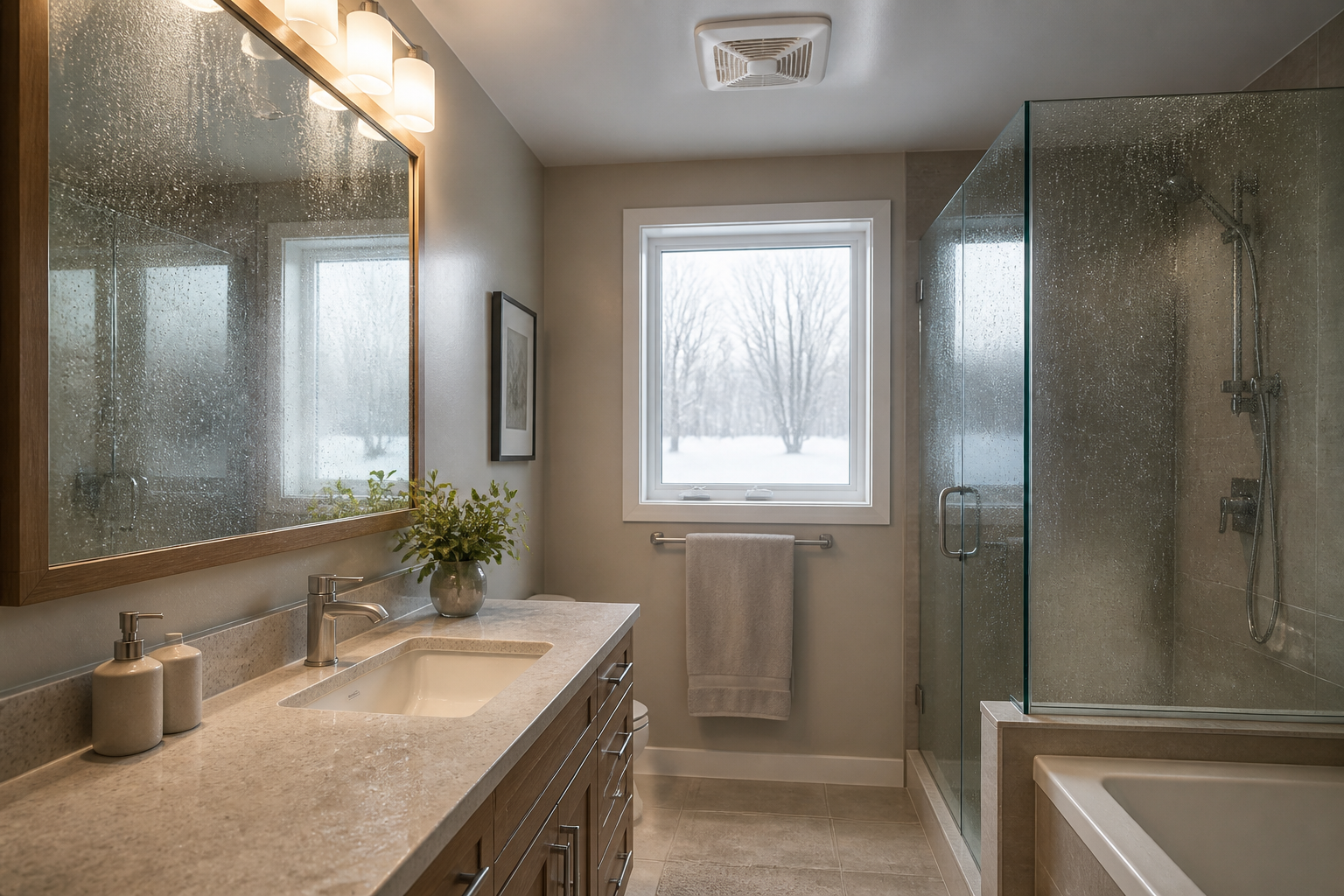
Learn why bathrooms stay damp in Canadian winters and how to reduce condensation, control humidity, improve ventilation, and prevent mold growth.

Your bathroom stays damp in winter because showering adds warm water vapour to the indoor air, while winter makes many bathroom surfaces colder. When that warm, moist air touches a cold mirror, window, exterior wall, ceiling, or pipe, it can turn back into liquid water. This process is called condensation.
Condensation is more than an annoying fog on the mirror. Repeated moisture can soak grout, caulking, drywall, paint, wood trim, and ceiling materials. If those areas stay damp, mold and mildew can begin to grow.
Winter often makes the problem worse because windows are closed, homes are heated, and airtight construction can trap moisture indoors. A bathroom fan that is undersized, rarely used, clogged with dust, or vented into an attic instead of outdoors can also leave humid air behind.
Health Canada recommends maintaining indoor relative humidity between 30% and 50%. In colder parts of Canada, a winter target closer to 30% to 40% may help reduce window and bathroom condensation, especially during very cold weather.
A small digital hygrometer can show whether the problem is really high humidity. Place it outside the bathroom as well as inside it, because a bathroom may become temporarily humid during a shower even when the rest of the home is within a reasonable range.
As a practical rule, lower the humidity if you notice persistent condensation on bathroom surfaces, bedroom windows, or other cold areas. If the reading is regularly above 50%, reduce moisture at the source and consider a dehumidifier in the dampest part of the home.

Turn on the bathroom exhaust fan before or as soon as the shower starts. Keep it running during the shower and for at least 30 minutes afterward. The fan should move air outdoors, not into the attic, wall cavity, ceiling space, or another room.
To check whether the fan is moving air, hold a single sheet of toilet paper near the grille. It should be gently pulled toward the fan. This simple test does not confirm that the duct is connected correctly, but weak airflow is a reason to clean the grille, inspect the fan, or ask a qualified professional to check the system.
During winter, make sure the exterior vent is not blocked by snow, ice, lint, leaves, or a stuck damper. A blocked outlet can greatly reduce ventilation and may allow moisture to collect in the duct.
Closing the door while showering can help keep moisture from spreading through the home, but the fan needs replacement air to work. If the door is tightly sealed and there is no undercut or transfer grille, the fan may struggle to pull humid air out.
After the shower, leave the fan running and keep the door slightly open if doing so improves airflow without allowing moisture to spread into a bedroom or hallway. In a small bathroom, a modest gap under the door may be enough to support ventilation.
Use a squeegee on shower walls and glass, then wipe standing water from the tub or floor. Drying surfaces reduces the amount of water that can evaporate back into the air and helps grout and caulking dry faster.
Do not ignore damp bath mats, towels, or fabric shower curtains. Hang them so they can dry fully instead of leaving them bunched on the floor or against a wall.
Not all bathroom moisture comes from showering. Check around the toilet base, under the sink, behind the vanity, around the tub, and near supply lines. A slow leak may keep drywall or flooring damp even when the room appears clean and well ventilated.
Look for bubbling paint, swollen trim, soft flooring, discoloured drywall, musty odours, or mold that returns soon after cleaning. These signs suggest that the moisture source needs to be repaired rather than covered with new caulking or paint.
If mold or water marks appear mainly on an exterior wall, ceiling corner, window frame, or behind a cabinet, the surface may be unusually cold. Cold spots can result from insufficient insulation, air leaks, thermal bridging, or furniture blocking warm air.
Keep heating vents and baseboards clear. Leave a small gap between large cabinets and exterior walls where practical, and avoid packing storage tightly into cold corners. Opening blinds or curtains can also help warm air reach windows.
A bathroom fan must discharge outdoors. Venting humid bathroom air into an attic or ceiling cavity can create hidden moisture problems, including damp insulation, roof-deck condensation, and mold that may not be visible from inside the bathroom.
If you are unsure where the duct goes, or if moisture appears around the fan housing or ceiling, have the ventilation route inspected. This is especially important after renovations or in older homes where fans may have been installed without proper exterior ducting.
A dehumidifier can help when the whole home is humid, when condensation appears in several rooms, or when a basement or lower level is contributing moisture. It is less useful as the only solution for a bathroom with a broken or poorly routed exhaust fan.
Use a hygrometer to guide the decision rather than running a dehumidifier continuously without measuring humidity. In a cold Canadian winter, excessive dehumidification can make the air uncomfortably dry and may irritate skin, eyes, or airways.
If your home has a heat-recovery ventilator, or HRV, use and maintain it according to the manufacturer’s instructions. An HRV can exchange stale indoor air for outdoor air while recovering some heat, which is helpful in a relatively airtight home.
For a small amount of mold on a washable hard surface, Health Canada recommends cleaning with unscented dishwashing detergent and water, then drying the area completely. Wear gloves and eye protection, improve ventilation, and avoid disturbing mold unnecessarily.
Do not simply paint over mold or clean it without fixing the moisture problem. Mold will likely return if condensation, a leak, or inadequate ventilation remains.
Consider professional help when the affected area is extensive, the source of moisture is unclear, materials such as drywall or insulation are involved, or the mold keeps returning. People with asthma, severe allergies, immune suppression, or other health concerns should avoid unnecessary exposure and discuss suspected mold-related symptoms with a healthcare professional.
The main distinction is simple: condensation requires less moisture in the air, warmer or better-insulated surfaces, or better airflow. If the bathroom stays damp despite reasonable humidity and a working fan, investigate hidden leaks or building-envelope problems instead of treating the visible mold alone.
A. The fan may be too weak, clogged, running for too short a time, or venting somewhere other than outdoors. A blocked exterior outlet, inadequate replacement air, plumbing leak, or very cold wall can also keep the room damp.
A. Briefly opening a window can remove moisture when outdoor air is cold and dry, but it is not always practical in severe weather. A properly installed exhaust fan is usually the better everyday solution, especially if the window creates drafts or freezing risks.
A. It can, but condensation is more common when warm shower air reaches a cold ceiling. If the stain grows after rain or snowmelt, appears outside the normal shower area, or returns despite good ventilation, have the roof, attic, plumbing, and ceiling assembly inspected.
A. Indoor mold can aggravate allergies and asthma and may cause respiratory or irritation symptoms in some people. The safest approach is to remove visible mold, correct the moisture source, and seek medical advice if symptoms persist or if someone in the household has significant respiratory or immune-related health concerns.