Welcome to KnowHow Daily!
Practical guides, money-saving tips, tech solutions, government benefits, and useful information for everyday life.
Welcome to KnowHow Daily!
Practical guides, money-saving tips, tech solutions, government benefits, and useful information for everyday life.

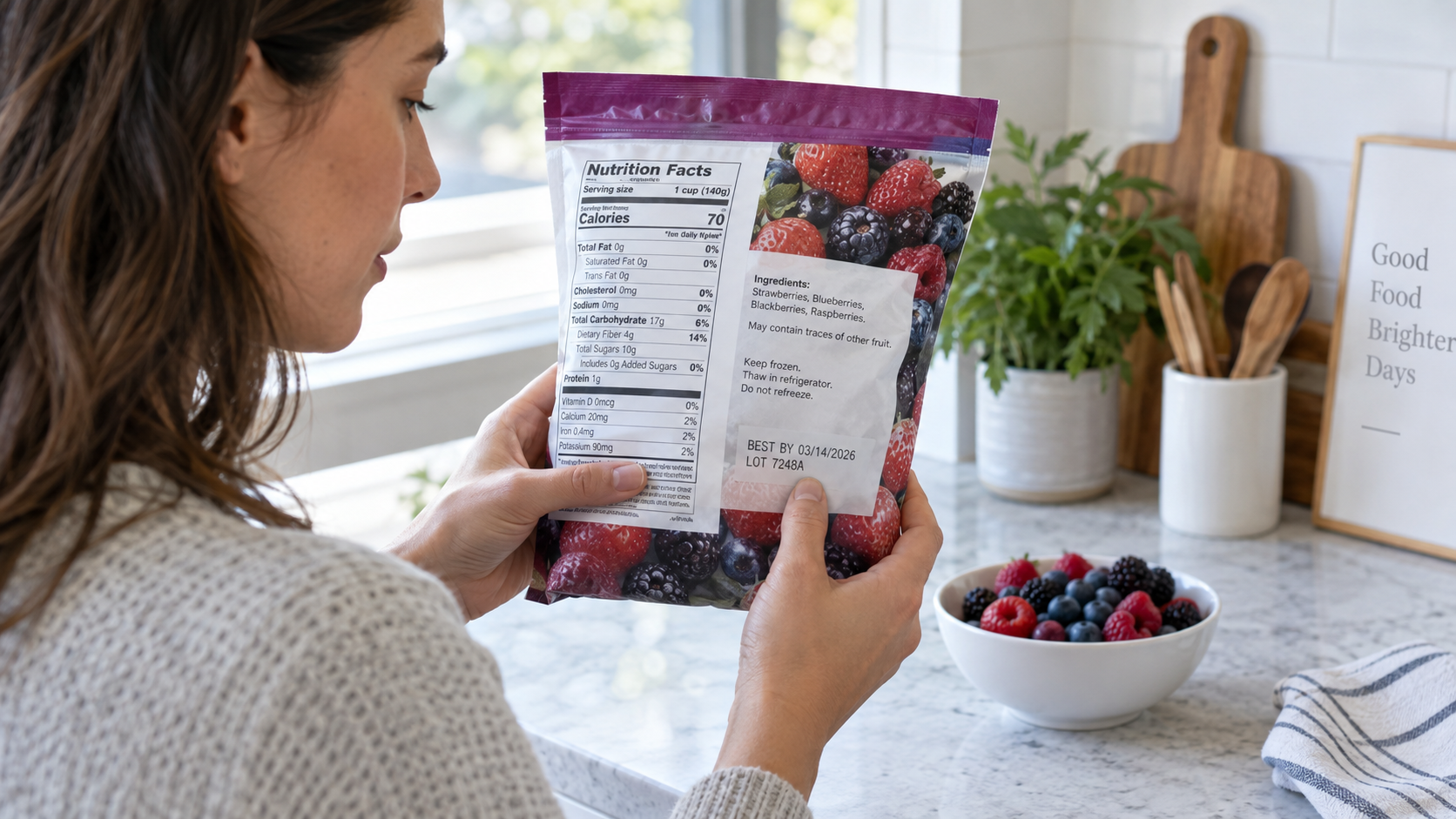
The FDA says a multistate E. coli outbreak is linked to recalled Great Value and GreenWise frozen berries. Check lots, dispose safely, and learn when to call a doctor.
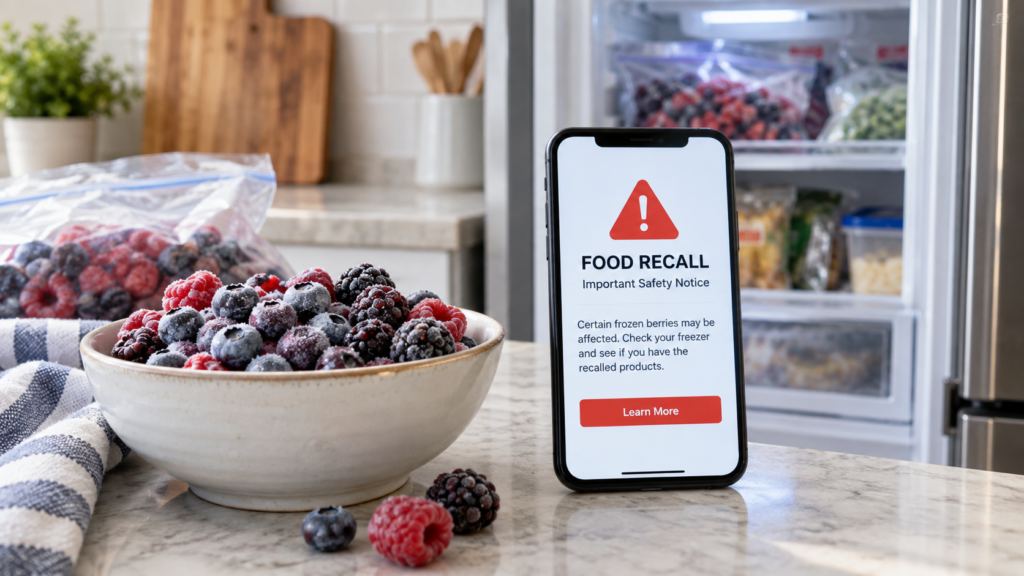
The FDA says its investigation into a multistate outbreak of E. coli O145:H28 remains ongoing. As of the agency’s latest case update, 17 people in two states had been infected, six had been hospitalized, and no deaths had been reported. Illnesses began between May 11 and August 2, 2026.
The products connected to the investigation are frozen berries from Frutas y Hortalizas del Sur S.A. of San Carlos, Chile. The recalled items were sold under Great Value and GreenWise branding, and the affected products may still be in home freezers because frozen berries have a long shelf life.
If you have recalled berries, do not taste them, serve them, blend them into smoothies, or use them in baking. The safest next step is to discard them or return them to the store.
View the official FDA frozen blueberry outbreak notice
The current Great Value recall covers a 10-ounce package of Organic Triple Berry Blend with these identifying details:
The FDA says this lot was distributed to select Walmart stores in 26 states and Puerto Rico: Alabama, Arkansas, Florida, Georgia, Illinois, Indiana, Iowa, Kansas, Kentucky, Louisiana, Michigan, Minnesota, Mississippi, Missouri, Nebraska, North Carolina, North Dakota, Ohio, Oklahoma, South Carolina, South Dakota, Tennessee, Texas, Virginia, West Virginia, and Wisconsin.
GreenWise products were sold through Publix stores in Alabama, Florida, Georgia, Kentucky, North Carolina, South Carolina, Tennessee, and Virginia. The recalled products include:
| Product | Size | UPC |
|---|---|---|
| GreenWise Organic Whole Blueberries | 10 ounces | 41415-06453 |
| GreenWise Organic Whole Blueberries | 48 ounces | 41415-12053 |
| GreenWise Organic Whole Mixed Berries | 10 ounces | 41415-06753 |
| GreenWise Organic Whole Mixed Berries | 48 ounces | 41415-12153 |
The supplier’s original GreenWise recall identified a 10-ounce package of organic blueberries with printed lot code 60401, shown on some packaging as 6 040 01, and a February 9, 2028, best-by date. Publix later announced a broader recall covering all lots of the listed GreenWise whole blueberry and whole mixed-berry products.
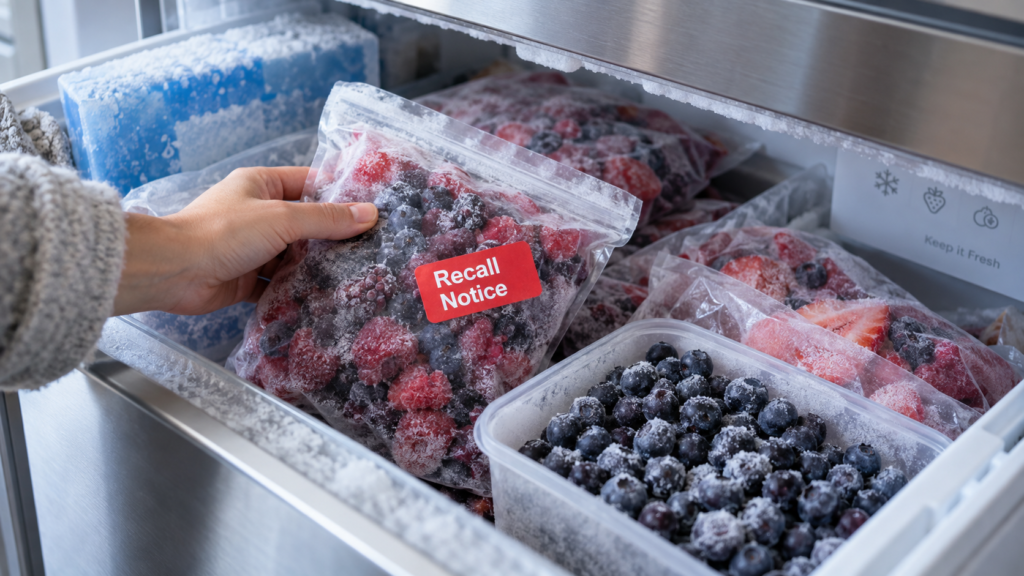
Do not rely on smell, appearance, or a small taste to decide whether the product is safe. Food contaminated with E. coli may look and smell normal.
For households in Canada, the FDA advisory lists distribution in the United States and Puerto Rico, not Canadian provinces or territories. If you bought the same products through an importer, cross-border retailer, or another source, compare the package details with the FDA notice before using them.
Frozen food can leave contaminated liquid or particles on freezer shelves, counters, blender parts, measuring cups, cutting boards, and storage containers. Cleaning those areas helps reduce the chance of spreading bacteria to other food.
Wash the inside walls and shelves of the freezer or refrigerator, along with utensils and containers that touched the berries. Then sanitize the surfaces with a solution of one tablespoon of chlorine bleach in one gallon of hot water, following the product label and applicable safety directions. Let surfaces dry, and wash your hands again when you finish.
Pay special attention to blender jars, smoothie cups, reusable bags, and drawers where the package may have leaked or rested. Do not mix bleach with other cleaners.
View the FDA food safety cleaning guidance
Symptoms can begin a few days after exposure or as long as nine days later. Common symptoms include severe stomach cramps, diarrhea that may be bloody or watery, nausea, vomiting, and fever.
Contact a health care provider if you ate recalled berries and develop symptoms that could be related to an E. coli infection. Tell the provider about the recalled product and when you ate it. Do not wait for symptoms to become severe, especially if the person affected is a young child, older adult, pregnant, or immunocompromised.
Seek urgent medical care for bloody diarrhea, diarrhea or vomiting lasting more than two days, a fever above 102°F, or signs of dehydration such as very dark urine, little or no urination, dizziness, extreme thirst, or a dry mouth.
E. coli infections can sometimes lead to hemolytic uremic syndrome, or HUS. Warning signs include little or no urination, unusual bruising or tiny red spots, blood in the urine, extreme tiredness, irritability, or reduced alertness. HUS is a medical emergency.
The FDA says the investigation is still ongoing and that the advisory may be updated as investigators receive more information. The agency has not announced an end date for the investigation. Consumers should rely on the package details in the current FDA notice rather than assuming that every frozen blueberry or berry blend is affected.
The practical status for shoppers is straightforward: avoid the recalled Great Value and GreenWise products, remove them from your freezer, clean any areas they touched, and seek medical advice if symptoms appear after possible exposure.
A. No. The FDA notice identifies specific Great Value and GreenWise frozen berry products and lots. Other brands and packages are not automatically part of this recall.
A. If the berries were removed from their packaging and you cannot confirm whether they match the recalled products, the FDA advises throwing them away rather than eating them.
A. Do not try to make recalled products safe by cooking, blending, or baking them. Recalled food should be discarded or returned to the place of purchase.
A. Symptoms can begin a few days after exposure and may appear up to nine days later. Contact a health care provider if symptoms develop after eating recalled berries.








FDA Infant Formula Standards Proposal: What Parents Need to Know About Nutrient Changes and the Comment Deadline