Welcome to KnowHow Daily!
Practical guides, money-saving tips, tech solutions, government benefits, and useful information for everyday life.
Welcome to KnowHow Daily!
Practical guides, money-saving tips, tech solutions, government benefits, and useful information for everyday life.

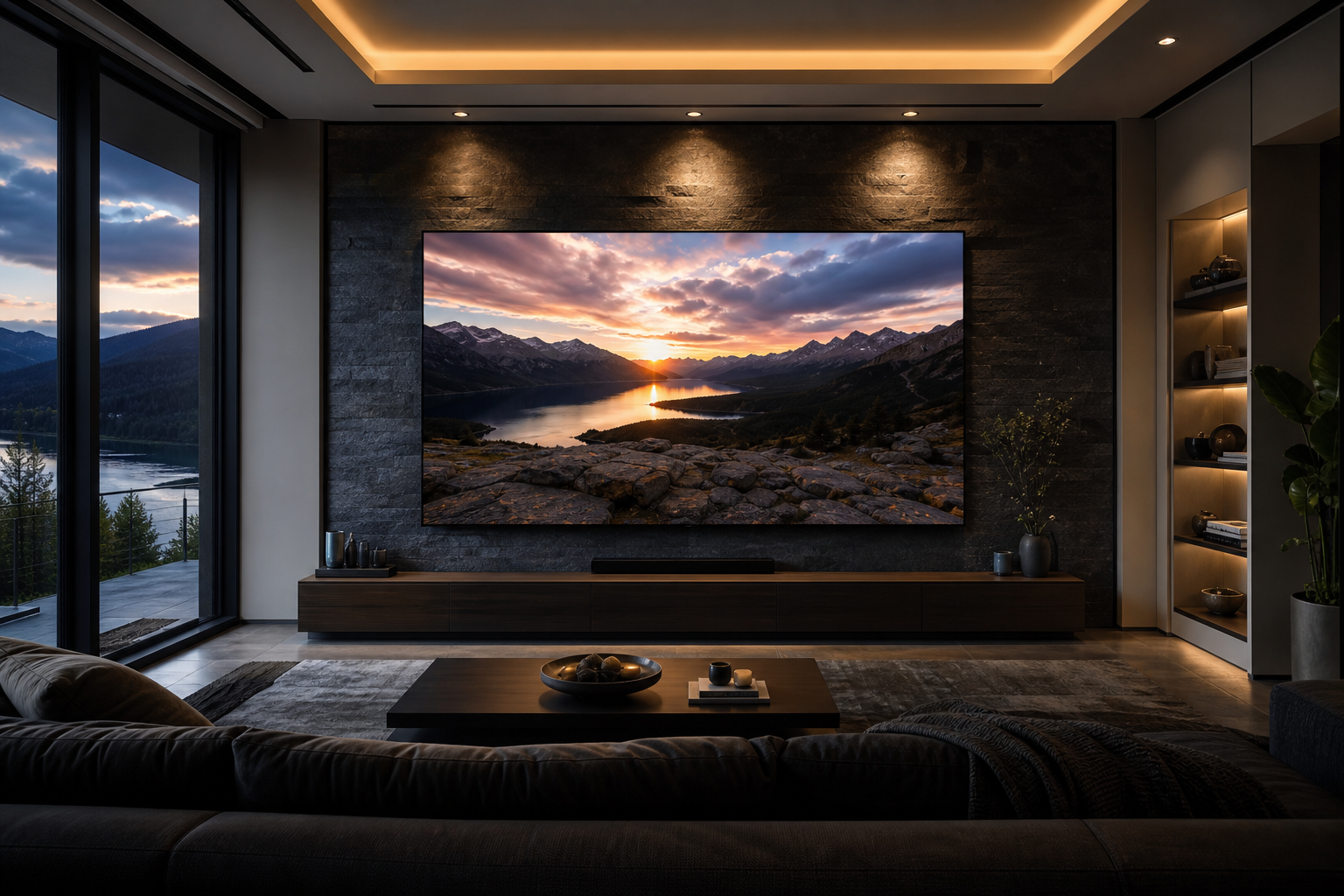
Compare the best 98- to 100-inch TVs of 2026, including TCL, LG, Sony, Samsung, and budget-friendly models for movies, sports, gaming, and bright rooms.
A 98- to 100-inch TV is no longer limited to luxury custom theaters. In 2026, shoppers in Canada and the United States can choose from lower-cost LED models, Mini LED sets with strong HDR brightness, and premium televisions designed for serious movie watching.
The biggest mistake is choosing by screen size alone. At this scale, panel quality, viewing distance, delivery access, wall strength, warranty support, and installation costs matter almost as much as the picture. A 98-inch screen is about 85 inches wide, while a 100-inch model is roughly 87 inches wide. The difference in size is modest, so picture quality and price should guide the final decision.
| TV | Best for | Key strengths | Observed price |
|---|---|---|---|
| TCL 98QM7L | Best overall value | SQD Mini LED, 144Hz, Google TV, strong gaming features | US$2,499.99; C$4,999.99 |
| LG 100QNED84BU | Best 100-inch TV | Mini LED, Dolby Vision, webOS, 120Hz | US$3,299.99; C$5,499.99 |
| Sony 98-inch BRAVIA 5 | Best for movies at a lower premium price | Mini LED, Sony XR processing, 120Hz, Google TV | About US$3,999.99; C$4,999.99 |
| Sony 98-inch BRAVIA 7 II | Best premium picture | True RGB LED, refined processing, strong motion handling | About C$12,999.99 |
| LG 98-inch NU85 | Best lower-cost big screen | 98-inch 4K display, webOS, simple streaming setup | US$1,499.99 |
| TCL 98QM8L | Best step-up gaming and HDR option | Higher-end SQD Mini LED performance, 144Hz-class gaming support | US$3,999.99 |
Prices above are retail snapshots checked for September 5, 2026. Promotions, delivery fees, taxes, environmental handling fees, and installation charges can change by retailer and country.
The TCL 98QM7L is the easiest recommendation for most buyers. Its SQD Mini LED backlight gives it substantially better contrast and HDR impact than basic direct-lit 98-inch televisions, while its 144Hz-class gaming features make it a practical choice for PlayStation 5, Xbox Series X, and PC gaming.
It uses Google TV, supports Dolby Vision and Dolby Atmos, and includes gaming-focused features such as variable refresh rate support and a game bar. The 2026 U.S. direct price observed was US$2,499.99, making it one of the most compelling big-screen TV deals available. Canadian pricing is much higher, with Best Buy listing the model at C$4,999.99 before applicable taxes and fees.
Choose the QM7L if you want a genuinely large screen for sports, streaming, and gaming without moving into luxury-TV pricing. Its main compromise is that it does not provide the same processing refinement or premium motion handling as Sony’s most expensive models.
The LG 100QNED84BU is the clearest choice for shoppers who specifically want a 100-inch screen rather than a 98-inch model. Its Mini LED backlight is designed to improve brightness and local contrast, which helps in living rooms with windows or overhead lighting.
LG includes Dolby Vision, Dolby Atmos, Filmmaker Mode, 120Hz performance, and webOS. The Alpha 8 AI Processor Gen3 handles upscaling and image processing, while LG’s Magic Remote and familiar app interface make the TV easy to use for everyday streaming.
U.S. pricing observed at major retailers was about US$3,299.99, while Canadian pricing was about C$5,499.99. That makes the LG more expensive than the TCL QM7L in the United States, but it may appeal to buyers who prefer webOS, Dolby Vision support, LG’s service network, or the exact 100-inch format.
Sony’s 98-inch BRAVIA 5 is a strong movie-room option for viewers who value natural image processing, clean motion, and accurate handling of lower-quality streaming content. It uses a Mini LED display, Sony’s XR processor, Google TV, Dolby Vision, and a 120Hz panel.
The BRAVIA 5 is not the brightest or least expensive choice in this category, but Sony’s processing can make compressed streaming video, older movies, and cable content look more polished. It is particularly appealing if your household watches a mixture of high-quality 4K movies and ordinary broadcast or streaming programming.
As of September 5, the model was listed around US$3,999.99 in the United States and C$4,999.99 in Canada, although sale pricing varies. The TV is also deep and heavy, so professional delivery and installation are strongly recommended.
The Sony BRAVIA 7 II is the premium pick for buyers who want the most advanced picture technology in this size range and are comfortable paying for it. Its True RGB LED system is designed to improve color volume and light control, while Sony’s XR processing focuses on realistic textures, motion, and contrast.
This is the type of TV that makes sense in a dedicated media room, a high-end living room, or an installation where picture quality matters more than value. Canadian retail pricing observed was approximately C$12,999.99, placing it far above the TCL, LG, and BRAVIA 5 alternatives.
For most shoppers, the BRAVIA 7 II is not the sensible value choice. It is the right choice when you want a premium Sony experience at 98 inches and do not want to compromise on processing or color performance.
The LG NU85 is worth considering when the main goal is getting a 98-inch picture for the lowest practical price from a major brand. In the United States, the 2026 model was listed around US$1,499.99, dramatically below Mini LED and premium RGB models.
This is a conventional LED television rather than a premium Mini LED set. It should work well for casual streaming, sports, family rooms, and buyers who would rather spend less on the TV and more on a soundbar or installation. However, it will not deliver the same HDR brightness, black-level control, or gaming performance as the TCL QM7L or TCL QM8L.
The TCL 98QM8L sits above the QM7L in TCL’s 2026 lineup and is aimed at buyers who want a more premium large-screen experience without moving all the way to ultra-luxury pricing. It uses TCL’s SQD Mini LED technology and offers a stronger feature set for HDR viewing and gaming.
U.S. retail pricing observed was approximately US$3,999.99. That is a substantial jump over the QM7L, so the QM8L makes sense mainly for shoppers who watch a lot of HDR movies, play games regularly, or want better performance in a bright room.
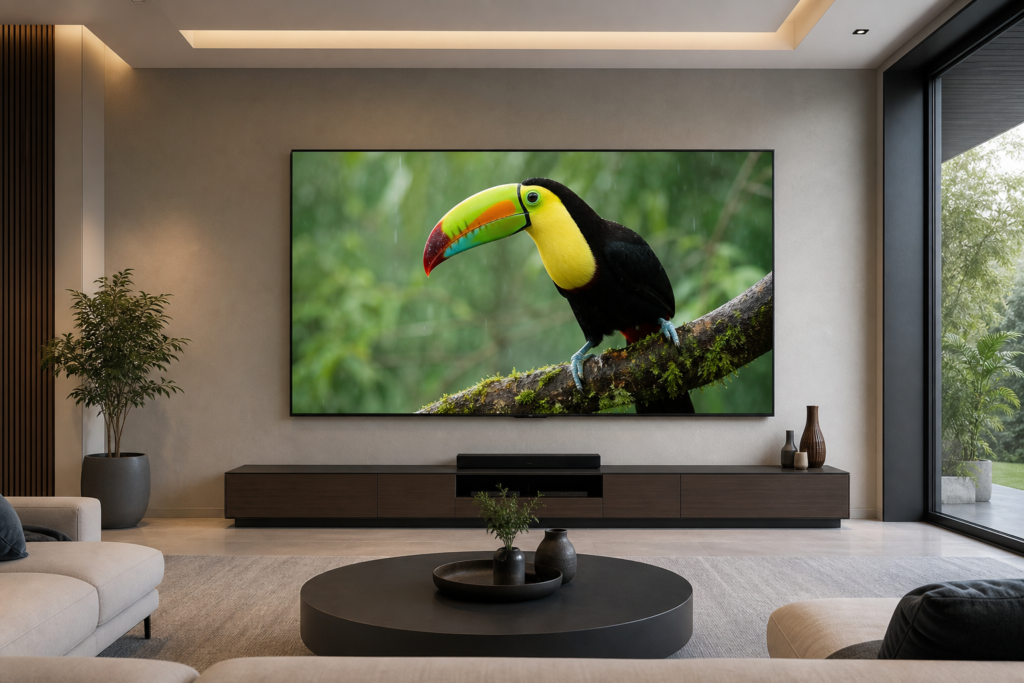
Usually, the difference is smaller than buyers expect. A 100-inch screen has roughly 4 percent more screen area than a 98-inch screen, but both require a similar room, mounting surface, and delivery plan.
Choose 100 inches when the model is a better fit, the price is competitive, or you specifically want LG’s 100-inch QNED format. Choose 98 inches when you want more brand and model options, especially from TCL, Sony, Samsung, and LG.
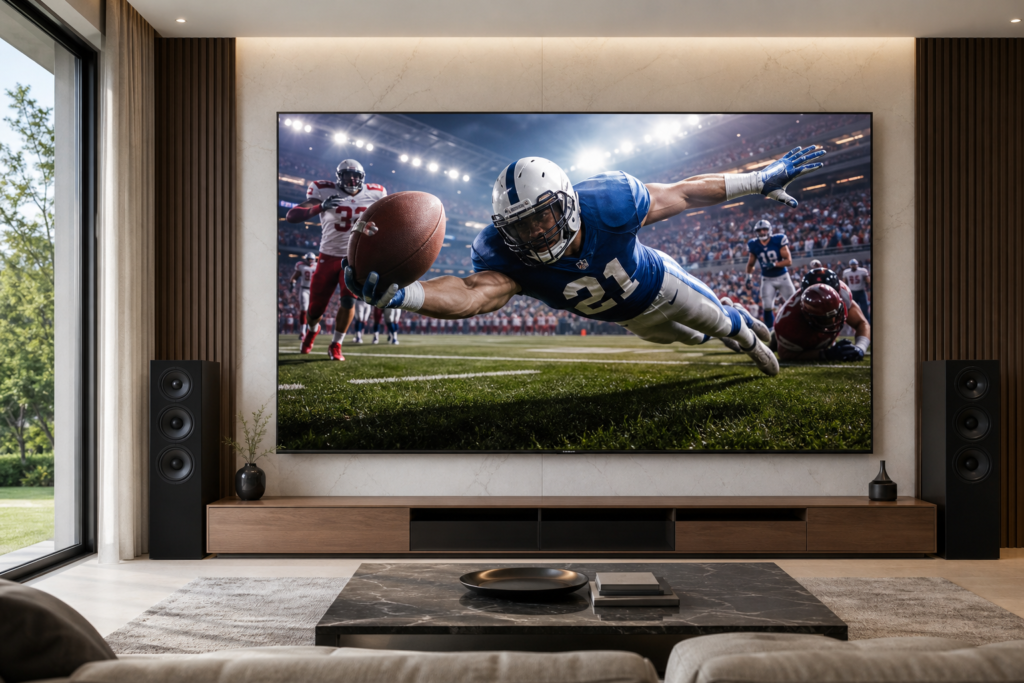
For 4K content, a practical starting point is about 10 to 12 feet from the screen. LG gives a similar recommendation for its 97- and 100-inch televisions. Sitting closer can be enjoyable for cinematic viewing, but lower-quality cable and streaming video may reveal compression, noise, or softness.
Mini LED is one of the most useful upgrades at this size. It can improve brightness, shadow detail, and HDR impact compared with basic LED backlighting. It is especially useful in bright rooms and for sports or animated content.
Look for a native 120Hz or higher panel, HDMI 2.1 features, variable refresh rate, and low input lag if you play console or PC games. TCL’s QM7L and QM8L are particularly attractive for gaming, while LG and Sony also offer strong 120Hz options in selected models.
Dolby Vision can improve supported movies and shows by allowing dynamic HDR metadata. It is not the only measure of picture quality, but it is a useful advantage for streaming libraries that support it. Also check peak brightness and local dimming, because an HDR label alone does not guarantee a convincing HDR image.
Model names are often similar across both countries, but pricing, included installation, environmental fees, delivery coverage, and retailer promotions can differ sharply. For example, the TCL QM7L was observed at US$2,499.99 in the United States and C$4,999.99 in Canada, while the LG 100QNED84BU was observed around US$3,299.99 and C$5,499.99 respectively.
In Canada, check whether the listed price includes an environmental handling fee and whether the retailer delivers to your postal code. In the United States, confirm whether the advertised price requires a membership, store credit card, or limited-time promotion. For either country, verify the return policy before accepting delivery because returning an oversized television can be difficult and expensive.
A. Not necessarily. A 98-inch TV can work well in a large living room or open-concept space if the viewing distance is roughly 10 to 12 feet and the wall is wide enough. The bigger concern is usually getting the boxed TV through doorways and around corners, not watching it comfortably.
A. A 98-inch TV is usually easier to use every day because it provides consistent brightness, built-in streaming apps, instant startup, and better performance in rooms with ambient light. A projector can create a larger image for less money, but it generally requires more careful room lighting, screen placement, and maintenance.
A. Most buyers should plan for one. The built-in speakers can handle dialogue and casual viewing, but a screen this large benefits from sound with a wider front stage and a separate subwoofer. Make sure the soundbar does not block the bottom edge or infrared sensors.
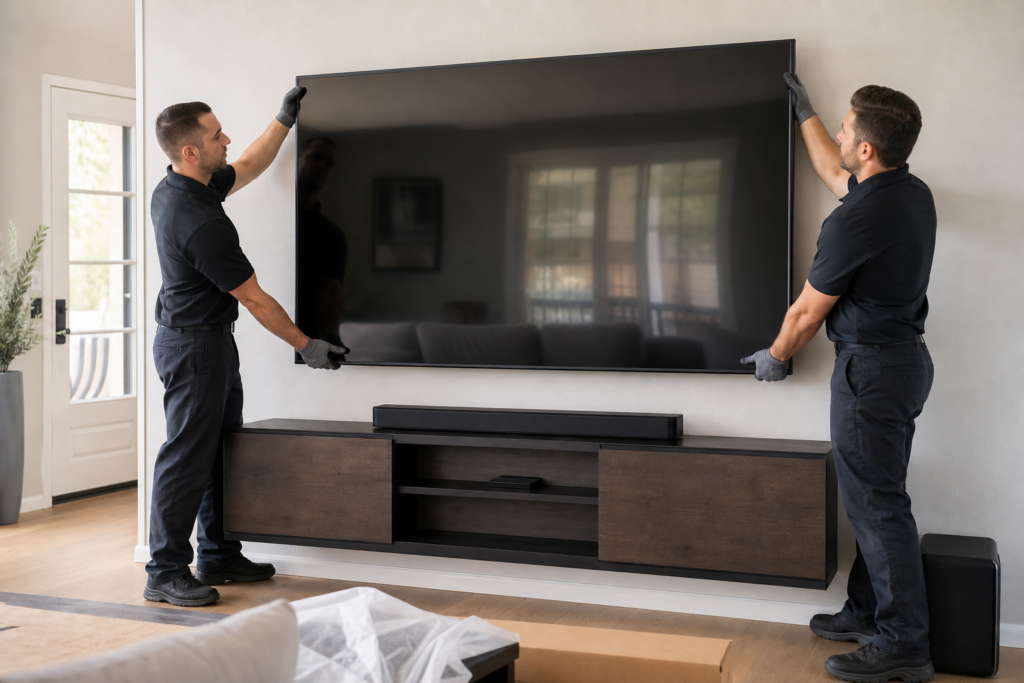
A. It is not recommended. Large televisions are awkward, flexible, and heavy even when the listed weight appears manageable. Use a professional installation service or at least two to four capable adults, depending on the model and mounting method.