Welcome to KnowHow Daily!
Practical guides, money-saving tips, tech solutions, government benefits, and useful information for everyday life.
Welcome to KnowHow Daily!
Practical guides, money-saving tips, tech solutions, government benefits, and useful information for everyday life.

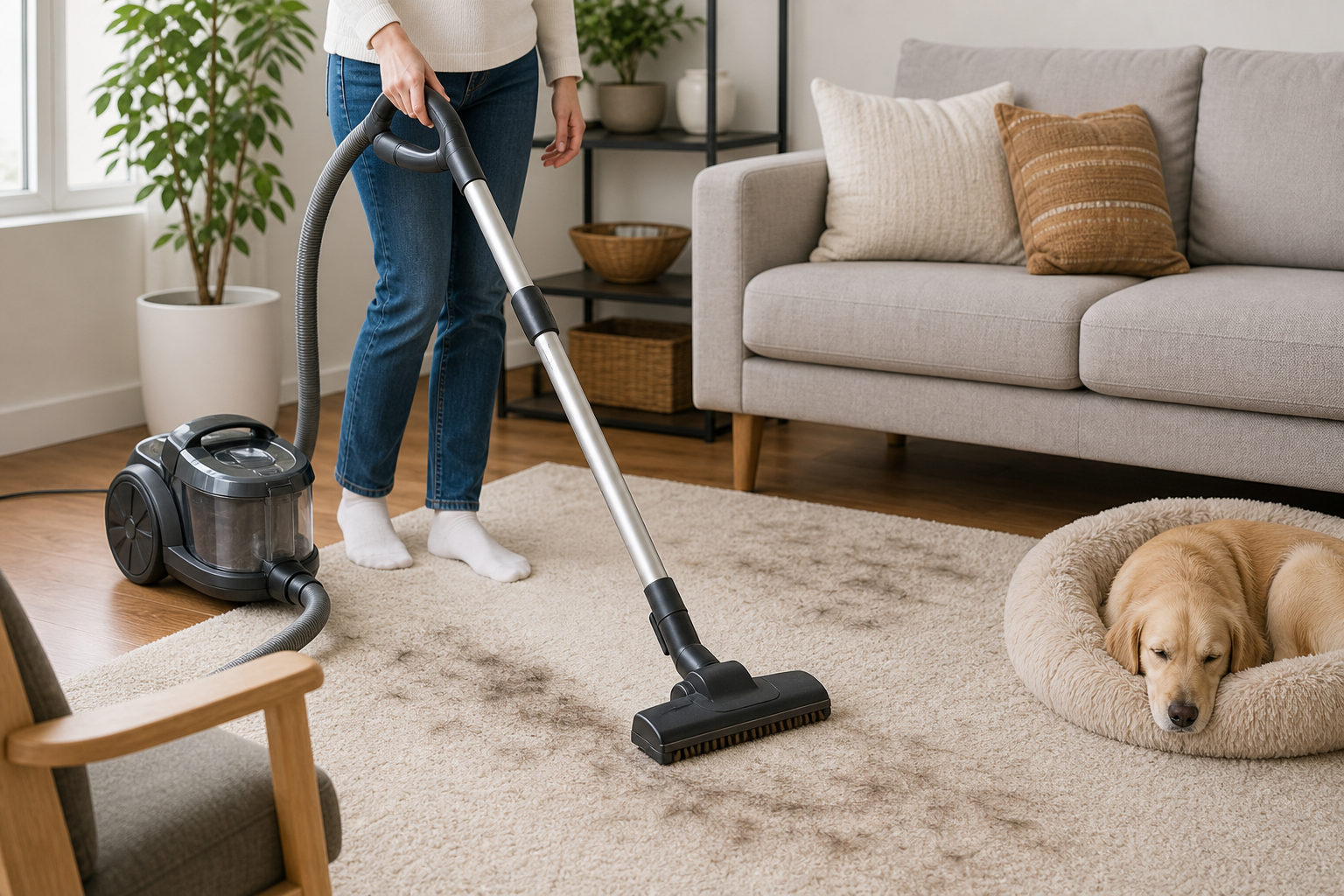
Learn how HEPA filtration, sealed systems, bags, filters, and pet-hair tools affect allergy-friendly vacuum performance in U.S. and Canadian homes.
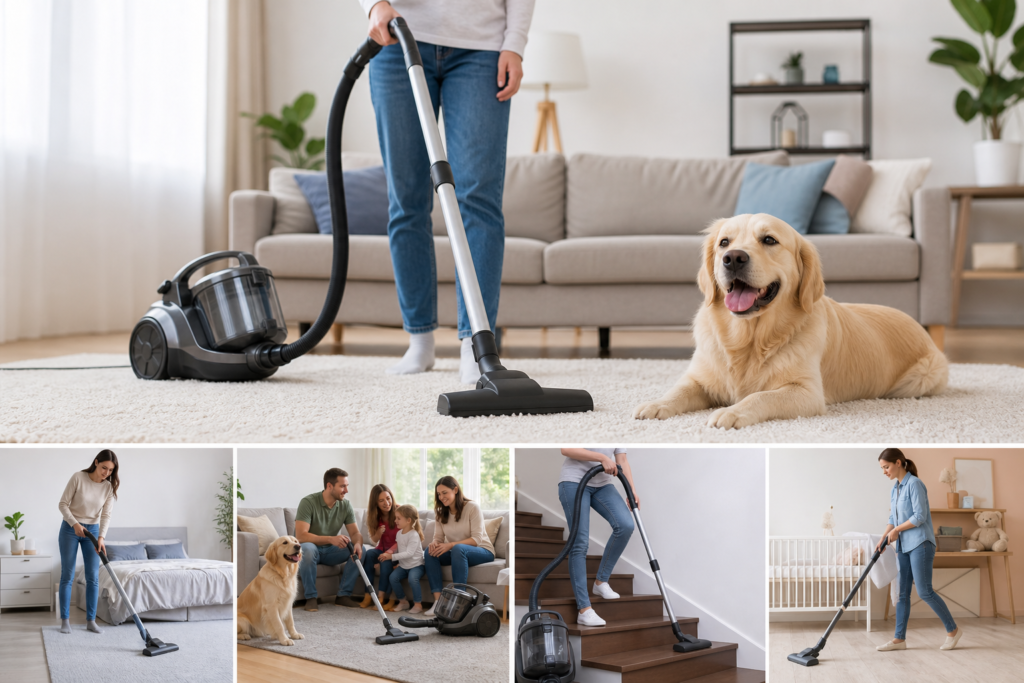
The best HEPA vacuum for allergies is not necessarily the one with the biggest motor or the most impressive marketing claim. Look for three things first: a verified HEPA filter, a sealed system that keeps air from bypassing the filter, and tools that match your floors and furniture.
| Household need | Best fit | Why it makes sense | Main trade-off |
|---|---|---|---|
| Dust sensitivity or asthma triggers | Bagged canister or upright with sealed filtration | Less dust is released during normal operation and bag changes can be contained | Replacement bags add an ongoing cost |
| Heavy pet hair on carpet | Sealed upright or canister with a powered brush | A motorized floor head can lift embedded hair more effectively than suction alone | Brush rolls need regular cleaning |
| Mostly hard floors and quick cleanups | Sealed stick or cordless vacuum with a documented HEPA system | Lightweight and convenient for frequent cleaning | Shorter runtime, smaller dust capacity, and more frequent filter care are common |
| Large home with mixed flooring | Full-size canister or upright with adjustable floor settings | Better capacity and more flexibility across carpet, rugs, and hard floors | Bulkier storage and higher purchase cost |
These are design-based recommendations, not independent product awards. A specific model still needs to be checked for its exact configuration, filtration claims, warranty, and availability in the United States or Canada.
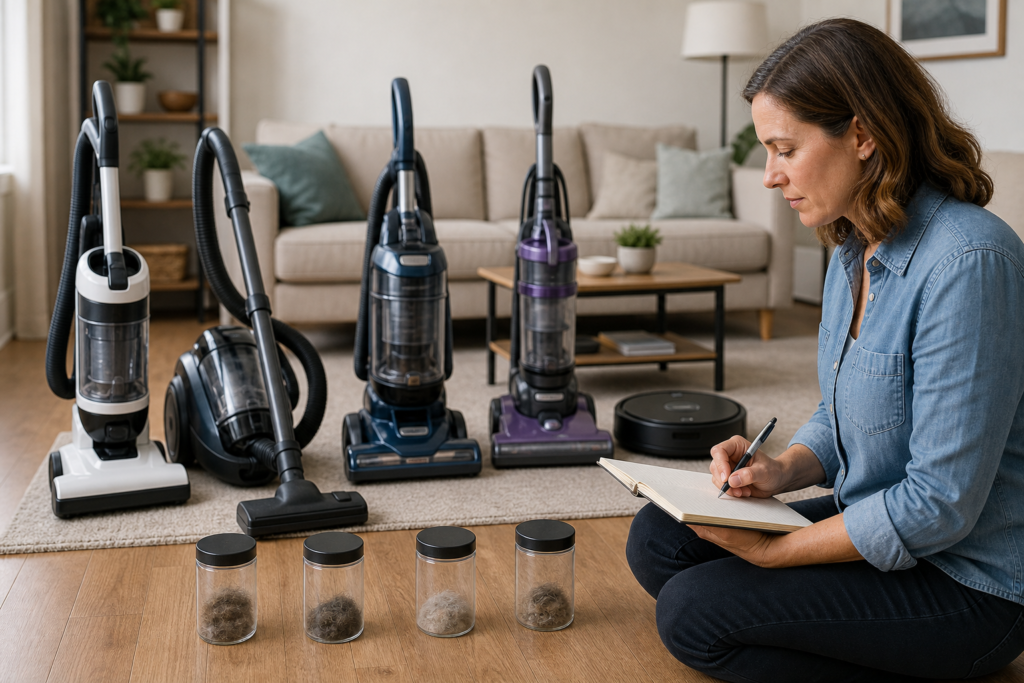
Indoor dust can contain pollen, mold spores, dust mites, pet dander, and other biological particles. Vacuuming removes settled dust, but the process can also stir particles into the air. The U.S. Environmental Protection Agency says a HEPA vacuum may help reduce the amount of vacuumed dust that escapes back into the room.
That benefit depends on the whole machine, not just the filter material. A HEPA filter rated at 99.97% efficiency for particles measuring 0.3 micrometers is useful only if the air drawn into the vacuum is forced through the filter instead of leaking around it. EPA guidance for HEPA vacuums used in renovation cleanup specifically emphasizes a design that prevents air from bypassing the filter.
For this guide, the practical priorities are filtration, sealing, dust disposal, floor performance, attachments, maintenance, and realistic allergy expectations. No product is treated as medically protective, and no model is described as independently tested here.
| Feature | What to look for | Why it matters |
|---|---|---|
| HEPA filter | A clearly defined HEPA or true HEPA specification | Helps capture fine particles that pass through the filter stage |
| Sealed system | Manufacturer documentation describing a sealed air path, complete seal, or equivalent design | Reduces the chance that dirty air escapes through gaps, seams, or the exhaust path |
| Dust disposal | Self-sealing bag or a dust cup that can be emptied without opening it indoors | Limits exposure to concentrated dust during maintenance |
| Floor head | Height adjustment, suction control, and a powered brush for carpet where needed | Helps remove hair and debris without damaging delicate flooring |
| Maintenance | Accessible filters, reasonable replacement costs, and clear instructions | A clogged or neglected filter can reduce airflow and cleaning performance |
A bagged canister or upright with sealed filtration is the easiest category to recommend when minimizing dust exposure is the main goal. The bag contains the debris as it is collected, and many designs allow the full bag to be removed and discarded without tipping a dusty container into a garbage can.
This style is particularly practical for households with wall-to-wall carpet, several bedrooms, or a person who reacts strongly to dust during cleaning. Choose a model with a powered floor head if pets shed heavily or carpets hold hair. For hard floors, make sure the head can switch off its brush roll or use a soft-floor setting.
The trade-offs are ongoing bag purchases, less visibility into how full the container is, and the need to confirm that replacement bags remain available in your region. A bagged design is not automatically sealed, so check the manufacturer’s filtration and air-path description rather than assuming the bag provides complete protection.
Pet hair is a mechanical cleaning problem as much as a filtration problem. A HEPA filter may capture fine particles, but it will not compensate for a floor head that leaves hair behind. Look for a motorized brush roll, a tool designed for upholstery, and a way to remove wrapped hair without taking apart half the vacuum.
A powered brush is most useful on carpet, rugs, stairs, and fabric furniture. On hard floors, a rotating brush can scatter debris or scratch vulnerable surfaces if it is not designed for that use. The most flexible setups let you turn the brush off or change to a hard-floor head.
Pet dander is not the same thing as visible fur. Allergens can be present in skin flakes, saliva, urine, and other material associated with pets, so collecting loose hair is helpful but does not eliminate exposure. Regular cleaning of bedding, upholstery, and pet resting areas still matters.
A cordless vacuum can be a good choice when frequent, quick cleaning is more realistic than occasional deep cleaning. Removing dust and hair several times a week may help prevent buildup, especially in homes with shedding pets and mostly hard floors.
The compromises are usually smaller dust bins, limited runtime, less capacity, and more frequent filter maintenance. Emptying a cordless dust cup can also release a visible puff of dust if the container has to be opened over an indoor trash can. If you choose this format, look for a dust cup that empties from the bottom or can be removed and emptied outdoors.
Be cautious with vague claims such as “captures allergens” or “advanced filtration.” Ask whether the machine has a HEPA filter, whether the entire system is sealed, and whether the claim applies to the exact model and configuration being sold in your country.
Bagged vacuums generally have the cleaner disposal routine because the dust is contained in a replaceable bag. Bagless vacuums avoid bag costs and let you see when the dust cup needs emptying, but the cup, cyclones, and washable filters all require handling.
For either design, maintenance is part of filtration performance. Replace disposable bags before they become overfilled, clean or replace filters according to the manual, and inspect seals if suction suddenly changes. Do not wash a filter unless the manufacturer says it is washable, and allow washable parts to dry completely before reinstalling them.
“HEPA filter” describes a filtration component. It does not automatically prove that the motor housing, dust container, gaskets, and exhaust path are sealed. Prefer clear manufacturer language about a sealed system, complete seal, or equivalent whole-machine design.
For carpet and pet hair, prioritize a powered brush and easy brush-roll maintenance. For hard floors, look for suction control, a soft brush, or a setting that stops the rotating brush.
Allergens and hair collect on sofas, mattresses, stairs, baseboards, and around pet beds. A narrow crevice tool and upholstery attachment may do more for real-world cleaning than a higher advertised wattage.
Check how often filters need replacement, whether they are washable, and whether genuine replacements are sold in your country. A vacuum that is difficult or expensive to maintain may not remain effective for long.
Start with the exact model number and configuration. Retailers sometimes use similar names for machines with different floor heads, batteries, included tools, or filtration systems.
If allergies or asthma are a concern, it can also help to have someone else do the vacuuming or leave the area while dust is being stirred up. EPA guidance recommends regular vacuuming, damp dusting, washing bedding, and controlling indoor humidity as part of a broader approach to reducing indoor allergens.
Choose a sealed bagged vacuum if your first priority is the cleanest dust-disposal routine. Choose a powered upright or canister if pet hair on carpet is the main challenge. Choose a sealed cordless model only when its smaller capacity and maintenance demands fit your cleaning habits. Whichever style you buy, verify the exact HEPA, sealing, tool, warranty, and replacement-part details before placing the order.
A. No. A HEPA vacuum can help capture fine particles that pass through the machine, but pet allergens may also remain on furniture, bedding, clothing, and other surfaces. Regular cleaning and reducing contact with contaminated areas are still necessary.
A. Usually, yes. The filter can only capture particles in the air that reaches it. A sealed system is designed to reduce dirty-air leaks around the dust container, motor housing, gaskets, and exhaust path.
A. Not necessarily. A well-sealed bagless vacuum can clean effectively, but emptying the dust cup and washing filters may expose you to concentrated dust. If disposal exposure is a major concern, a self-sealing bagged design is often more convenient.
A. It can in smaller homes with mostly hard floors and frequent cleaning. For thick carpet, multiple pets, stairs, or long cleaning sessions, a full-size upright or canister usually offers more capacity and stronger sustained performance.
A. No. It is a cleaning tool, not a medical treatment. Reducing settled dust may lower one source of exposure, but allergy or asthma symptoms should be managed with advice from a qualified healthcare professional.