Welcome to KnowHow Daily!
Practical guides, money-saving tips, tech solutions, government benefits, and useful information for everyday life.
Welcome to KnowHow Daily!
Practical guides, money-saving tips, tech solutions, government benefits, and useful information for everyday life.

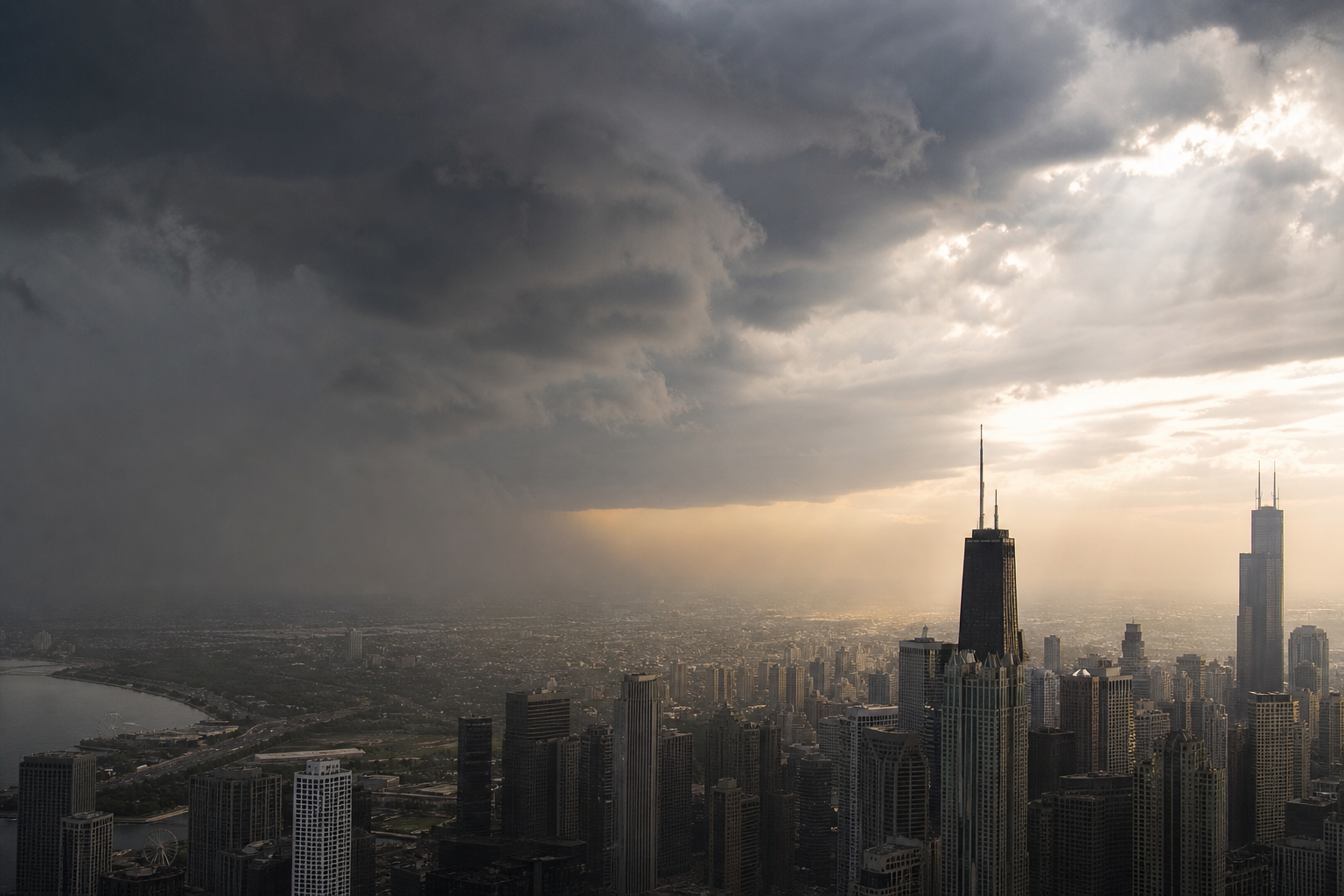
Google WeatherNext 3 brings hourly, higher-resolution AI forecasts to Search, Gemini, Maps, and Cloud. Here is what U.S. and Canadian users may notice.
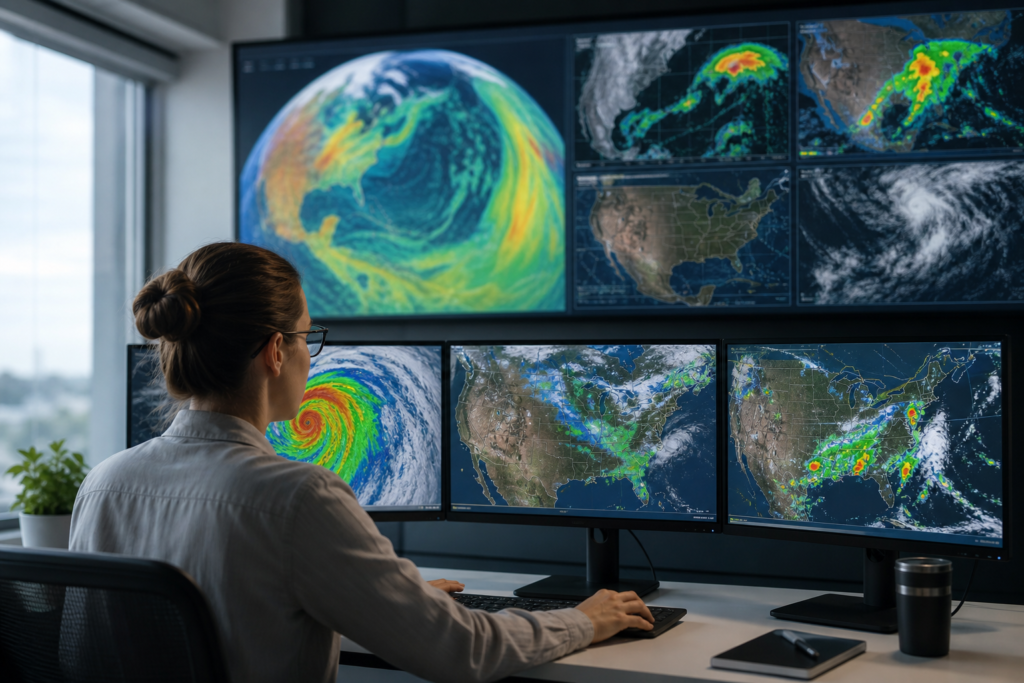
Google WeatherNext 3 is a new AI forecasting model designed to make weather predictions more frequent, more detailed, and more useful at local scales. Google announced it on September 3, 2026, saying the model would begin powering weather information across Search, Gemini, Google Maps, Google Maps Platform, Earth Engine, BigQuery, and other Google Cloud tools.
The most important distinction is that WeatherNext 3 is a forecasting engine, not a new weather-alert authority. It can help Google estimate what conditions may look like at a particular place and time, but official watches, warnings, and public-safety instructions still come from agencies such as the U.S. National Weather Service and Environment and Climate Change Canada.
For everyday users, the practical change may be subtle at first. You probably will not see a large “WeatherNext 3” label every time you check the forecast. Instead, you may notice more frequent updates, more localized precipitation timing, or forecast details that better reflect nearby terrain and changing conditions.
Traditional numerical weather prediction relies heavily on large physical simulations of the atmosphere. AI models can process historical weather patterns and observations much faster, but their usefulness depends on the quality and freshness of the data they receive.
WeatherNext 3 directly uses live geostationary satellite mosaics and refreshes its forecast system every hour. Google says the model also trains against real-world weather-station observations, helping it produce predictions that are better connected to conditions measured at the surface.
Its outputs use several spatial scales rather than treating every weather variable as if it needed the same level of detail. Temperature and humidity can be forecast at approximately 5-kilometer resolution, other surface variables at about 10 kilometers, and some atmospheric variables, including wind, at about 25 kilometers. Google describes this as roughly five times sharper overall than WeatherNext 2, which used a 25-kilometer grid and six-hour forecast intervals.
WeatherNext 3 is also probabilistic. In plain English, it does not only produce one imagined future; it can generate a range of possible outcomes. Google’s developer documentation describes a 64-member ensemble and forecasts extending as far as 15 days in some operating cycles. That does not mean a 15-day forecast will be equally reliable every day. Forecast confidence still declines as the time horizon grows.
The biggest benefit is likely to appear in situations where weather changes quickly or varies across short distances.
Consider a weekend trip from Toronto to a nearby lake or from Denver to a mountain community. A broad regional forecast might show rain across the area, while a more localized system could help distinguish when rain is most likely at the destination. That is useful for planning, but it is not a guarantee that every shower will be predicted correctly.
The same principle applies in the United States, where a forecast for a large metro area can hide meaningful differences between neighborhoods, suburbs, foothills, and coastal locations. Higher resolution can reduce some of that smoothing, although local observations and official forecaster judgment remain important.
| Area | Earlier WeatherNext approach | WeatherNext 3 | What it means in practice |
|---|---|---|---|
| Update timing | WeatherNext 2 used six-hour forecast intervals | Hourly initialization, with longer forecasts in selected cycles | Fast-changing conditions may be reflected sooner |
| Local detail | Broad 25-kilometer grid | Approximately 5-kilometer surface detail for some variables | More room to represent local terrain and surface differences |
| Data inputs | Historical and model-based weather information | Live satellite data plus station observations and other analysis inputs | More current observations can feed the forecast process |
| Forecast range | Varied by product and operating cycle | Up to 15 days for some cycles, with shorter horizons for interim hourly runs | Useful for planning, but confidence still varies by day and weather pattern |
These improvements describe the model’s capabilities, not a promise that every location will receive a dramatic accuracy increase. Google says precipitation forecasts more than a day ahead may be up to 50% more accurate in some regions, but that is an overall company-reported result, not a guarantee for every city, storm, or forecast hour.
Weather forecasts are estimates, and precipitation is particularly difficult to predict at neighborhood scale. A brief thunderstorm can form between observation points, while a snow band can shift several miles and change travel conditions quickly.
For that reason, do not treat a Google forecast as a substitute for an official warning during severe weather. In the United States, consult the National Weather Service for watches, warnings, and hazard information. In Canada, use Environment and Climate Change Canada’s weather-alert system. Those sources are the right place to confirm whether authorities are advising people to shelter, avoid travel, evacuate, or take another safety action.
Check official U.S. weather alerts
Check official Canadian weather alerts
WeatherNext 3 also does not eliminate the need to compare forecasts when the decision matters. For a flight, mountain drive, boating trip, wildfire-risk activity, or outdoor event, check the forecast close to departure and look for official alerts, radar, and local guidance.
Most people will encounter WeatherNext 3 indirectly through Google products rather than by opening the model itself. Search users may see updated weather information, while Gemini and Maps may use the underlying forecast data in weather-related answers or planning features. Google has also made the model available for developers, researchers, and businesses through WeatherNext data products and cloud services.
Businesses that work with weather-sensitive operations may have more to gain. Examples include renewable-energy operators, agriculture, logistics, construction, aviation planning, and event management. Google says WeatherNext 3 includes variables relevant to clean energy, such as wind at turbine-like heights, cloud cover, and solar radiation.
However, access is not identical across products. A consumer seeing weather in Search is not necessarily receiving the same raw model output available through BigQuery, Earth Engine, or Cloud Storage. Developers also need to review Google’s terms, data formats, access requirements, and update schedules before building a production system around it.
Request WeatherNext data access
The useful way to think about WeatherNext 3 is as a more frequently refreshed forecasting layer behind Google’s products. It may make everyday planning more precise, especially for rain, snow, temperature, and rapidly changing conditions. It is not a guarantee of perfect neighborhood-level accuracy, and it should not be used in place of official warnings from U.S. or Canadian weather authorities.
A. Google announced global availability across products including Search, Gemini, Maps, Google Maps Platform, Earth Engine, and Cloud beginning September 3, 2026. The exact feature, interface, and timing can vary by product, location, account, and rollout stage, so users may not see a WeatherNext 3 label in every forecast.
A. No. WeatherNext 3 is a Google forecasting model. For official watches, warnings, advisories, and emergency instructions, use the National Weather Service in the United States or Environment and Climate Change Canada in Canada.
A. Google reports improvements in forecast accuracy, including potential precipitation gains of up to 50% more than a day ahead in some regions. That is an aggregate company-reported result, not a guarantee for every location or weather event. Forecast confidence still depends on the variable, location, lead time, and complexity of the weather.
A. Most consumers will encounter its forecasts through Google products. Developers, researchers, and businesses can access WeatherNext 3 data through Google services such as BigQuery, Earth Engine, and Google Cloud Storage, subject to the applicable access requirements and terms.






FDA Infant Formula Standards Proposal: What Parents Need to Know About Nutrient Changes and the Comment Deadline