Welcome to KnowHow Daily!
Practical guides, money-saving tips, tech solutions, government benefits, and useful information for everyday life.
Welcome to KnowHow Daily!
Practical guides, money-saving tips, tech solutions, government benefits, and useful information for everyday life.

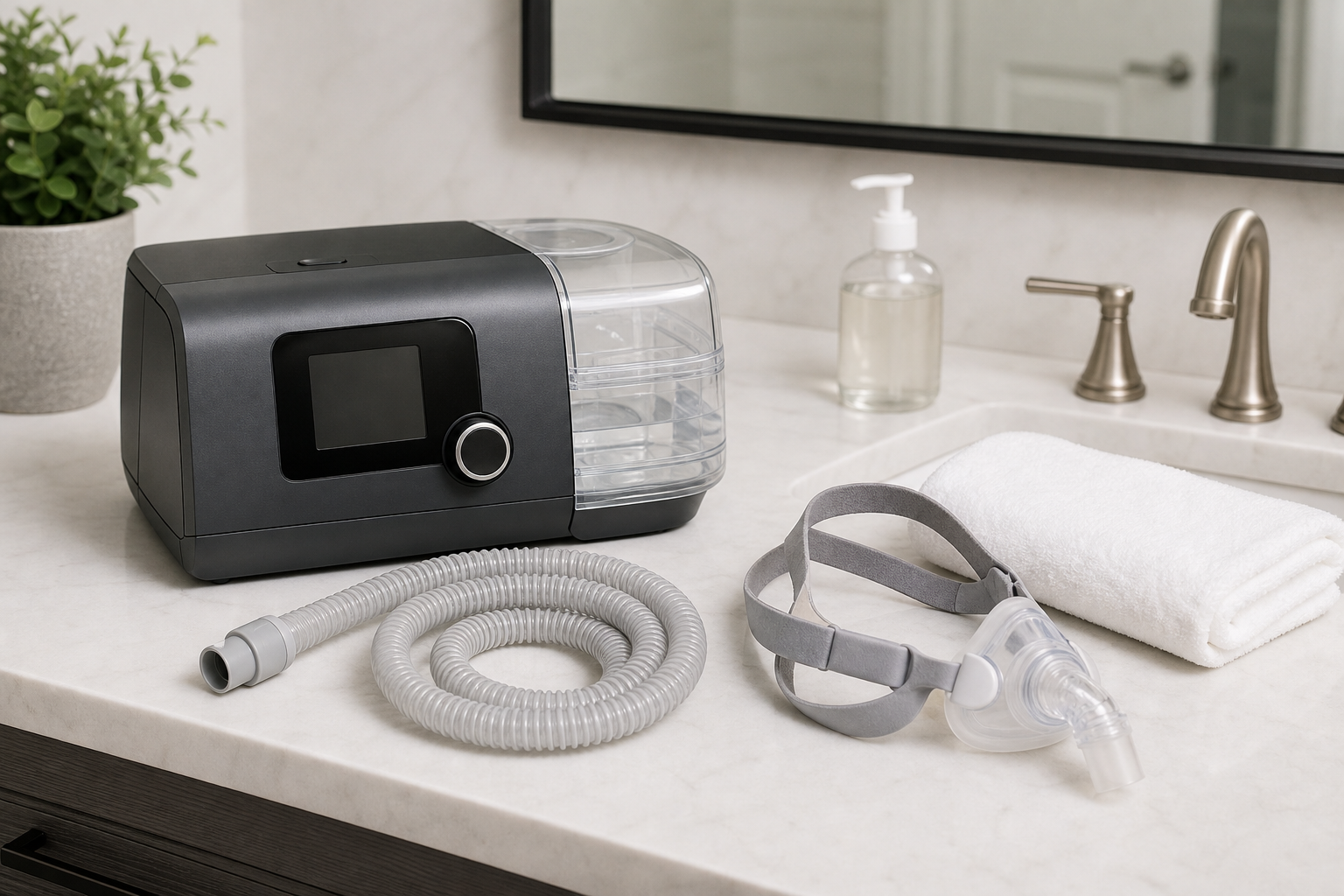
Learn how to clean your CPAP mask, tubing, humidifier, and filters safely—and what the FDA says about ozone and UV CPAP cleaning devices.
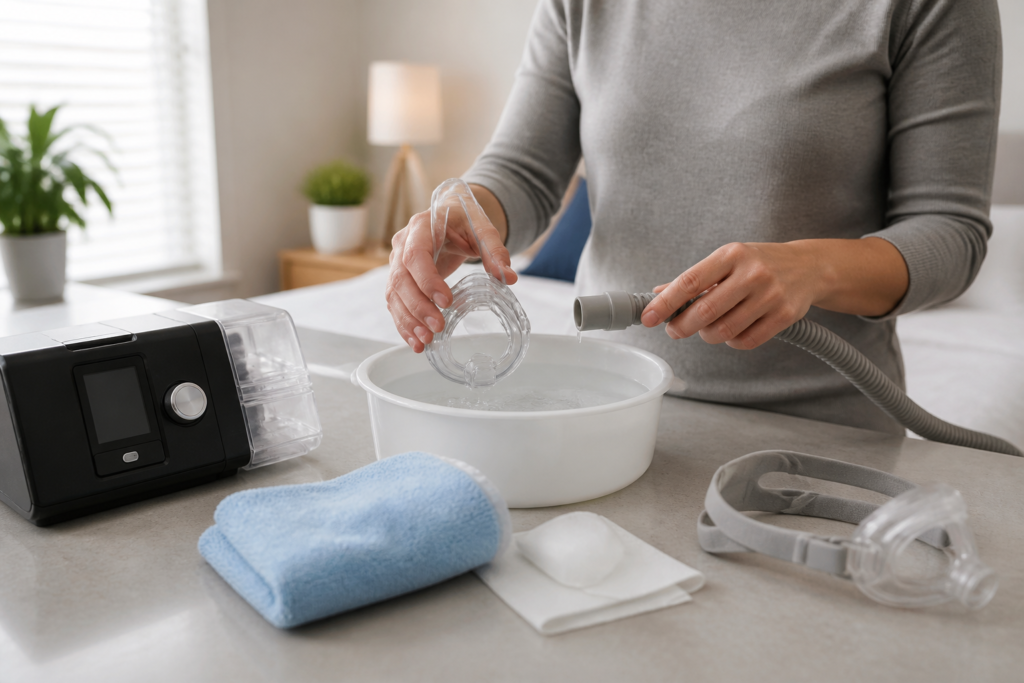
For most people, you do not need an automated ozone or UV cleaner to maintain a CPAP or BiPAP system. The practical routine is simpler: disconnect the removable parts, wash them with mild soap and water according to the manufacturer’s instructions, rinse thoroughly, and let everything dry completely before reconnecting it.
The most important distinction is that cleaning your equipment is not the same as using a device that claims to disinfect or sterilize it. The U.S. Food and Drug Administration says it has not received enough evidence to confirm that most ozone or UV CPAP cleaners work safely, clean the inside of hoses, or avoid damaging masks, tubing, and machines.
A dirty mask, hose, humidifier tank, or filter can collect skin oils, dust, moisture, and microorganisms. Good maintenance helps keep the equipment comfortable and functioning properly, but it does not replace medical treatment or your prescribed CPAP therapy.
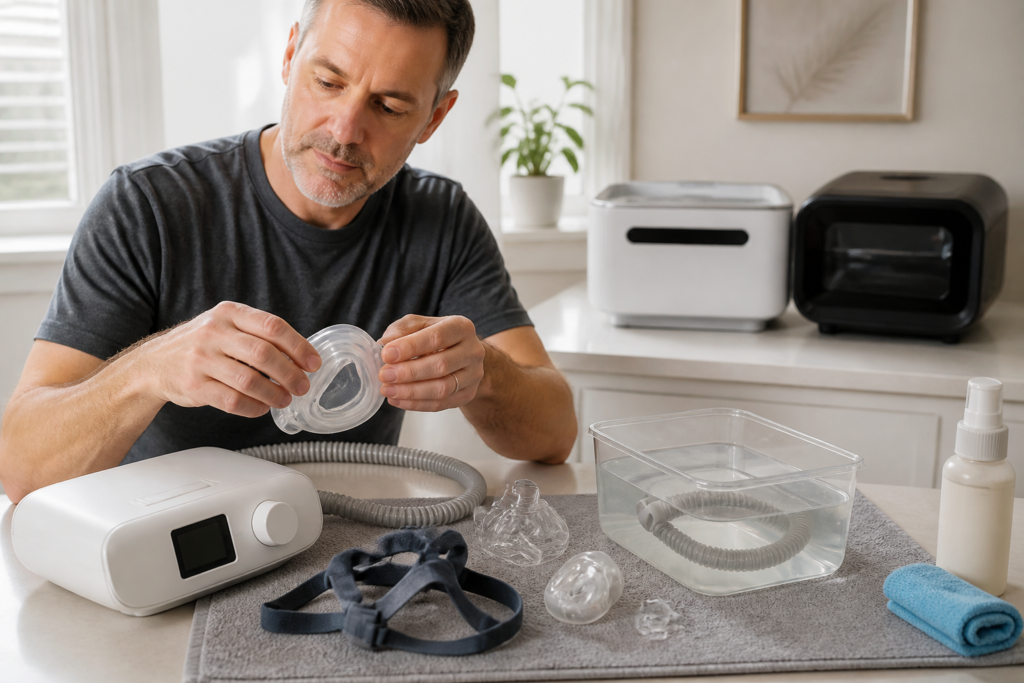
Your equipment manual takes priority because cleaning schedules and materials differ between brands and models. A heated tube, memory-foam mask cushion, reusable filter, or humidifier tank may have special instructions that do not apply to another system.
| Part | Typical care | What to watch for |
|---|---|---|
| Mask cushion or nasal pillows | Clean regularly with mild soap and warm water; many manufacturers recommend daily cleaning. | Replace when it becomes cracked, stiff, cloudy, stretched, or difficult to seal. |
| Mask frame and headgear | Wash on the schedule listed by the manufacturer, often weekly. | Do not use harsh cleaners, bleach, antibacterial soap, or high heat unless specifically approved. |
| Air tubing | Wash regularly, often weekly, then rinse and air-dry. | Check for splits, cloudiness, sticky residue, or water trapped inside. |
| Humidifier water tank | Empty and clean according to the device manual. Let it dry fully between uses when instructed. | Look for mineral buildup, cracks, discoloration, or a damaged seal. |
| Air filter | Replace or clean only as directed for that filter type. | Do not wash a disposable filter. A damp or visibly dirty filter needs attention. |
As one manufacturer example, ResMed lists daily cleaning for some mask cushions and humidifier tubs, with weekly cleaning for mask frames, headgear, and air tubing. That schedule is useful as an illustration, not a universal rule for every CPAP brand.
Start by unplugging the CPAP machine and removing the mask, tubing, humidifier tank, and any other parts identified as washable in the manual. Never place the electrical machine, power cord, or heated components in water.
Wash removable parts in warm water with a small amount of mild liquid soap. Gently rub away oils and residue rather than scrubbing aggressively. Rinse until no soap remains. Soap residue can irritate the skin and may affect the mask seal.
Hang or place the parts in a clean, well-ventilated area to dry. Avoid direct sunlight, clothes dryers, dishwashers, washing machines, and strong heat unless your manufacturer specifically says a component is safe for that method. Reassembling damp parts can encourage unwanted microbial growth and leave moisture in the hose.
Clean the outside of the CPAP machine with a slightly damp cloth. Keep water away from openings and electrical connections. If your manual permits diluted vinegar for mineral buildup in a humidifier tank, follow its exact dilution and rinsing instructions rather than using vinegar routinely on every component.
Use the manufacturer’s instructions for your exact model when the general routine conflicts with a product-specific instruction.
Open the ResMed CPAP equipment cleaning guideOzone is a reactive gas sometimes marketed as “activated oxygen.” At concentrations high enough to reduce bacteria, it can also irritate the lungs and may remain inside a mask or hose after the cleaning cycle. The FDA has received reports of asthma attacks, headaches, and breathing difficulty after people used devices that claimed to clean CPAP accessories with ozone.
The FDA also warns that ozone may damage CPAP components. This concern is particularly relevant to masks, tubing, seals, and certain internal materials. Residual ozone can also enter the room or remain in equipment for hours, depending on the device and how it is used.
That does not mean every product marketed with an ozone claim has the same design or regulatory status. It does mean that a seller’s claim that a device “sanitizes” or “kills germs” is not enough evidence that it is safe for your particular CPAP system.
If you already own an ozone device, do not connect it to a CPAP machine while the machine is operating. Check the current manufacturer instructions and any applicable safety communication before using it. People with asthma, chronic obstructive pulmonary disease, cardiovascular disease, or unusual breathing symptoms should ask a health professional before considering ozone exposure.
Review the FDA SoClean safety communication Review the FDA CPAP cleaning device guidanceUV light can reduce microorganisms when the light reaches the target surface with the right intensity and exposure time. That creates a major limitation for CPAP equipment: the inside of a long, flexible hose has shadows, bends, and areas the light may not reach evenly.
The FDA says it has not received sufficient evidence that UV CPAP cleaners safely clean the inside surface of hoses or protect users from unsafe UV exposure. UV light may also contribute to material degradation in some plastics and rubber components. A closed box with safety interlocks is different from an exposed UV wand, but neither should be assumed to be appropriate for CPAP equipment without compatible, product-specific authorization and instructions.
Never use an exposed UV wand on your mask, hose, or near your eyes or skin unless the product has clear, credible safety information and is specifically appropriate for that use. “Disinfects in seconds” is not, by itself, proof of safe or complete cleaning.
If you are considering an add-on device, evaluate it as a supplemental device—not as a replacement for routine washing.
The FDA has described one authorized category of add-on device for reducing bacteria on certain CPAP masks and ventilation hoses after regular cleaning. That authorization does not turn the device into a universal CPAP cleaner, and it does not replace the original manufacturer’s instructions.
Replace a mask cushion, hose, humidifier tank, filter, or headgear when it is damaged, no longer seals properly, remains discolored after cleaning, develops a persistent odor, or reaches the replacement interval specified by the manufacturer or your equipment provider. Exact replacement timing varies by component, brand, insurance arrangement, and condition.
Contact your sleep clinician or equipment supplier if cleaning causes repeated leaks, skin irritation, unusual odors, condensation problems, or changes in therapy comfort. Stop using a suspected damaged component and seek medical advice promptly for new or worsening shortness of breath, chest symptoms, severe headache, or an asthma flare after using an ozone or UV device.
The practical decision is straightforward: follow the cleaning instructions for your exact CPAP system first. Treat any ozone or UV product as an optional, model-specific add-on that requires credible regulatory and manufacturer support—not as a shortcut around soap, water, drying, filter care, and timely replacement.
A. Only if your CPAP or component manufacturer allows it and provides instructions. Vinegar may be recommended for certain humidifier tanks or mineral deposits, but it is not a universal cleaner for every mask, cushion, hose, or heated tube.
A. Do not assume those parts are dishwasher-safe. High heat and harsh detergents can damage cushions, seals, tubing, and headgear. Use the cleaning method in the equipment manual.
A. No. Even an authorized add-on device is intended to supplement, not replace, the manufacturer’s cleaning process. Ozone products may also create exposure and equipment-compatibility concerns.
A. Ask your health care professional before using an ozone device. The FDA’s safety communication notes that people with underlying lung disease, including asthma and COPD, may be sensitive to ozone. Seek prompt medical care for breathing difficulty or an asthma flare.