Welcome to KnowHow Daily!
Practical guides, money-saving tips, tech solutions, government benefits, and useful information for everyday life.
Welcome to KnowHow Daily!
Practical guides, money-saving tips, tech solutions, government benefits, and useful information for everyday life.


Learn what the FTC’s 2026 auto-dealer price transparency guidance means for advertised prices, document fees, rebates, add-ons, and your final purchase paperwork.

The Federal Trade Commission’s September 15, 2026, automobile pricing FAQs give consumers a useful standard for evaluating dealer advertisements: the advertised vehicle price should reflect the actual price that any consumer can walk in and pay.
That generally means the price must include dealer-required fees and charges. The main exception is a charge that a federal, state, or local government requires you to pay directly, such as certain taxes or registration costs. A dealer cannot simply label a fee as a “government” charge if the government does not require the consumer to pay it directly.
The FAQs are staff guidance rather than a new consumer rule or a guarantee that every dispute will be resolved in the buyer’s favor. Still, they explain how the FTC views potentially misleading pricing under the Federal Trade Commission Act. For shoppers, the practical message is straightforward: compare the real vehicle price, not the lowest number in a large font.

If a dealer requires every buyer to pay a charge to purchase the vehicle, that charge should be built into the advertised price. This can include a mandatory documentation fee, dealer processing fee, required certification charge, or a dealer-installed product that the buyer cannot decline.
For example, if a dealer advertises a vehicle at $40,000 and requires every customer to pay an $85 documentation fee, the FTC’s FAQ example says the advertised price should be $40,085. The dealer should not advertise $40,000 and reveal the required fee only after you have negotiated or reached the paperwork stage.
Fees that a dealer is allowed to charge under state law are not automatically exempt from the advertised price. The important question is whether the dealer requires the consumer to pay the charge. State disclosure rules may require the fee to be listed separately, but they do not necessarily allow the dealer to hide it from the advertised total.
A common warning sign is an advertisement based on a discounted document fee that not every shopper will receive. If one buyer is charged $50 but another is required to pay $300, the dealer should not advertise a price that works only for the buyer receiving the smaller fee.
Ask the dealer to identify every mandatory fee and confirm whether the advertised price applies to you without special membership, financing, trade-in, employment, military, student, or loyalty qualifications.
Discounts and manufacturer incentives are not automatically improper. The problem is presenting a conditional price as though it were available to everyone.
A dealer may advertise one price for a buyer who qualifies for a specific rebate or uses a particular financing arrangement, but the conditions should be clear and the price available to a typical eligible shopper should not be confused with the price available to all shoppers. If the discount requires dealer financing, ask for the cash price and the financing price separately.
Do not judge the deal by the monthly payment alone. A low payment may result from a longer loan term, a large down payment, a balloon payment, or extra products added to the contract. Compare the vehicle price, amount financed, annual percentage rate, loan term, and total payments.
Gap coverage, service contracts, paint protection, fabric treatment, window etching, tire protection, and accessories may be offered during the sale. These products can be legitimate options, but an optional product should not be presented as required when it is not.
The FTC says dealers should not imply that an installed option cannot be removed, misstate what an option costs, or charge for a product you did not agree to buy. If an add-on is already installed and the dealer says it cannot be removed, ask whether its cost is included in the advertised price or whether you can decline the vehicle without paying for it.
Before signing, check that every add-on listed on the buyer’s order is something you requested. If you do want an add-on, ask for its cash price and its total cost over the life of the loan. A product that adds only a small amount to the monthly payment can cost hundreds or thousands of dollars overall.
The most useful document is a written out-the-door quote for the specific vehicle you want. The FTC’s consumer guidance recommends requesting this before leaving home. It gives you something concrete to compare and makes last-minute additions easier to spot.
Read the official FTC automobile pricing transparency FAQsIf the salesperson will not provide a written breakdown, changes the price after you arrive, or says the advertised price is unavailable without an explanation that was clear in the ad, treat that as a reason to pause. You can leave and compare another offer.
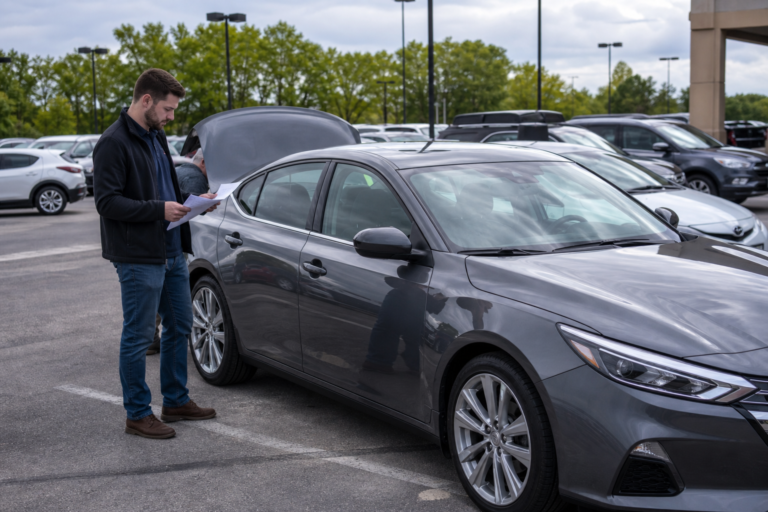
Before signing, compare the buyer’s order or purchase worksheet with the saved advertisement and written quote. Look for duplicate charges, unexplained “protection” products, altered vehicle prices, and fees that were not included in the earlier discussion.
The final paperwork should clearly identify the vehicle you agreed to buy and the products or services you accepted. Do not sign blank forms or rely on a promise that an unwanted item will be removed later.
Watch for these common changes:
If the numbers do not match, ask the dealer to correct the paperwork before you sign. If the explanation is unclear or the dealer pressures you to continue, you are allowed to stop the transaction.
The FTC guidance applies to vehicle advertising and dealer conduct in the United States. It does not create a single North American pricing rule, so Canadian shoppers should check the rules in their province.
Ontario has its own all-in pricing requirement for registered motor vehicle dealers. OMVIC says an advertised vehicle price must include the fees and charges the dealer intends to collect, with HST and licensing generally allowed as clearly disclosed additions. That can include administration fees, freight, pre-delivery inspection costs, government levies, and mandatory pre-installed products.
Rules differ across Canada, so shoppers in provinces other than Ontario should use their provincial motor-vehicle regulator or consumer-protection agency. The same practical habit still helps everywhere: save the ad, request the written total, and compare the paperwork before signing.
Start by asking for a written explanation of each charge and whether it is mandatory. Keep copies of the advertisement, emails, text messages, quote, buyer’s order, and signed contract. Written records are more useful than a verbal account if you later file a complaint.
For a suspected U.S. deceptive-pricing issue, you can submit a report through the FTC’s consumer fraud reporting service. The FTC asks consumers to include details about the dealership and the conduct involved.
Report suspected deceptive car pricing to the FTCIn Ontario, consumers can contact OMVIC about an issue involving a registered dealer. In other Canadian provinces, contact the applicable provincial motor-vehicle regulator or consumer-protection office.
File a complaint with OMVICReporting a dealer does not automatically cancel a signed contract or guarantee a refund. If you have already signed and believe you were charged for unauthorized products or misled about the price, consider getting advice from your provincial consumer office, state attorney general, or a qualified lawyer.
A. Not every charge is treated the same way. The FTC says the advertised price should include dealer-required charges. Certain government charges that the buyer must pay directly may be excluded, but the advertisement and final paperwork should identify them clearly.
A. A dealer may be allowed to charge a documentation fee under state law, but that does not necessarily mean it can be left out of the advertised price. If the fee is mandatory for the buyer, the FTC’s guidance indicates it should be reflected in the advertised amount.
A. An installed product may affect the transaction, but the dealer should not misrepresent an optional product as required or charge for an item you did not agree to buy. Ask whether the vehicle can be purchased without the product and whether its cost is already included in the advertised price.
A. The advertised price is the price shown in the dealer’s marketing. The out-the-door price is the complete amount needed to purchase the vehicle, including applicable taxes, government charges, and other transaction costs. Request the out-the-door figure in writing before visiting.
A. Do not assume there is an automatic cancellation period. Cancellation rights depend on the contract and the law where you bought the vehicle. If the paperwork includes unexpected charges, stop before signing when possible and seek help from the appropriate consumer-protection agency or legal professional.