Welcome to KnowHow Daily!
Practical guides, money-saving tips, tech solutions, government benefits, and useful information for everyday life.
Welcome to KnowHow Daily!
Practical guides, money-saving tips, tech solutions, government benefits, and useful information for everyday life.

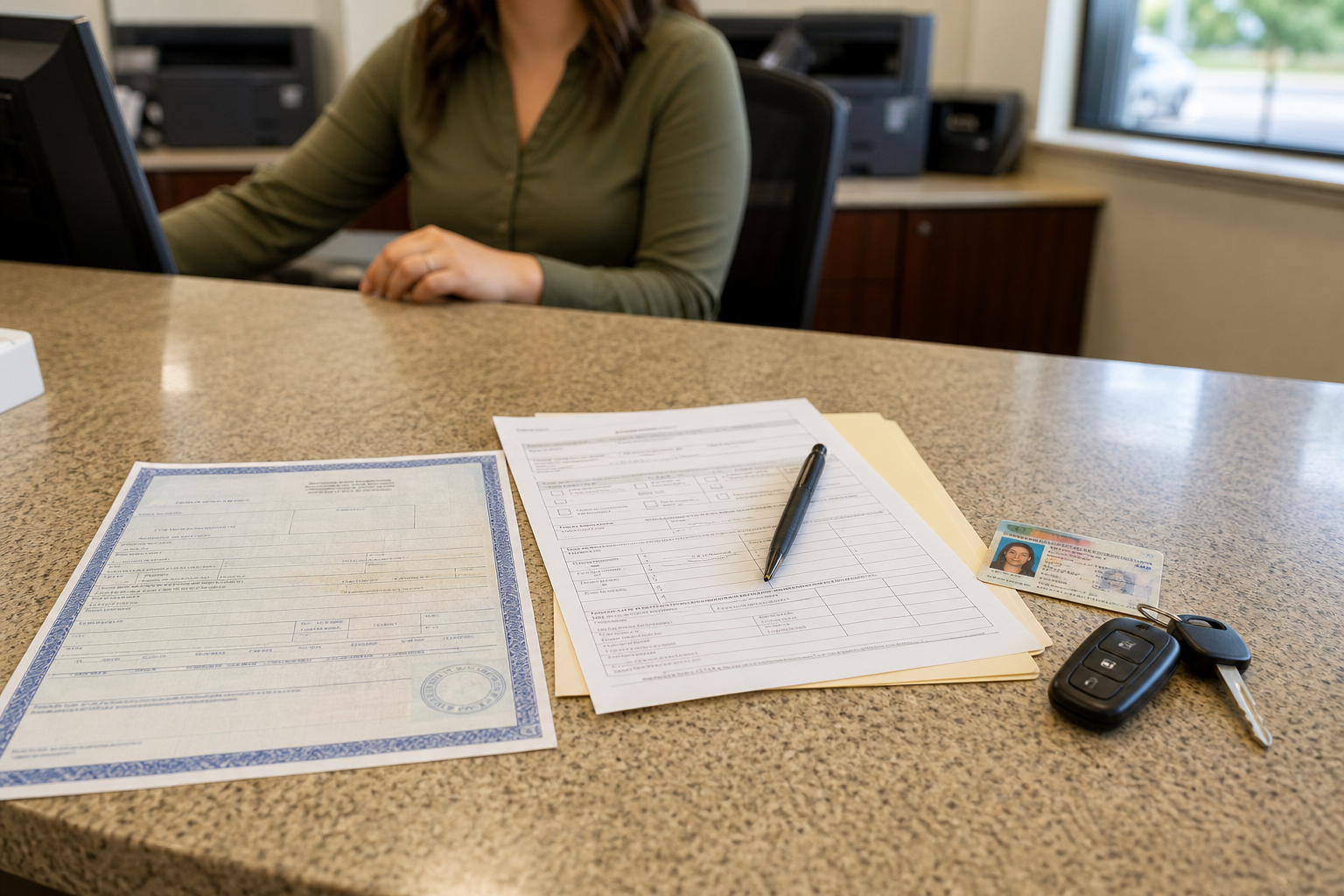
Learn which Texas title-transfer path applies after a vehicle owner dies, including probate, heirship affidavits, beneficiaries, survivorship rights, liens, and county tax office steps.

Transferring a deceased owner’s vehicle title in Texas usually comes down to one question: what legal document proves that the vehicle now belongs to the person applying for the new title?
For a probated estate, that proof is generally the original or certified Letters Testamentary or Letters of Administration issued by the probate court. For an estate that was not probated, the usual document is the completed Affidavit of Heirship for a Motor Vehicle, Form VTR-262.
There are two important alternatives. A surviving co-owner may be able to use a recorded rights-of-survivorship agreement, and a named beneficiary may be able to claim the vehicle directly. Those options depend on what was recorded on the Texas vehicle record before the owner died.
| Situation | Typical ownership evidence |
|---|---|
| Estate was probated | Original or certified Letters Testamentary or Letters of Administration, plus the title application |
| No probate or administration | Form VTR-262, signed and notarized by the required heirs |
| Recorded beneficiary designation | Form 130-U, title or motor vehicle record printout, death certificate, and beneficiary documentation |
| Recorded rights of survivorship | Form 130-U, the survivorship agreement or title notation, and a copy of the death certificate |
These paths should not be mixed casually. If a beneficiary designation exists, a later will generally does not cancel it. If the vehicle is part of a probated estate, the executor or administrator—not an individual heir acting alone—usually handles the transfer.

If the estate went through probate, the court appoints an executor or administrator and provides documentation showing that authority. The executor or administrator can assign or transfer the vehicle title by submitting the required court documents with the title application.
Form VTR-262 is not required when the vehicle is being transferred through a completed probate process and the appropriate certified probate documents are attached. If the will exists but no probate or administration was filed, the heirship form may still be used only when the applicable Texas requirements are met. If a court determined that no administration is necessary, TxDMV’s form instructions call for the original or certified court document and the relevant portions of the will showing the vehicle belongs to the decedent and identifying the heirs.
Because probate questions can affect more than the vehicle, families should not use an heirship affidavit to avoid probate when the estate has disputes, unknown heirs, significant debts, or other property requiring court administration.
An heirship affidavit is designed for situations in which there has been no estate administration and no administration is necessary. Every required heir must sign before a notary. A power of attorney cannot be used to sign the heir certification on behalf of an heir.
Download Form VTR-262The form identifies the decedent, vehicle, surviving heirs, and transferee. It also includes an odometer disclosure section when federal or state law requires mileage certification during the transfer.
The signing rules depend on the family situation:
Texas law can produce different results for blended families, separate property, community property, and relatives beyond a spouse or child. If there is no surviving spouse or child, TxDMV’s form instructions recommend consulting legal counsel about who qualifies as an heir at law.
Unlike the beneficiary process, TxDMV states that a death certificate is not required when ownership is transferred using Form VTR-262. The county tax office may still ask for additional documentation if the record contains an unusual problem or conflicting information.
A Texas vehicle beneficiary designation must have been recorded before the owner’s death. It applies only when all recorded owners are individuals. If a business or trust is listed as an owner, the beneficiary designation cannot be applied to that vehicle record.
The beneficiary must survive the owner by at least 120 hours and submit the title application no later than the 180th day after the owner’s death. To claim the vehicle, the beneficiary generally submits Form 130-U, the Texas title listing the beneficiary, the death certificate, and the title application fee. If the paper title is unavailable, the beneficiary may request a motor vehicle record printout through the county tax assessor-collector’s office.
A beneficiary who misses the 180-day deadline or disclaims the vehicle may need to use the heirship or probate process instead. Any lien or other recorded interest remains relevant. A lien release is required when the record still shows a lien, unless the lien carries forward under the applicable rules.
Download Form VTR-121A rights-of-survivorship agreement allows ownership to pass to the surviving co-owner or co-owners. The agreement may be recorded with the title or retained as supporting evidence, depending on how it was filed. After an owner dies, the survivor generally submits Form 130-U, the survivorship documentation or title notation, and a copy of the death certificate.
This is different from simply having two names printed on a title. Look for a survivorship remark or a properly completed Form VTR-122. If no survivorship right was recorded, the deceased owner’s interest may still need to pass through probate or heirship procedures.
For most deceased-owner transfers, prepare a complete packet rather than relying on the office to locate missing documents. TxDMV’s general checklist includes:
If the original title is missing, do not sign a blank replacement document or assume the estate can use an ordinary bill of sale. A beneficiary may be able to obtain a motor vehicle record printout at the time of application. Other applicants should ask the county office whether a certified copy of title or another ownership-record procedure applies.
Get a certified copy of a Texas vehicle titleA deceased owner’s death does not automatically erase a vehicle loan. If the title record shows a lien, bring the original lien release when the loan was paid off. In some situations, the lien may carry forward to the new owner, but that does not mean the debt disappears.
Blended families are another common source of delay. The surviving spouse may not be the parent of every surviving child, and the required heir signatures can change. Minor heirs require guardian documentation. If one heir refuses to sign, cannot be located, or disputes the transfer, the simple affidavit route may not be appropriate.
Do not use Form VTR-262 to transfer a vehicle based only on a family understanding. The affiants certify that they are the sole known heirs and that the information is true. TxDMV warns that falsifying information on the form is a felony.
Finally, county procedures can differ on appointments, payment methods, copies, and local document review. The legal ownership route comes from Texas law and TxDMV rules, but the county office processes the application and can identify record-specific problems.
Gather the title or vehicle record information, death certificate if your route requires one, lien documents, identification, and the correct ownership evidence before making an appointment or visit. If you are unsure whether the vehicle belongs in probate, contact a Texas probate attorney before signing an heirship affidavit. For a straightforward filing, use TxDMV’s current forms and contact the county tax assessor-collector where you will submit Form 130-U.
Download the official deceased-owner and beneficiary formsA. Usually no. A death certificate proves the owner died, but you also need the document that proves your authority to receive the vehicle, such as probate letters, Form VTR-262, beneficiary evidence, or a rights-of-survivorship agreement.
A. Not necessarily. A will may need to go through probate before the executor can transfer the vehicle. Also, a properly recorded Texas beneficiary designation generally is not superseded by a later will.
A. The beneficiary may no longer be able to use the direct beneficiary claim process. TxDMV states that the vehicle may then need to be transferred through heirship procedures or probate.
A. The required signatures depend on the family situation. A surviving spouse may be the only required heir in some cases, while surviving children may also need to sign in a blended-family situation or when there is no surviving spouse.
A. The ownership transfer and registration request are generally handled together at the county tax office. If you are not ready to drive the vehicle or cannot provide registration requirements, ask about applying for title only.