Welcome to KnowHow Daily!
Practical guides, money-saving tips, tech solutions, government benefits, and useful information for everyday life.
Welcome to KnowHow Daily!
Practical guides, money-saving tips, tech solutions, government benefits, and useful information for everyday life.

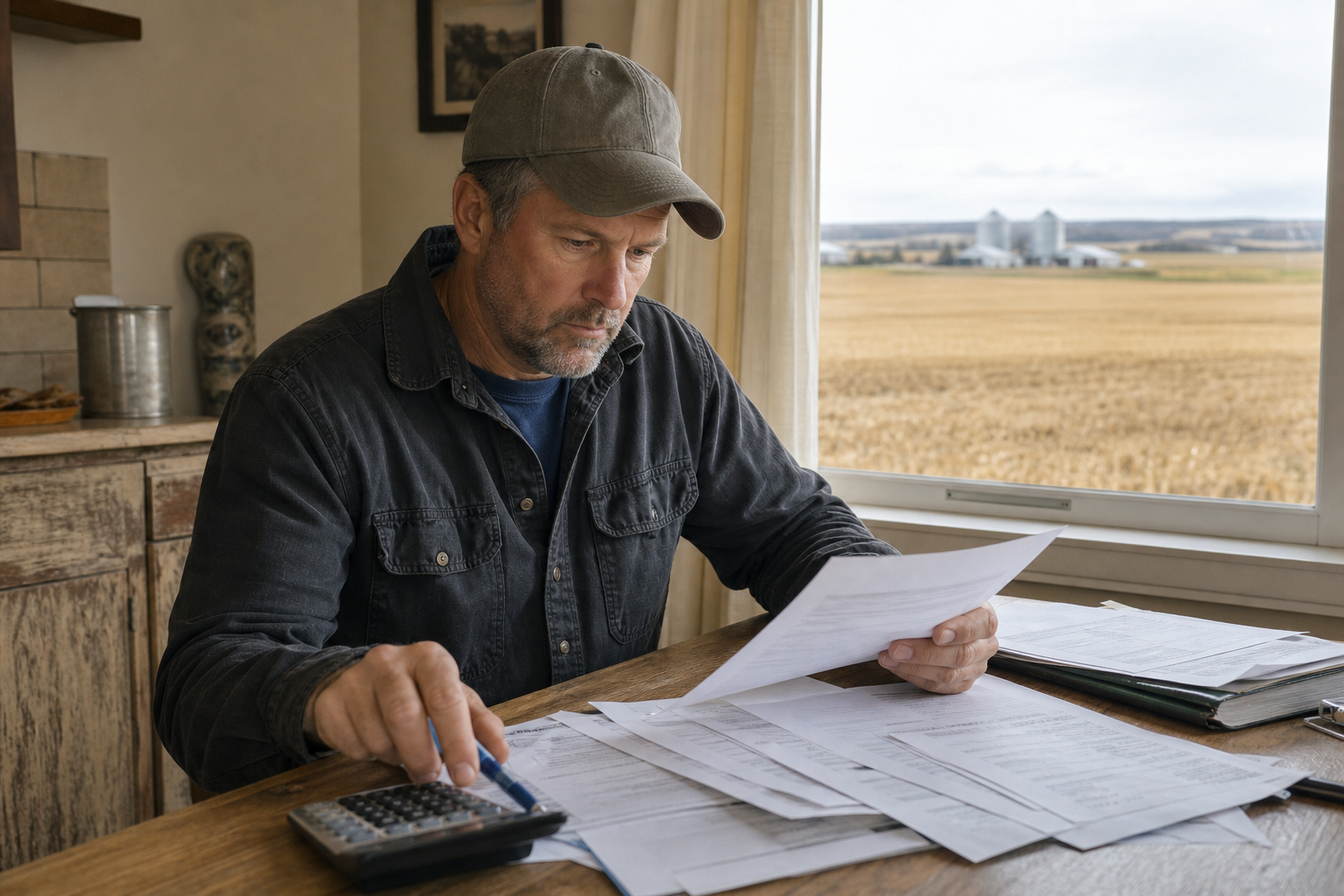
Missed the June 30 AgriStability deadline? Here’s what Canadian farmers need to know about the September 30, 2026 final deadline, penalties, forms, tax returns, and provincial filing routes.

If you missed the June 30, 2026 initial deadline, you may still be able to submit your 2025 AgriStability form until September 30, 2026. That is the final deadline. A form received after June 30 is subject to a reduction of $500 for each month or part of a month past the initial deadline, up to the final deadline.
For most late filers, that means a potential reduction of $500 for a July submission, $1,000 for an August submission, or $1,500 for a September submission. The reduction applies to an AgriStability payment, not as a separate bill. If the reduction is larger than the calculated payment, the payment can be reduced to zero.
The same September 30 deadline applies to the 2025 Canadian income tax return reporting eligible farming income or loss. The exception noted by Agriculture and Agri-Food Canada is for Status Indians farming on a reserve in Canada who are exempt from filing an income tax return.
View the official AgriStability application instructions
| When the form is received | Possible reduction from the benefit |
|---|---|
| By June 30, 2026 | No late-filing reduction |
| July 1 to July 31, 2026 | $500 |
| August 1 to August 31, 2026 | $1,000 |
| September 1 to September 30, 2026 | $1,500 |
The program counts any part of a month as a full month. A form submitted on September 1 is therefore treated as being one month later than a form submitted by August 31, not as a single day late.
These deadlines apply even if an appeal or audit is already in progress. If September 30 falls on a Saturday, Sunday, or public holiday, the program says the information may be sent on the next business day.
AgriStability is intended for Canadian agricultural producers facing a significant decline in farming income. A benefit may be available when the current-year production margin falls more than 30% below the historical reference margin. For the 2025 program year, temporary changes increased the compensation rate from 80% to 90% and raised the maximum payment limit from $3 million to $6 million.
Those changes don’t guarantee a payment. Eligibility still depends on program participation, the information submitted, the producer’s reference margin, farming activity, income-tax reporting, and other program rules.
Before filing, confirm that you were enrolled for the 2025 program year or qualify under an applicable late-participation rule. Late participation is not the same as late filing. Some producers who never enrolled or did not pay their required fee may face an additional late-participation reduction or upfront fee.
Your province or territory determines where the form goes. Don’t assume that every producer uses the same online system.
Open Prince Edward Island AgriStability information Open Quebec AgriStability documentation and forms Open Saskatchewan AgriStability forms and filing information Open the Alberta AgriStability filing portal| Location | General filing route |
|---|---|
| British Columbia, Manitoba, Newfoundland and Labrador, Nova Scotia, New Brunswick, Northwest Territories, and Yukon | Individuals can generally use CRA EFILE, while corporations use Corporation Internet Filing. Paper forms are also available. |
| Alberta | Contact Agriculture Financial Services Corporation and use its AgriStability filing instructions or supported account route. |
| Saskatchewan | Contact the Saskatchewan Crop Insurance Corporation. |
| Ontario | Submit through Agricorp using its Year-end Report and Claim Form process. |
| Quebec | Contact La Financière agricole du Québec. |
| Prince Edward Island | Contact the Prince Edward Island Department of Agriculture and Land. |
For provinces using the federal administration route, individual producers generally use the 2025 T1273 Statement A with the RC4408 guide. Corporations, co-operatives, and special individuals use the 2025 Corporation/Co-operative and Special Individual forms. A producer with more than one farming operation may also need Statement B forms for additional operations.
Your participant identification number, or PIN, is usually shown on your AgriStability Enrolment Notice or AgriInvest Deposit Notice. If you can’t find it, contact the administrator responsible for your province before submitting the form.
Have the information used for your 2025 farming income and expenses ready. Depending on your operation, you may also need inventory, accounts receivable, accounts payable, prepaid expense, production, and accrual information.
Individuals should check whether they need the T1273, T1274, T1275, or T1175 forms. Corporations and co-operatives should use the relevant Statement A and Statement B forms and the corporate harmonized guide.
A sole proprietor, partnership, corporation, co-operative, trust, and special individual may not use the same form. Each partner in a partnership generally reports the partnership’s full income and expenses and provides the applicable ownership percentage.
Use the federal electronic route or paper instructions only if your province is listed under the federal administration process. If you farm in Alberta, Saskatchewan, Ontario, Quebec, or Prince Edward Island, follow the provincial administrator’s filing instructions instead.
Save your electronic confirmation, fax transmission record, courier receipt, mailed-copy tracking, or other evidence showing when the completed form was sent. A form may not be considered complete if required information or supporting documents are missing.
Manitoba producers affected by the 2026 flooding may qualify for a special waiver of the 2025 late-filing penalty. The waiver applies to affected producers farming in a municipality or First Nation community that declared a state of emergency because of flooding. Producers outside the designated areas who missed the deadline because of flooding may ask that their individual circumstances be considered through the appeal process.
New Brunswick, Newfoundland and Labrador, and Nova Scotia have also published a 2025 late-participation option for certain producers who did not enrol, opted out, or failed to pay the required fee by the final fee deadline. In those cases, an upfront fee and a separate 20% late-participation reduction may apply. Filing by September 30 does not automatically remove those requirements.
Ontario and Alberta publish their own filing terminology and submission instructions. Ontario refers to a Year-end Report and Claim Form, while Alberta refers to supplementary forms. The underlying federal deadline remains September 30, 2026, but the form names and submission systems differ.
Check Ontario and Alberta filing instructionsThe administrator reviews the form and may request missing information or additional documentation. Once the calculation is complete, you should receive a Calculation of Program Benefits notice explaining the result. Processing time depends on whether the application is complete and which administration handles it.
If you believe the program rules were applied incorrectly, Agriculture and Agri-Food Canada says an appeal generally must be submitted within 90 days of being informed of the decision. An adjustment request may also be available within 18 months of the original Calculation of Program Benefits notice, depending on the issue.
Submit an AgriStability appealDon’t wait for a perfect estimate if the deadline is approaching. Complete the official form as accurately as possible, attach required information, and contact the responsible administrator immediately if a document is unavailable or your business structure is unusual. The safest next step is to open the official application instructions for your province, confirm the correct form, and submit before September 30, 2026.
A. A form received after the final deadline generally won’t qualify for 2025 AgriStability benefits. Contact your provincial or federal administrator immediately if exceptional circumstances prevented you from filing.
A. No. It is normally a reduction from any AgriStability payment calculated for the 2025 program year. The reduction can reduce a small payment to zero but does not normally create a separate amount owing.
A. Yes. The 2025 income tax return reporting eligible farming income or loss is also due by September 30, 2026 for AgriStability purposes, except for the Status Indian reserve-farming exemption identified by Agriculture and Agri-Food Canada.
A. Not necessarily. Ontario and Alberta use provincial administrators with their own filing systems and form terminology. Confirm the correct route with Agricorp or Agriculture Financial Services Corporation before submitting.