Welcome to KnowHow Daily!
Practical guides, money-saving tips, tech solutions, government benefits, and useful information for everyday life.
Welcome to KnowHow Daily!
Practical guides, money-saving tips, tech solutions, government benefits, and useful information for everyday life.

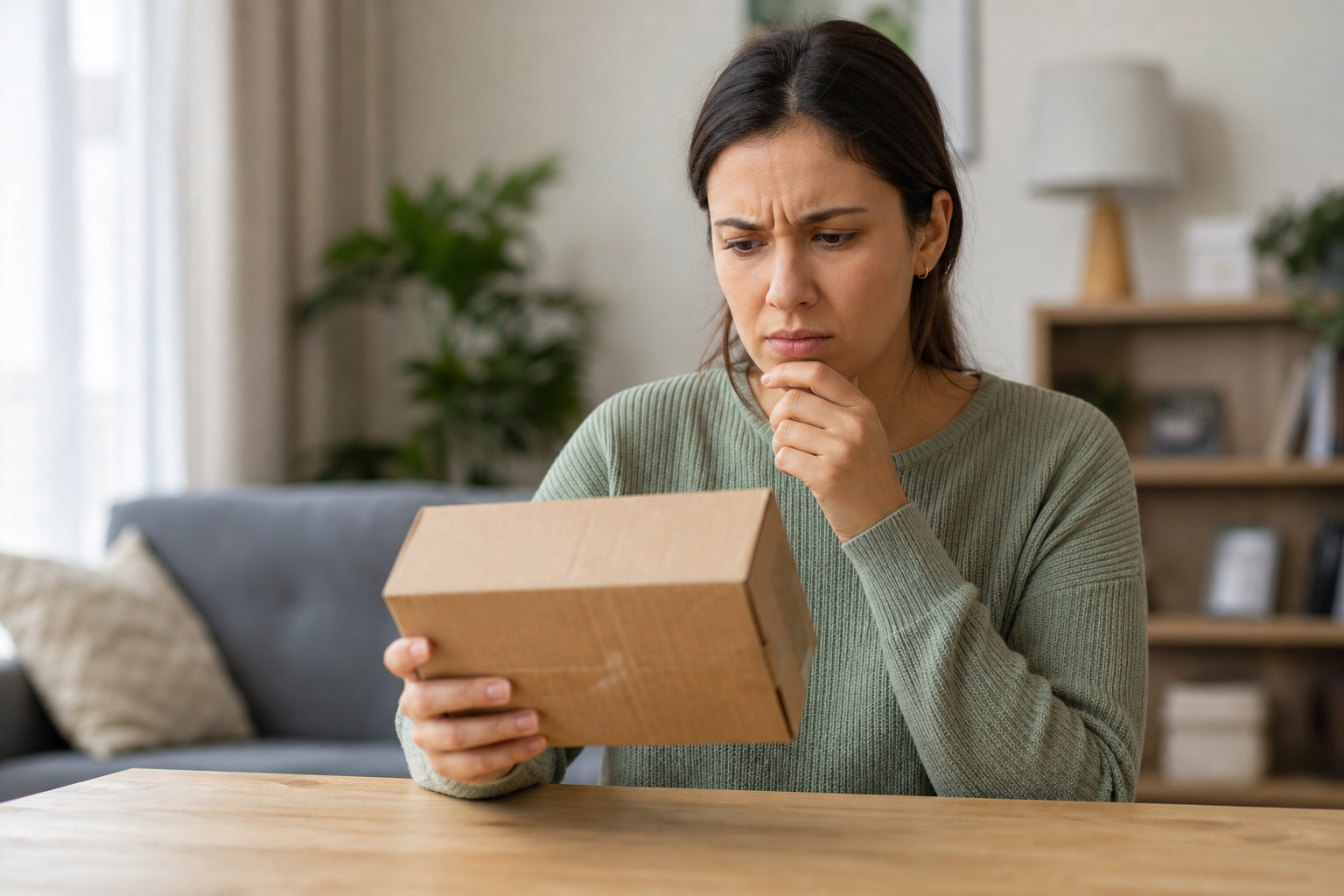
Received a package you didn’t order? Learn how brushing scams work, what not to scan or pay for, and how to protect your shopping accounts and credit.
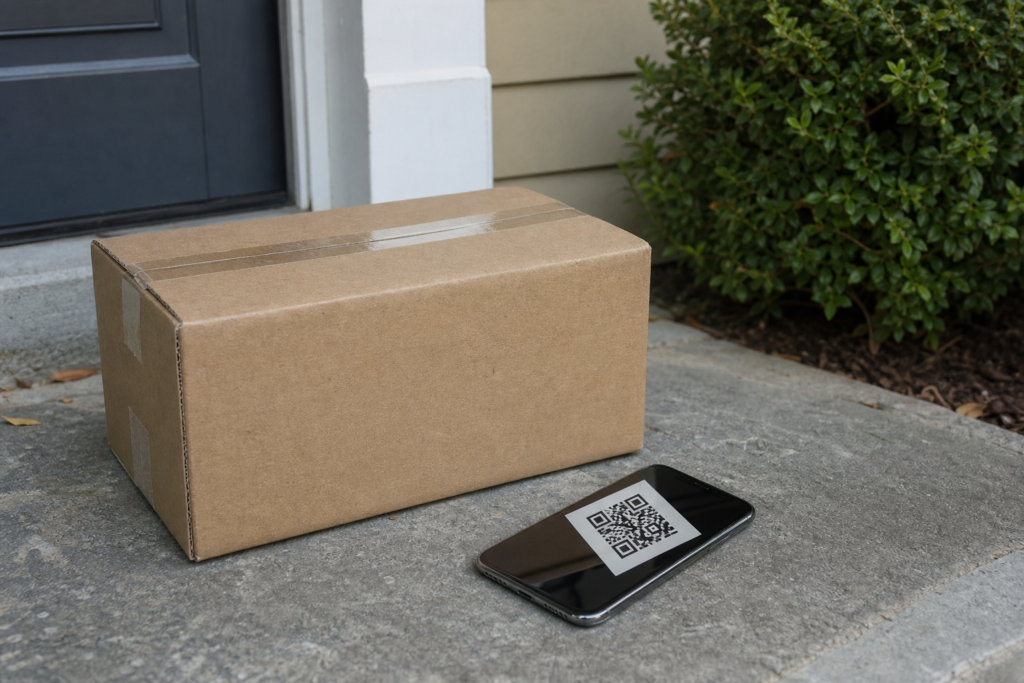
If a package arrives in your name but you didn’t order it, don’t assume it’s a harmless free gift. It may be a brushing scam, in which a seller sends a low-cost item to a real address and then uses the delivery to create fake reviews or make a marketplace account look more legitimate.
The package can also be a warning that someone has access to an online shopping account, your address, or other personal information. In some cases, it may simply be a gift, a household purchase you forgot about, or a delivery sent to the wrong address. The safest approach is to treat it as unverified until you know where it came from.
The most important distinction is this: receiving an unordered item is different from authorizing a purchase. In the United States, federal consumer guidance says you generally do not have to pay for or return merchandise you did not order. That does not mean you should interact with the sender, scan a code, or use the product.
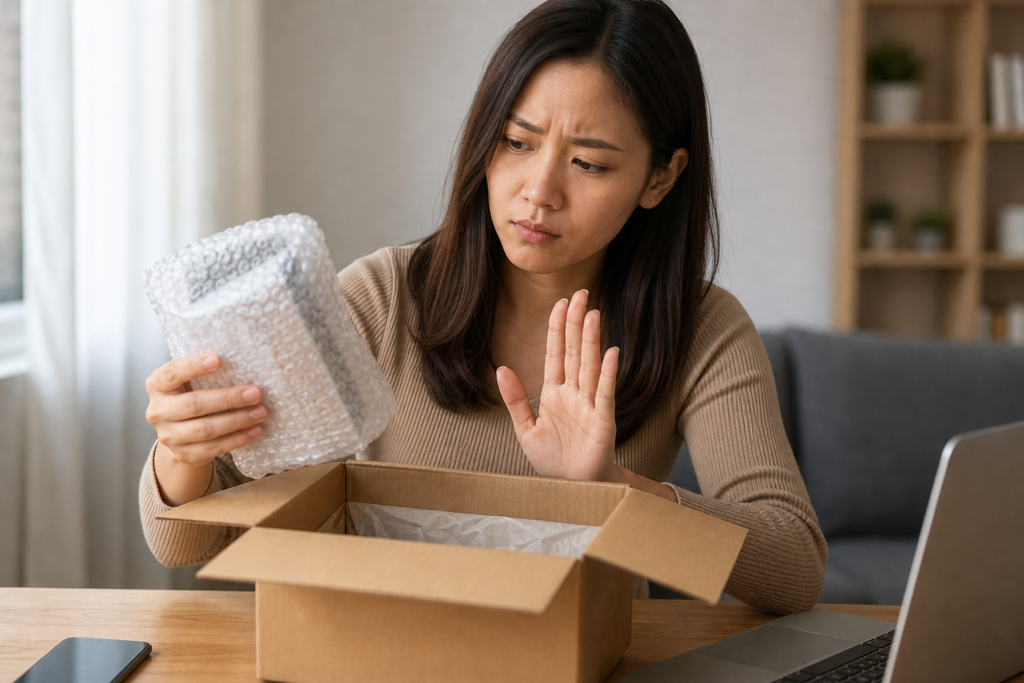
Some brushing deliveries include a card or note that tells you to scan a QR code to identify the sender, claim a reward, or arrange a return. That code may lead to a phishing website designed to collect your card number, shopping password, or other login details. It could also direct you to a malicious download.
Do not scan the QR code, call a phone number printed on the insert, reply to a message from the sender, or visit a website by typing the address from the package into your browser. If you need to verify a delivery, open the shopping company’s official app or type its known website address yourself.
Be cautious with the product, too. An unfamiliar cosmetic, supplement, electronic device, food item, seed packet, or children’s product may be counterfeit, contaminated, unsafe, or simply not suitable for use. Keep the packaging while you document what happened, but don’t eat, apply, plant, plug in, or otherwise use an unknown item.
Take pictures of the shipping label, tracking number, sender information, enclosed note, QR code, and the product. Record the date it arrived. This gives you useful evidence if the package is connected to account abuse, identity theft, a dangerous product, or a marketplace listing.
Don’t post a photo publicly with your full address, phone number, order number, or barcode visible. Crop or cover those details before sharing anything online.
Sign in through the official app or website for Amazon, Walmart, eBay, Temu, Etsy, or any other marketplace you use. Review recent orders, saved addresses, payment methods, new devices, account messages, and reviews posted under your name.
If you see activity you don’t recognize, change the password immediately and turn on two-factor authentication if the service offers it. Use a new password that you do not reuse elsewhere. Contact the marketplace through its official support channel and ask it to investigate the order or seller.
If the package appears to be connected to a shopping account, changing that account’s password is more urgent than trying to identify the sender.
Check your credit card, debit card, bank account, and payment-service statements for unfamiliar charges. A brushing delivery itself may not involve a charge, but the same exposed information could be used for unauthorized purchases, recurring subscriptions, or account changes.
If you find a transaction you did not authorize, contact the financial institution using the number on your card or statement—not a number from the package, text message, or email. Ask what steps are available to block the card, dispute the transaction, or secure the account.
One unexpected package does not prove that someone opened credit in your name. Still, checking your credit report is sensible if you also notice unfamiliar shopping-account activity, strange emails about new accounts, missing mail, unauthorized charges, or other signs that your information may have been misused.
U.S. consumers can request free credit reports through the federally authorized AnnualCreditReport.com service. Look for accounts, hard inquiries, addresses, and collections you don’t recognize.
Learn how to place a U.S. credit freeze or fraud alert
Get free U.S. credit reports through AnnualCreditReport.com
Canadians should review reports from both Equifax and TransUnion. The Government of Canada recommends contacting both bureaus to report suspected fraud and request a fraud alert when appropriate.
Read the Government of Canada credit report and fraud guidance
For U.S. consumers, the FTC says you generally do not have to pay for unordered merchandise or return it. A seller cannot create a debt simply by mailing you something you never agreed to buy.
That rule does not mean every package should automatically be kept or used. If the item is hazardous, leaking, damaged, suspicious, or addressed to someone else, avoid handling it further and contact the delivery company or local authorities for guidance. If it is an ordinary, unopened product addressed to you, keep the documentation and avoid communicating with the sender.
Canada does not have an identical single federal rule covering every unordered delivery in the same way, so the safest practical response is to avoid payment or contact until you verify what happened. If a company demands money, threatens collections, or claims you agreed to a subscription, contact your financial institution and report the incident through the Canadian reporting system.
Your next step depends on what happened after the scan.
If you provided personal information or see signs of identity theft, use the official U.S. identity-theft recovery service or the Canadian reporting process rather than replying to the sender.
Use IdentityTheft.gov for a U.S. identity theft recovery plan
Report the incident to the Federal Trade Commission, especially if the package included a phishing QR code, fake review request, suspicious seller information, or signs that your personal information was misused.
If the package came through a marketplace, report the seller or suspicious review through the marketplace’s official support tools as well. Save screenshots before the listing or message disappears.
Canadian residents can report fraud or cybercrime through the National Fraud Reporting System, even if they did not lose money. The Canadian Anti-Fraud Centre says reports help law enforcement identify links between incidents and track emerging fraud patterns. If money or personal information was involved, contact your financial institution and local police as well.
Use this checklist before doing anything with an unexpected delivery:
If you cannot verify the source, do not scan, pay, return, or use the product. Document it, secure your shopping accounts, check for unauthorized activity, and report the incident through the appropriate official channel.
A. In the United States, the FTC says you generally do not have to pay for or return unordered merchandise. You should still avoid using an unfamiliar product and keep the packaging in case you need to document a scam or safety concern. Canadian rules can differ, so avoid paying or contacting the sender until you verify the situation.
A. No. It could be a gift, a forgotten household order, a replacement shipment, or a delivery error. It becomes more concerning when the package includes a QR code, asks you to contact an unknown sender, appears in an account you did not use, or arrives alongside suspicious account or financial activity.
A. Do not open or use it. Follow the carrier’s official process for misdelivered mail or packages, using contact information from the carrier’s known website rather than a label insert or text message. If the package looks dangerous or suspicious, contact the carrier or local authorities.
A. Not automatically. A credit freeze or fraud alert is more appropriate when you find unfamiliar accounts or inquiries, lose identity documents, provide information to a scammer, or see other evidence of identity theft. Review your credit reports first and contact the relevant credit bureaus or financial institutions if something is wrong.