Welcome to KnowHow Daily!
Practical guides, money-saving tips, tech solutions, government benefits, and useful information for everyday life.
Welcome to KnowHow Daily!
Practical guides, money-saving tips, tech solutions, government benefits, and useful information for everyday life.

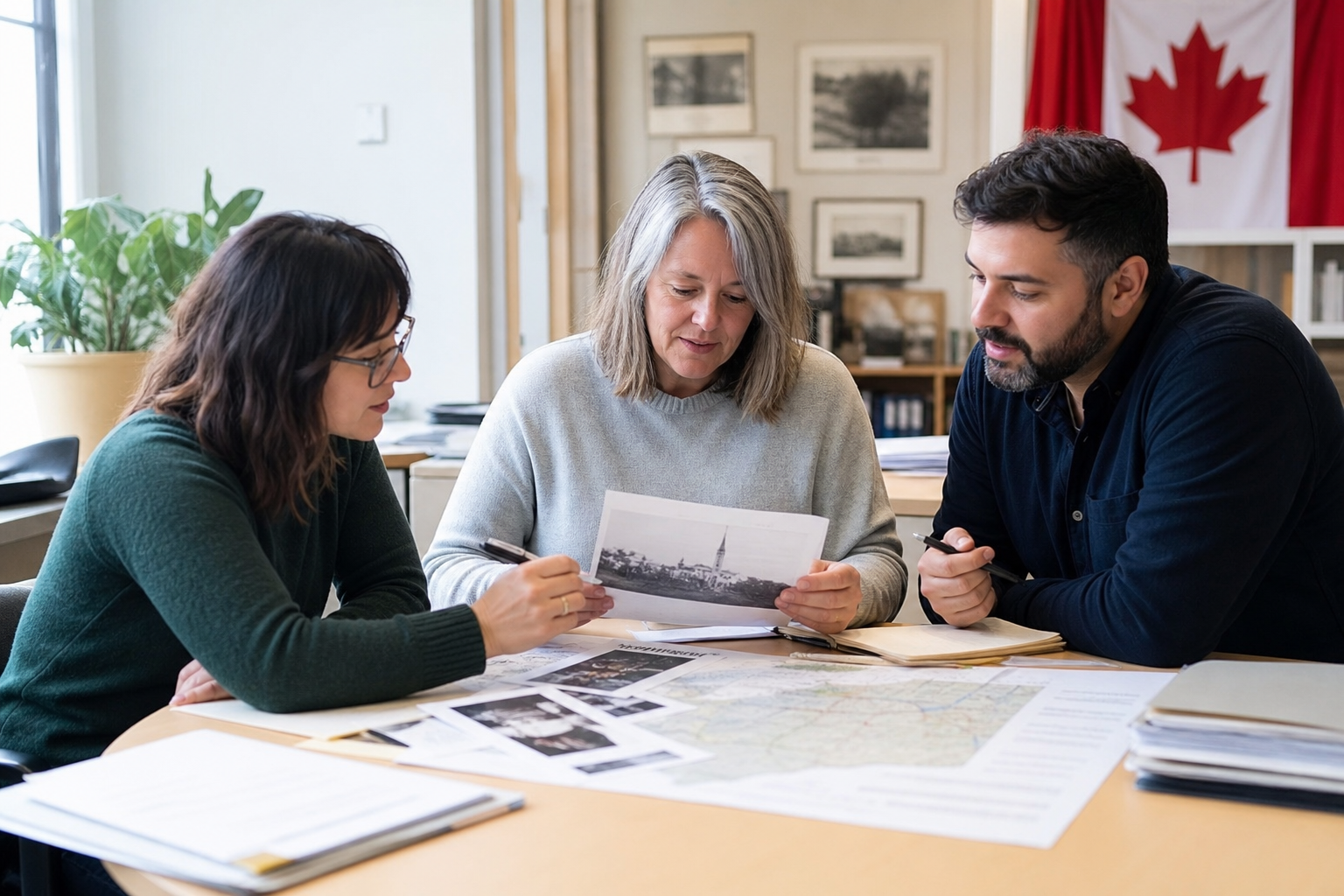
Canadian organizations have until October 1, 2026, at 4 p.m. ET to apply for Commemorate Canada funding. Use this eligibility and application checklist.

The Commemorate Canada funding intake is open for projects connected to 2027 anniversaries and later eligible anniversaries. The deadline is October 1, 2026, at 4:00 p.m. Eastern Time.
The 2027 intake includes an exceptional opportunity for projects recognizing the 160th anniversary of Confederation. That anniversary would not normally fit the program’s standard 25-year anniversary pattern, but Canadian Heritage has specifically recognized it as eligible for 2027.
Commemorate Canada supports projects that help people understand important events, people, places, symbols, anniversaries, and accomplishments in Canadian history. Funding is competitive, so meeting the basic rules only makes a proposal eligible for consideration; it does not guarantee approval.
This is a Canadian program. Organizations and projects based in the United States do not qualify simply because their work relates to Canadian history.
View the official Commemorate Canada funding page
The applicant must be an eligible Canadian organization. The program lists these main applicant categories:
Organizations may apply alone or as partners in a joint project. When several eligible organizations work together, one applicant must take responsibility for overall project management and coordination.
Private individuals and political parties cannot apply. Federal departments, their institutions, and other federal portfolio agencies are also excluded, subject to the specific exception identified in the program guidelines for Canada Place Corporation and Canada Day celebrations.
If your organization is a business, the project cannot be designed to create a commercial advantage or profit. A business may be eligible for a public, non-commercial historical project, but a promotional campaign, private event, or revenue-generating activity would not fit the program.
This is likely to be the most important eligibility question for organizations planning a 2027 proposal. Commemorate Canada requires the project to be national in scope, not merely local in subject or audience.
A project taking place in one community may still need to demonstrate broader Canadian relevance, educational value, and public reach. A proposal that only celebrates a local anniversary, serves a narrow private audience, or functions as a regular community festival may not qualify.
Before writing the application, prepare a short explanation that answers three questions:
The project must also be conceived and take place in Canada. Activities held abroad are not eligible under this intake.
Every proposed project must satisfy all of the core requirements below:
| Requirement | What it means for your proposal |
|---|---|
| Eligible anniversary | The project must relate to an anniversary of national significance. Standard anniversaries include 25th, 50th, 75th, 100th, and later 25-year milestones. Canada’s 160th anniversary is an exceptional eligible anniversary for 2027. |
| Educational component | The project must teach, explain, document, or deepen understanding of the history being commemorated. |
| National scope | The proposal must demonstrate significance and reach beyond a purely local activity. |
| Free public access | The public must be able to participate or access the project without an admission charge or restrictive private-membership model. |
| Canadian delivery | The project must be conceived and take place in Canada. |
Projects involving monuments or commemorative plaques have an additional requirement: the applicant must own the site or have an agreement allowing use of the land.
Projects commemorating living individuals are not eligible. The guidelines also exclude fairs and festivals, major infrastructure, lobbying, fundraising activities, ongoing operations, and projects that generate commercial advantage or profit.
Read the official Commemorate Canada application guidelines
Eligible costs must be directly related to the proposed project. Examples include educational materials, research and documentation, online or travelling exhibits, websites, forums, conferences, communications, translation, professional services, venue and equipment rentals, and artist or performer fees.
Administrative costs may be eligible, but they cannot exceed 15% of the total contribution. Plaques and monuments may be eligible up to a maximum of $10,000. Travel must take place within Canada and follow the rates allowed for government business travel.
Several common costs are excluded. These include land purchases, major construction or infrastructure, ongoing organizational operations, lobbying, advocacy, fairs and festivals, and fundraising activities.
In-kind support can count toward the project budget when it is essential, eligible, measurable at fair market value, and matched by an equal in-kind revenue amount. In-kind contributions are not reimbursed as cash.
Do not incur project expenses before submitting the application or before receiving written confirmation of funding approval. The guidelines state that expenses incurred before written approval are undertaken at the applicant’s own risk.
Canadian Heritage requires a complete application package. Start gathering the documents before requesting the form so that the deadline does not become a last-minute paperwork problem.
Your budget should connect each expense to a specific activity. The application is evaluated partly on whether the budget is realistic, reasonable, and detailed, and whether the organization has the capacity to deliver the project.
It also helps to confirm partnerships early. Relevant, documented partnerships and diversified revenue sources are part of the evaluation criteria.
Commemorate Canada does not currently direct applicants to a public online submission form. The official instructions say to read the full application guidelines, request an application package from Commemorate Canada, complete and sign the form, attach the required documents, and submit the package by email.
Mail, courier, and hand-delivery are also listed as alternatives. Mailed applications must be postmarked by the deadline, while hand-delivered applications must arrive by the deadline. Email is the most straightforward option for organizations working close to the cutoff.
Request the official Commemorate Canada application package
Canadian Heritage says it will acknowledge receipt within two weeks of receiving the application in its office. That acknowledgement is not an approval decision.
Applications are compared with other proposals and prioritized against available funding. Reviewers consider completeness, project objectives and scope, anniversary relevance, budget quality, revenue diversification, confirmed partnerships, organizational capacity, audience reach in both official languages, and the applicant’s track record. Equity, diversity, and inclusion are also considered when projects are evaluated and prioritized.
Funding may be provided as a grant or contribution. A contribution agreement can include reporting requirements, and projects receiving $250,000 or more as a contribution require an audited financial report. Recipients may also need to submit interim or final reports and publicly acknowledge Government of Canada support in English and French.
Because funding decisions and amounts are not guaranteed, organizations should keep other funding sources and backup project plans in view while waiting for a decision.
A proposal may be a poor match if it is mainly a local celebration, a commercial promotion, a fundraising event, an ongoing operating activity, or a festival without a clear educational and national-history component.
The program also does not provide a general amount that every successful applicant will receive. Avoid building a budget around an assumed award. Instead, show the full project cost, identify other confirmed or proposed funding, and explain what can still be delivered if the requested amount is reduced.
The safest next step is to test your idea against every eligibility requirement, request the official application package, and leave enough time for a second person to review the form, budget, signatures, and attachments before the October 1, 2026, 4 p.m. ET deadline.
A. The application intake closes on October 1, 2026, at 4:00 p.m. Eastern Time. Applications submitted after the deadline may not be considered.
A. A local organization may apply if it is an eligible Canadian applicant and its project meets the national-scope requirement. A project that is only a local celebration, festival, or ongoing community activity is unlikely to fit the program.
A. The current guidelines do not state one standard maximum award for every project. Applicants should provide a complete project budget, identify other sources of support, and avoid assuming that the full request will be approved.
A. The current instructions direct applicants to request an application package and submit the completed package by email. Mail, courier, and hand-delivery are also listed alternatives.