Welcome to KnowHow Daily!
Practical guides, money-saving tips, tech solutions, government benefits, and useful information for everyday life.
Welcome to KnowHow Daily!
Practical guides, money-saving tips, tech solutions, government benefits, and useful information for everyday life.

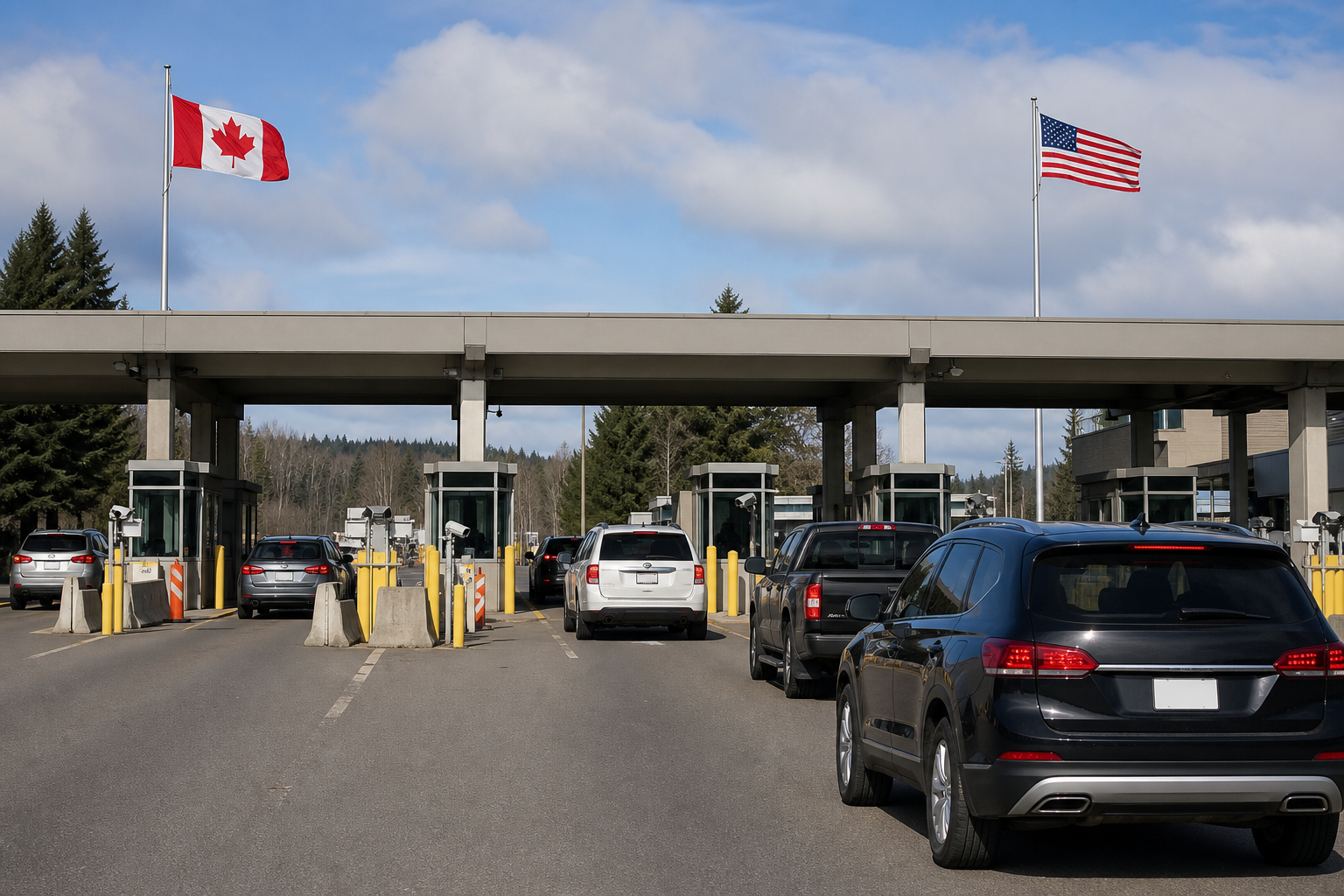
Canada-U.S. border crossing updates for September 2026, including required documents, wait-time tools, NEXUS, customs rules and upcoming changes.

Cross-border travel between Canada and the United States is operating normally for most visitors, but there are several details worth checking before you leave. The biggest practical issues right now are documentation, live wait times, goods declarations and a few program changes affecting specific travellers.
This guide is current as of September 6, 2026. Border conditions and entry decisions can change quickly, so use the official wait-time and travel-document tools before setting out.
Canadian citizens generally do not need a visitor visa for ordinary tourism or short business visits to the United States. At a land or sea crossing, accepted documents can include a valid Canadian passport, an enhanced driver’s licence or enhanced identification card, a NEXUS card, or another approved Western Hemisphere Travel Initiative document.
Canadian citizens entering the United States by air should carry a valid passport. A NEXUS card may be accepted for eligible travel from Canada, but travellers should confirm the requirements with their airline and the departure airport before travelling.
Canadian passports generally only need to be valid for the planned period of travel when entering the United States. They do not usually need an additional six months of validity beyond the intended departure date.
U.S. citizens should carry a valid U.S. passport when entering Canada. Canada may also accept other documents proving identity and citizenship, including a passport card, enhanced driver’s licence, enhanced identification document, or certain citizenship documents with photo identification.
A U.S. citizen visiting Canada for tourism generally does not need a Canadian visitor visa or an electronic travel authorization when travelling with a valid U.S. passport. Entry is still decided by a Canada Border Services Agency officer, and travellers must meet Canada’s admissibility requirements.
Canadian permanent residents returning to Canada should bring a valid permanent resident card or permanent resident travel document, along with the travel document required by their nationality.
U.S. permanent residents visiting Canada should carry a valid passport and proof of U.S. permanent resident status. Depending on nationality and how they travel, they may also need a Canadian visa or other authorization.
Canadian residents who are not Canadian citizens may need a U.S. visa or an approved ESTA if they are citizens of a Visa Waiver Program country. ESTA rules can apply to eligible Visa Waiver travellers arriving at a U.S. land border, not only those flying.
Wait times can change during weekends, holidays, major events, construction and periods of heavy summer traffic. The most useful step is to check the official live tools shortly before departure and again before choosing an alternate crossing.
One significant current disruption is at Saint-Bernard-de-Lacolle on Highway 15 in Quebec. Redevelopment of the primary inspection area is expected to continue until winter 2027, and travellers are being warned to expect higher-than-normal delays. If you are travelling through southern Quebec, compare nearby crossings before committing to your route.
NEXUS remains the main expedited-crossing option for pre-approved, low-risk travellers who regularly move between Canada and the United States. Members can use designated lanes at participating land crossings and special processing options at selected airports and marine reporting locations.
Every person using a dedicated NEXUS or other trusted-traveller lane must meet the lane’s requirements. Do not assume that one cardholder can bring non-members through a restricted lane.
NEXUS applicants must complete background checks by both countries and attend an interview at an enrollment centre. The membership fee for adults is currently listed as US$120 for five years, while applicants under 18 can apply without the fee under the program rules.
Travellers should also check lane hours and crossing availability before leaving. A NEXUS lane may not be open at every port or at every hour.
Whether you are entering Canada or the United States, you must declare goods, food, plants, animals, firearms, currency and other items covered by customs rules. When in doubt, declare the item and let the border officer decide whether it is allowed.
Canadian residents returning home should review personal exemption limits for purchases, alcohol and tobacco. Visitors entering Canada should check restrictions on food, plants, animal products and medications. Cannabis remains a major border issue: taking cannabis across the Canada-U.S. border is illegal, even if it was legally purchased or used in the country where you started your trip.
Firearms and weapons require particular care. Rules differ between Canada and the United States, and an item that is legal in one country may be restricted or prohibited in the other. Do not pack a firearm, ammunition or weapon for a casual cross-border trip without confirming the applicable import and transport requirements first.
Canada is scheduled to impose surtaxes on certain goods from the United States beginning September 8, 2026. This is mainly a customs and importing issue rather than a new passport or visa requirement for ordinary tourists.
Travellers returning to Canada with purchases should keep receipts, accurately describe what they bought and be prepared for questions about value, origin and intended use. The surtax treatment depends on the product, so do not assume that every U.S.-made item will be charged the same way.
Canada’s Remote Area Border Crossing program is scheduled to be replaced by telephone reporting on December 1, 2026. Existing RABC permits remain valid until 11:59 p.m. on November 30, 2026, but new applications are no longer being accepted.
The change affects people entering Canada through remote areas of northern Ontario or from the Northwest Angle into southern Manitoba. After the transition, travellers will need to report in person at a port of entry or at a designated telephone reporting site.
U.S.-bound travellers using Billy Bishop Toronto City Airport can now complete U.S. customs and immigration preclearance before departure. This can make connections and arrival in the United States more convenient, but passengers still need to arrive early enough for airport security and preclearance processing.
Border officers in either country can ask about the purpose of the trip, where you are staying, how long you plan to remain and what you are bringing with you. Answer clearly and truthfully, and keep important documents easy to reach rather than buried in luggage.
A. A passport is the simplest option, but it is not the only document accepted at a land border. Canadian citizens may also use certain enhanced driver’s licences, enhanced identification cards, NEXUS cards and other approved travel documents. Requirements are different for air travel, where a valid passport is generally required.
A. U.S. citizens should travel with a valid U.S. passport whenever possible. Canada may accept other proof of identity and citizenship, including some enhanced driver’s licences and citizenship documents, but carrying a passport usually creates the fewest complications.
A. No. Crossing the international border with cannabis is illegal, even when cannabis is legal in the province, territory or U.S. state where you bought it.
A. No. The September 8, 2026 change concerns surtaxes on certain U.S. goods. It is not a blanket entry fee or a new passport charge. Travellers bringing purchases into Canada should declare them accurately and keep receipts.









FDA Infant Formula Standards Proposal: What Parents Need to Know About Nutrient Changes and the Comment Deadline