Welcome to KnowHow Daily!
Practical guides, money-saving tips, tech solutions, government benefits, and useful information for everyday life.
Welcome to KnowHow Daily!
Practical guides, money-saving tips, tech solutions, government benefits, and useful information for everyday life.

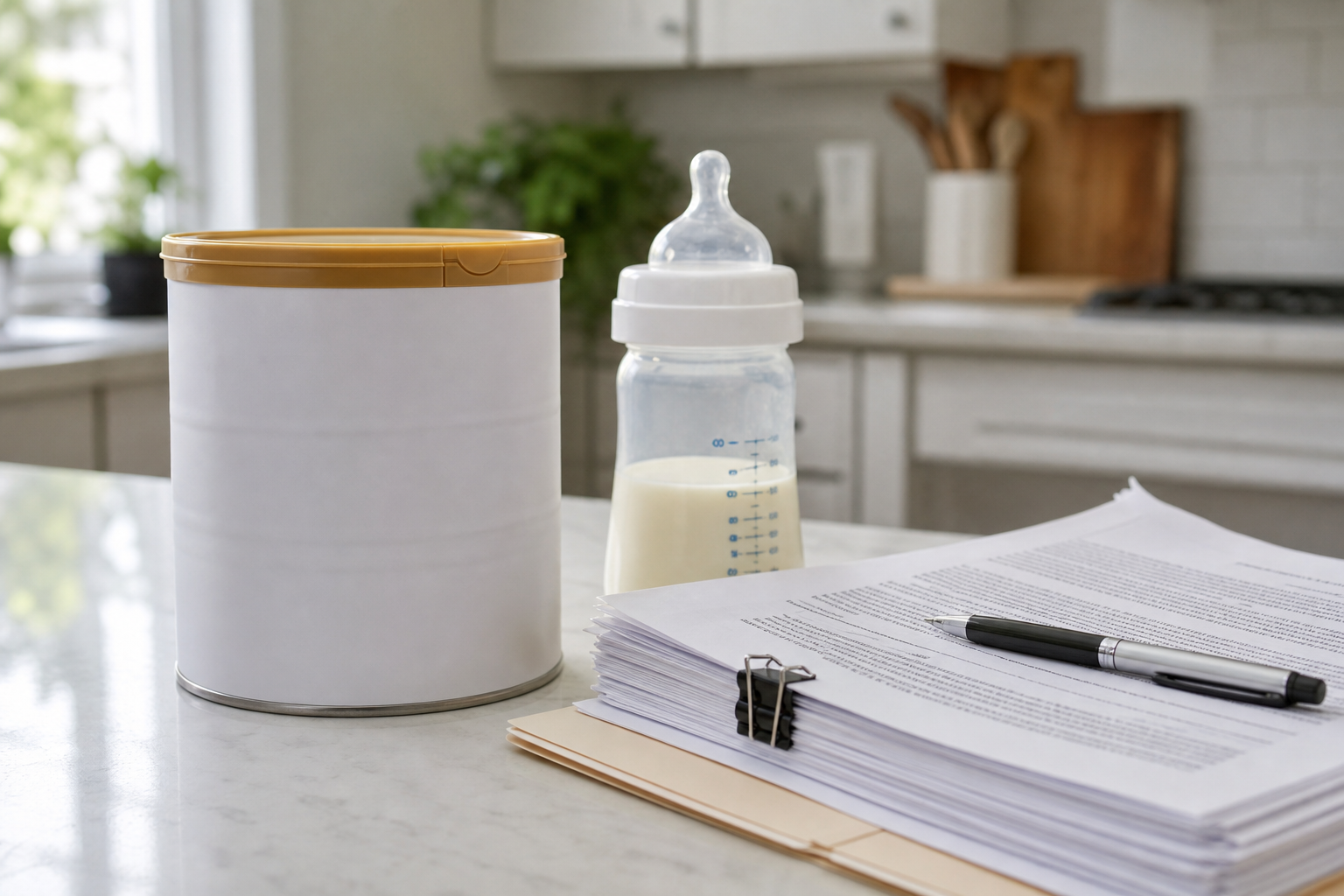
The FDA proposed changes to U.S. infant formula nutrient requirements and released new contaminant-testing data. Here is what changes now, what does not, and how to comment.
The U.S. Food and Drug Administration published a proposed update to infant formula nutrient requirements on October 29, 2026, with the rule appearing in the Federal Register on November 2, 2026. The proposal is part of the FDA’s first comprehensive review of infant formula nutrient standards since 1998. It is not a final rule, so parents do not need to change formulas, discard products, or adjust mixing instructions because of this announcement.
The FDA also released new information from its ongoing testing for chemical contaminants. Across the samples tested, most contaminant levels were very low or not detectable. The agency says the testing is part of continued monitoring, not a recall or a warning that currently marketed infant formula is unsafe.

The proposal covers eight of the 30 nutrients currently required in infant formula sold in the United States. Four nutrients would have revised limits, while four others would keep their existing requirements after the FDA’s scientific review.
| Nutrient | What the proposal would do |
|---|---|
| Iodine | Raise the minimum level from 5 to 15 micrograms per 100 kilocalories and lower the maximum from 75 to 50 micrograms. |
| Manganese | Lower the minimum from 5 to 1 microgram per 100 kilocalories and establish a maximum of 50 micrograms. |
| Vitamin A | Change the label unit from IU to micrograms RAE, lower the minimum and maximum levels, and limit qualifying vitamin A sources to preformed vitamin A. |
| Vitamin D | Change the label unit from IU to micrograms and raise both the minimum and maximum levels. |
| Chloride, potassium, selenium, and sodium | Retain the current minimum and maximum requirements after review. |
The proposal also asks for input about nutrients that are not currently required but are often added by manufacturers, including DHA, ARA, and L-carnitine. That request for input does not mean those nutrients are being added to the required list now.

For families, the most important point is that nothing changes immediately. The FDA says infant formulas currently on the U.S. market remain safe for babies and that the proposed nutrient changes are not being driven by a safety concern with existing products.
A proposed rule is an opportunity for public comment, not a new requirement. Manufacturers would not have to reformulate or relabel products unless the FDA later issues a final rule. The agency says it intends to complete additional phases of its nutrient review and combine the final changes into one comprehensive rule.
Parents should continue to prepare formula exactly as directed on the product label. Do not change the powder-to-water ratio, add supplements, dilute formula, or make homemade substitutions based on the proposal. If your baby has a medical condition, uses a specialized formula, or has feeding difficulties, ask a pediatrician or other qualified clinician before making a feeding change.
The FDA’s new testing pages cover chemical contaminants such as arsenic, cadmium, lead, mercury, PFAS, pesticides, phthalates, and other compounds. The agency tested products available at retail, including powdered, concentrated liquid, and ready-to-feed formulas in its broader 2023–2025 market basket survey. It also tested 134 powdered formula samples in a 2026 mini survey.
In the broader survey, most samples had undetectable or very low levels of contaminants. For example, 309 of 312 samples had no detectable pesticides, and glyphosate and glufosinate were not detected. In the 2026 mini survey, heavy-metal levels were again very low or undetectable across the products tested.
Those findings need to be read carefully. “Not detected” means the amount was below the test method’s detection capability; it does not necessarily mean a substance is absent. A detectable amount also does not automatically mean the product is unsafe. The FDA describes these market basket surveys as a snapshot that helps identify trends and guide further testing, not as a guarantee covering every product lot.
The FDA reports powdered formula testing results “as sold,” meaning the dry powder is tested before it is mixed with water. Because powdered formula is prepared with water, the concentration after preparation will be lower than the concentration measured in the dry product. The FDA is also working toward action levels for certain chemical contaminants.
There is no immediate implementation date because the rule is still under review. The Federal Register proposal says that a future final rule would become effective 60 days after publication. It also proposes giving manufacturers three years from that effective date to reformulate and relabel products.
That timeline could change after public comments, peer review, additional nutrient reviews, and the final rulemaking process. The FDA has not announced a final implementation date for the complete review.
Anyone may comment, including parents, caregivers, clinicians, researchers, and industry representatives. Electronic comments must be submitted by 11:59 p.m. Eastern Time on March 2, 2027. The official proposal identifies the docket as FDA-2026-N-10832.
Before submitting, read the proposal and explain which part you are addressing. You can share practical concerns, scientific information, labeling feedback, or questions about how a change could affect families. Comments submitted online become public, so do not include medical records, Social Security numbers, or other private information.
Read the official Federal Register proposal and submit a public commentThis proposed rule applies to infant formula marketed in the United States. It does not automatically change the rules for products sold in Canada. Health Canada reviews infant formulas before they can be sold in Canada, and Canadian products must meet Canada’s Food and Drug Regulations and related requirements.
If you live in Canada, check the product’s Canadian labeling and Health Canada’s reviewed-formula information rather than assuming that a U.S. proposal changes the formula sold across the border. Families who move between countries should also ask a health professional or the manufacturer about the exact product and formulation.
Check Health Canada's reviewed infant formulasThe FDA’s nutrient update is proposed, not final. Current U.S. infant formula remains available under existing requirements, and the FDA’s newly published testing information does not announce a general recall. Parents should keep following current preparation instructions and use official FDA or Health Canada resources for any product-specific safety alert.
A. No. The FDA says infant formulas currently marketed in the United States remain safe to use. The proposal is not a final rule and does not require parents to switch products or change preparation instructions.
A. The testing announcement does not announce a general recall. The FDA reported that most tested samples had very low or undetectable contaminant levels and says it will take action if unsafe levels are found.
A. Comments must be submitted by March 2, 2027. Electronic comments are accepted until 11:59 p.m. Eastern Time on that date, and submissions should identify docket FDA-2026-N-10832.
A. Not under this proposal. The FDA is requesting input about possible requirements for nutrients such as DHA, ARA, and L-carnitine, but it is not adding them to the required nutrient list in this first proposed rule.