Welcome to KnowHow Daily!
Practical guides, money-saving tips, tech solutions, government benefits, and useful information for everyday life.
Welcome to KnowHow Daily!
Practical guides, money-saving tips, tech solutions, government benefits, and useful information for everyday life.

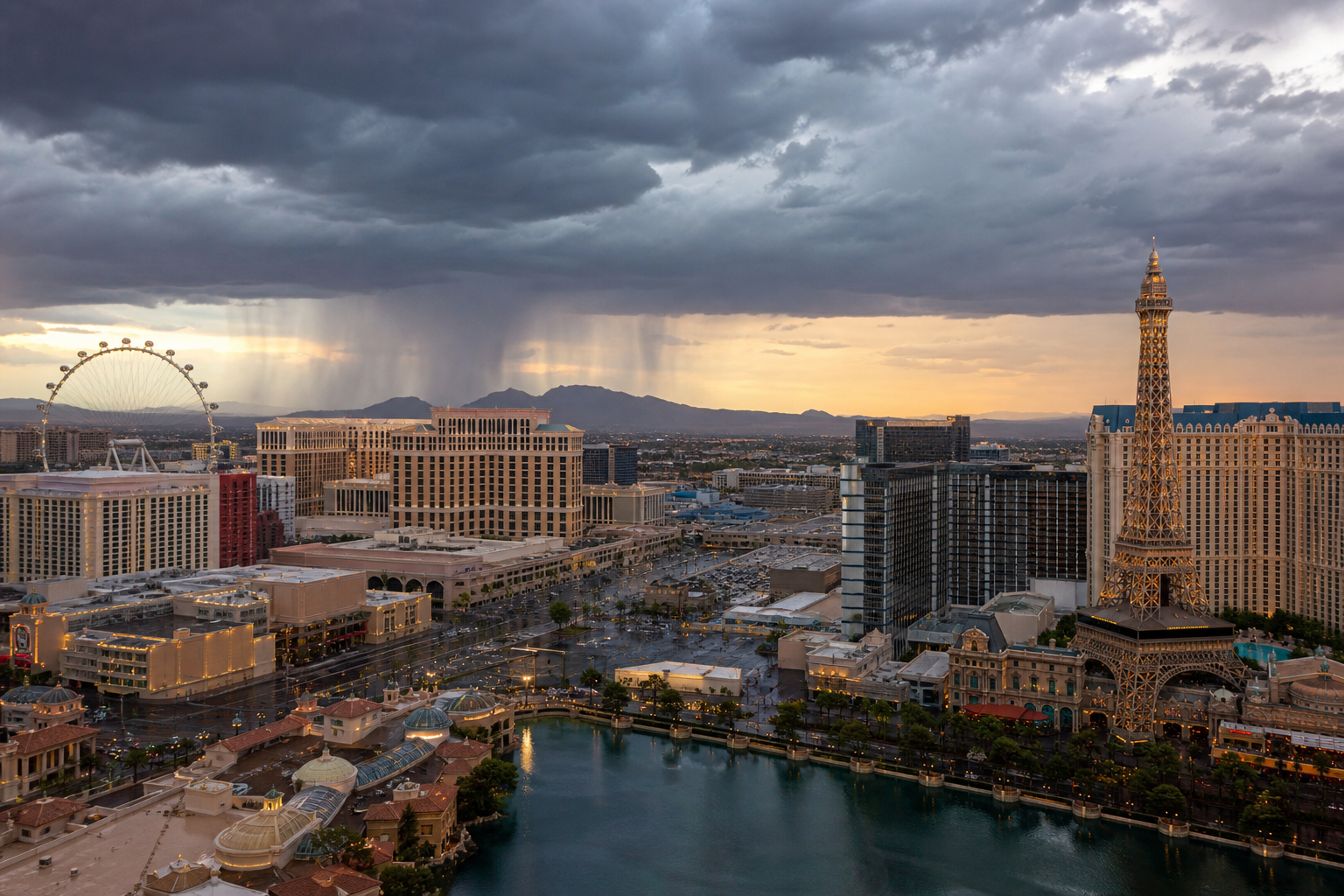
Las Vegas weather forecast for September 6–12, 2026: rain and thunderstorm risk Sunday, temperatures above 100°F later in the week, and practical safety advice for visitors.
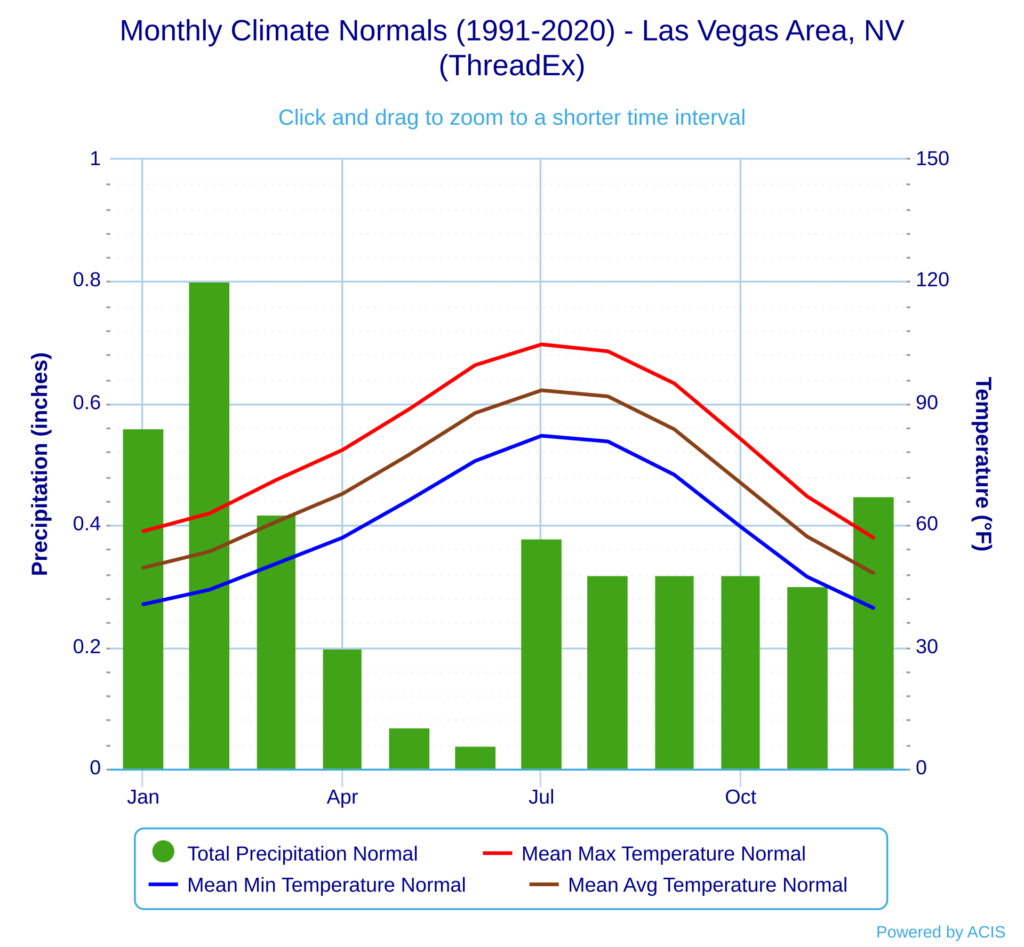
Las Vegas is starting the week with an unusual weather combination: a cooler, unsettled Sunday followed by a sharp return to extreme desert heat. For Sunday, September 6, the National Weather Service forecast calls for cloudy conditions, rain and possible thunderstorms, with temperatures around the upper 80s in the central valley. Some locations around the wider Las Vegas area may stay closer to the low or mid-80s.
The storm risk is not just about getting wet. Heavy downpours can produce sudden flooding in streets, underpasses, washes and low-lying areas. The strongest shower activity is expected mainly from late morning into the afternoon, although timing can vary across the valley.
After Sunday, conditions turn sunnier and hotter:
| Date | Expected conditions | Approximate high |
|---|---|---|
| Sunday, September 6 | Cloudy, showers and possible thunderstorms | Mid-80s to upper 80s°F |
| Monday, September 7 | Sunny and less humid | 93–96°F (34–36°C) |
| Tuesday, September 8 | Mostly sunny | 96–98°F (36–37°C) |
| Wednesday, September 9 | Sunny and hot | About 100–106°F (38–41°C) |
| Thursday, September 10 | Sunny and very hot | About 102–107°F (39–42°C) |
| Friday, September 11 | Hot, with some afternoon breeze | About 103–106°F (39–41°C) |
| Saturday, September 12 | Mostly sunny and hot | About 99–105°F (37–41°C) |
Forecast temperatures can differ by several degrees between Harry Reid International Airport, the Strip, North Las Vegas, Henderson and higher communities near the foothills. Elevation and storm clouds can make one part of the valley noticeably cooler than another.
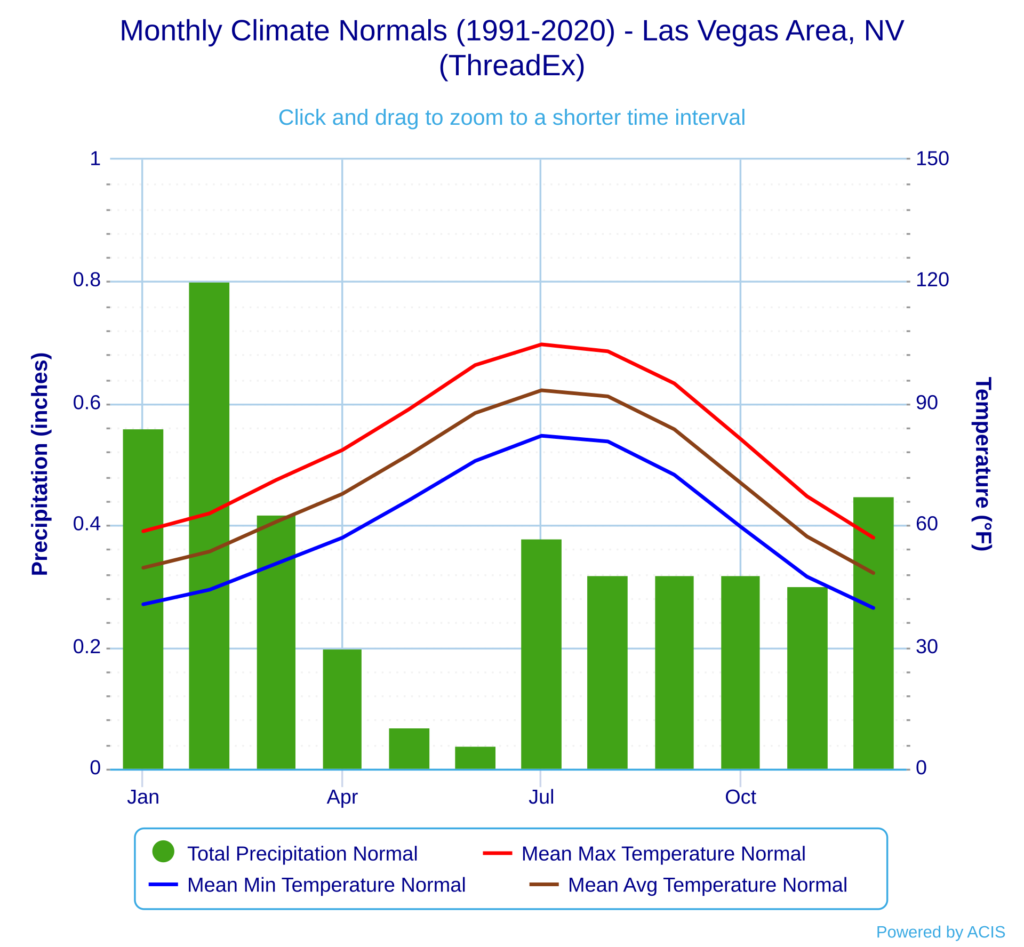
Sunday’s rain chance is meaningful, but this is not necessarily an all-day washout. Desert thunderstorms are often scattered, so one neighborhood may receive a heavy burst while another sees only clouds and wind. The risk is that a short, intense downpour can overwhelm normally dry channels and drainage areas.
Las Vegas sits in a broad desert valley surrounded by mountains. Storms may form over higher terrain and send runoff toward the valley even when skies overhead look relatively calm. Water can also travel quickly through normally dry washes.
Lightning can strike well away from the heaviest rain. That matters for people hiking at Red Rock Canyon, visiting Lake Mead, playing golf or attending outdoor events around the valley.
The main heat concern begins Wednesday, September 9, when highs are expected to reach roughly 100–106°F depending on location. Thursday through Saturday may bring highs from about 102°F to 107°F, with overnight temperatures remaining unusually warm in built-up areas.
That pattern can be dangerous because the body gets less relief after sunset. A hotel room, rental car or patio can remain hot long after the afternoon peak. Humidity may be lower than in many parts of the United States and Canada, but dry air increases water loss and can make dehydration harder to notice.
Warning signs of heat exhaustion include heavy sweating, weakness, dizziness, nausea, headache and faintness. Heat stroke is an emergency. Confusion, loss of consciousness, seizures or very hot skin require immediate emergency help.
If you arrive on Sunday, keep outdoor plans flexible and allow extra travel time. Rain can briefly affect traffic, airport approaches and roads leading toward Red Rock Canyon, Lake Mead, Boulder City and nearby desert attractions. A storm may pass quickly, but flooding and debris can remain after the skies clear.
For Monday and Tuesday, outdoor sightseeing is more manageable, but midday heat will still be intense for travelers who are not acclimated to the desert. By Wednesday, long hikes, strenuous sports and extended time on exposed pavement should be treated as high-risk activities.
A practical schedule is to do outdoor activities around sunrise, spend the hottest hours indoors or at a cooled attraction, and return outside near sunset only after checking the latest forecast. Remember that sunset does not mean the temperature drops immediately.
The forecast and warnings for Las Vegas come from United States agencies, including the National Weather Service and local emergency-management authorities. Canadian visitors should use the same U.S. Fahrenheit forecast shown by hotels, airlines and local media, while Canadian weather apps may also display Celsius.
For reference, 100°F is about 38°C, 105°F is about 41°C and 107°F is about 42°C. In an emergency, visitors from both Canada and the United States can call 911 in Las Vegas. Travel insurance, hotel policies and attraction operating decisions are separate from the weather forecast, so check those details before leaving for a remote or outdoor activity.
Forecast confidence is usually highest for the temperature trend and lower for the exact location and timing of thunderstorms. Check the local forecast before leaving each morning, then check again before hiking, driving outside the city or spending time near water.
Pay attention to the difference between a flood watch and a flood warning. A watch means conditions could support flooding. A warning means flooding is occurring, imminent or especially dangerous, and you should take action immediately.
A. Rain and possible thunderstorms are in the forecast, mainly from late morning into the afternoon. Conditions will be scattered, so rainfall amounts and timing may vary considerably across the Las Vegas Valley.
A. Not necessarily, but the timing matters. Monday and Tuesday are more manageable with highs in the mid-to-upper 90s, while Wednesday through Saturday may reach about 100–107°F. Plan outdoor activities early and spend the hottest part of the day in air-conditioned places.
A. Yes. Rain falling over mountains or upstream washes can send fast-moving water toward the valley. Never enter a flooded road, wash or underpass just because rain is not falling at your exact location.
A. Bring breathable clothing, a hat, sunglasses, sunscreen, sturdy walking shoes and a refillable water bottle. Add a light rain layer or compact umbrella for Sunday, but do not rely on an umbrella for lightning protection.