Welcome to KnowHow Daily!
Practical guides, money-saving tips, tech solutions, government benefits, and useful information for everyday life.
Welcome to KnowHow Daily!
Practical guides, money-saving tips, tech solutions, government benefits, and useful information for everyday life.

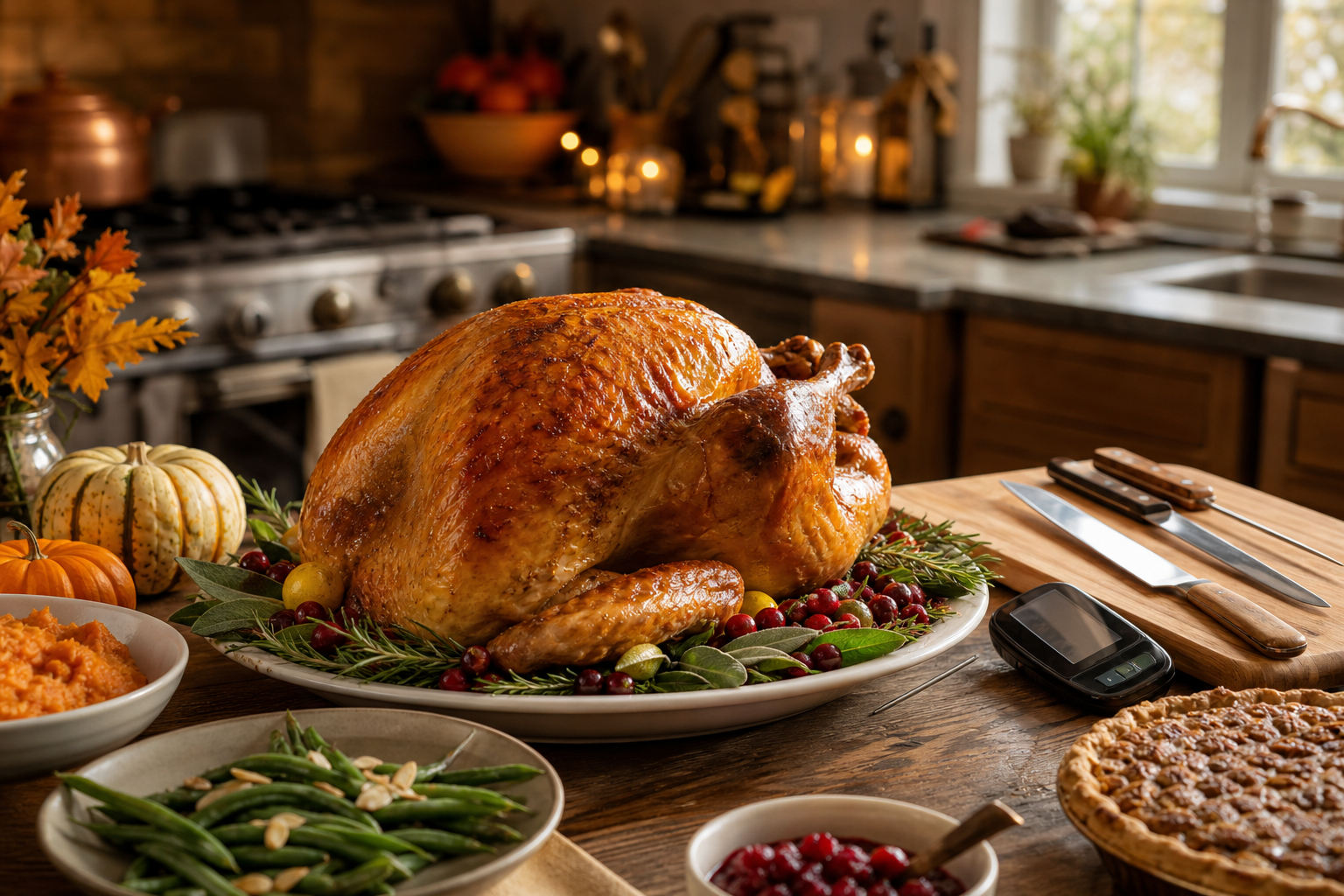
Plan your Thanksgiving turkey with safe thawing times, roasting guidance, internal temperatures, serving limits, and leftover storage rules for the U.S. and Canada.
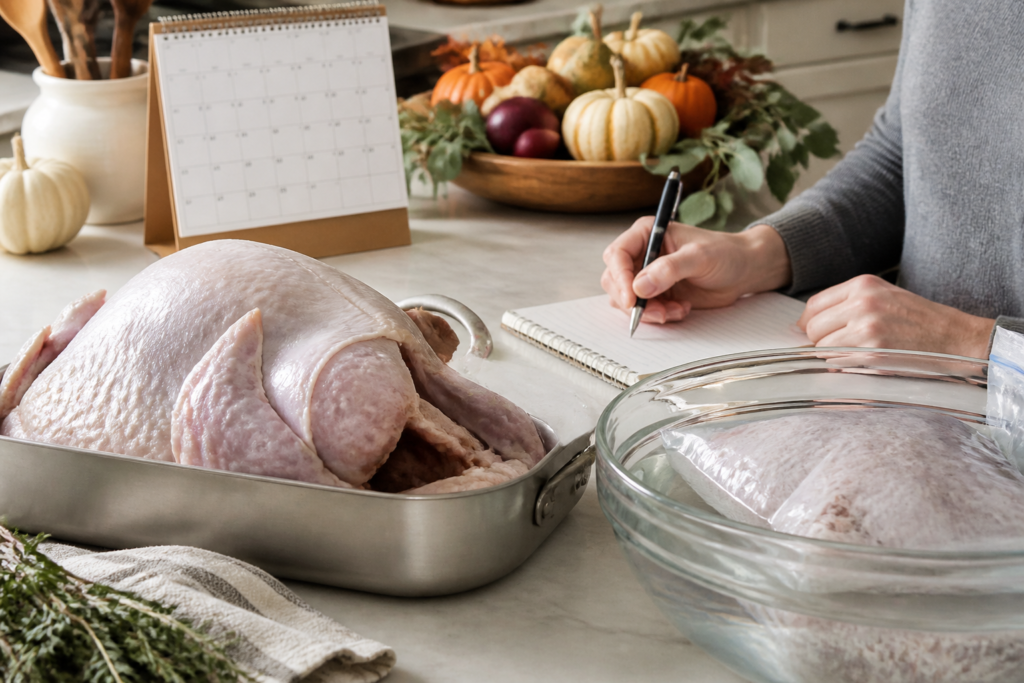
Thanksgiving in the United States falls on Thursday, November 26, 2026. If you are serving turkey that day, the safest plan is to choose the bird early, make room in the refrigerator, and work backward from the meal time.
As a rough buying guide, allow about 1 to 1½ pounds of whole turkey per person. That includes bones and may leave some leftovers. Buy more if you want generous portions or several days of sandwiches, soup, or casseroles.
The main distinction to remember is simple: thawing time is not cooking time. A turkey can look soft on the outside while ice remains inside, especially around the cavity and joints.
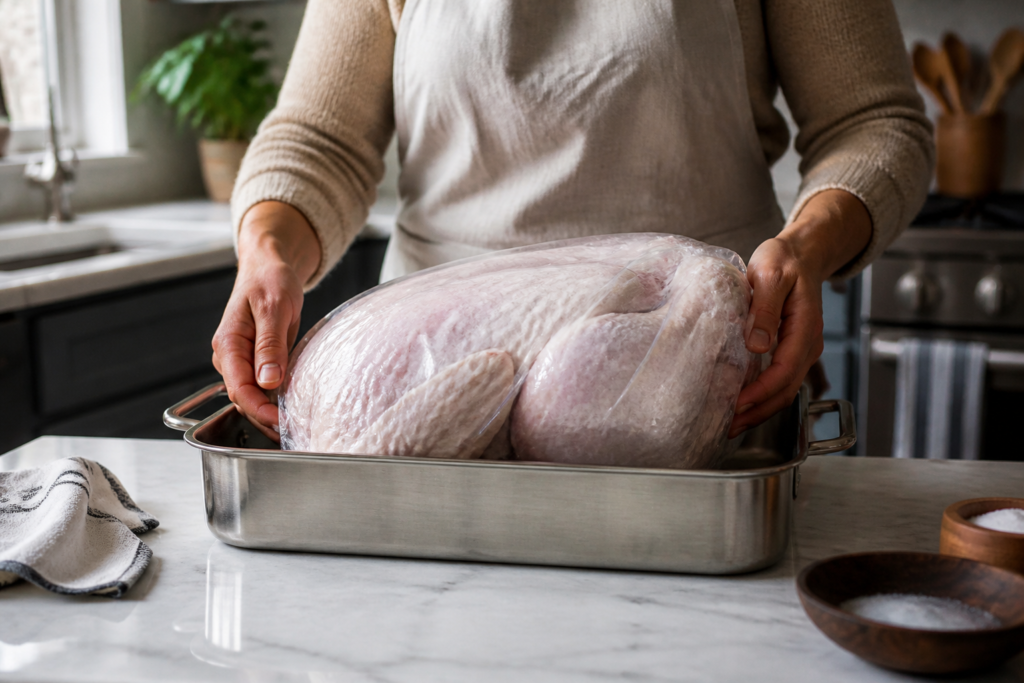
There are three safe methods: refrigerator thawing, cold-water thawing, and microwave thawing. Do not thaw a turkey on the kitchen counter, in hot water, outdoors, in a garage, or in a vehicle. The outside can enter the bacterial “danger zone” while the center is still frozen.
Keep the turkey in its original wrapping and place it on a tray or in a pan on the lowest refrigerator shelf. Allow approximately 24 hours for every 4 to 5 pounds.
| Turkey weight | Approximate refrigerator thawing time |
|---|---|
| 4 to 12 pounds | 1 to 3 days |
| 12 to 16 pounds | 3 to 4 days |
| 16 to 20 pounds | 4 to 5 days |
| 20 to 24 pounds | 5 to 6 days |
Once thawed, a turkey can generally remain refrigerated for another one to two days before cooking. That makes refrigerator thawing the best choice if you can plan ahead.
Leave the turkey in a leak-proof bag or its unopened packaging and submerge it in cold tap water. Change the water every 30 minutes so it stays cold. Allow about 30 minutes per pound.
A 12-pound turkey may take roughly six hours using this method. Cook it immediately after it has thawed. Do not put a cold-water-thawed turkey back in the refrigerator for several days, and do not refreeze it unless it has first been cooked.
Microwave thawing can work, but the turkey must fit comfortably inside the appliance and the manufacturer’s instructions should be followed. Remove packaging and metal clips, use a microwave-safe dish to catch drips, and cook the turkey immediately after thawing. The bird may begin to warm or cook unevenly during the process.
For a fully thawed turkey, set the oven to at least 325°F. Cooking time varies with the bird’s size, shape, starting temperature, oven accuracy, and whether it is stuffed. Use the chart below as a planning estimate, not as proof that the turkey is done.
| Turkey size | Unstuffed at 325°F | Stuffed at 325°F |
|---|---|---|
| 8 to 12 pounds | 2¾ to 3 hours | 3 to 3½ hours |
| 12 to 14 pounds | 3 to 3¾ hours | 3½ to 4 hours |
| 14 to 18 pounds | 3¾ to 4¼ hours | 4 to 4¼ hours |
| 18 to 20 pounds | 4¼ to 4½ hours | 4¼ to 4¾ hours |
| 20 to 24 pounds | 4½ to 5 hours | 4¾ to 5¼ hours |
A frozen turkey can be cooked safely, but it will take substantially longer than a thawed bird. If you are already close to mealtime, cooking turkey parts such as a breast, thighs, or drumsticks can be more predictable than trying to rush a whole bird.
Color, juices, and a pop-up timer are not reliable substitutes for a food thermometer. In the United States, USDA guidance says a whole turkey is safe when every relevant part reaches at least 165°F (74°C).
Check the thickest part of the breast, the innermost part of the thigh, and the innermost part of the wing. Avoid touching bone because it can distort the reading. If the turkey is stuffed, check the center of the stuffing as well; it should also reach 165°F.
Canada uses a different whole-poultry benchmark in its holiday guidance: Health Canada lists 82°C (180°F) for whole poultry, while 74°C (165°F) applies to poultry pieces, stuffing, casseroles, and leftovers. Canadian readers should follow the temperature guidance on the package and from Health Canada for the specific preparation.
For the most consistent food-safety result, cook stuffing separately in a casserole dish. Stuffing inside the bird can take longer to reach a safe temperature, which may leave the turkey meat overcooked by the time the center is ready.
Once the turkey is cooked, serve it promptly and keep hot food hot. Avoid leaving the entire bird and large dishes on the table for hours. Buffet-style meals need extra attention because food can sit at room temperature while people return for second and third servings.
Leftovers should go into the refrigerator or freezer within two hours. Remove meat from the bones, separate turkey from stuffing and gravy, and divide large amounts into shallow containers. Smaller portions cool faster and more evenly than a deep pot or tightly packed casserole.
Keep the refrigerator at 40°F (4°C) or colder. In the United States, refrigerated turkey and stuffing should generally be used within three to four days. Health Canada’s holiday guidance recommends using refrigerated leftovers within two to three days, while other Canadian general guidance allows up to four days for some leftovers. If you are unsure which rule applies to a particular dish, use the shorter period.
Freeze leftovers if you will not eat them within the recommended refrigerator window. Label containers with the date and leave enough space for food to expand. Freezing protects safety, although texture and quality can decline over time.
Reheat leftovers to at least 165°F (74°C), checking several spots with a food thermometer. In a microwave, cover the food loosely, stir or rotate it partway through, and allow standing time before checking the temperature.
Reheat gravy, soup, and sauces thoroughly, stirring as they heat. Slow cookers and chafing dishes are not recommended for reheating because food can spend too long in the danger zone before becoming hot enough.
A. No. Counter thawing allows the outer portions to become warm enough for bacteria to multiply while the center remains frozen. Use the refrigerator, cold water in a leak-proof package, or a microwave according to its instructions.
A. Do not leave it on the counter to finish thawing. You can continue thawing it in cold water, changing the water every 30 minutes, or cook it from frozen if the bird and oven instructions allow it. Expect a much longer cooking time and rely on the thermometer, not the clock.
A. No. Washing raw poultry can spread contaminated water droplets around the sink and nearby surfaces. Pat the turkey dry with paper towels if needed, then wash your hands and clean any surfaces that contacted the raw bird.
A. In the United States, refrigerate or freeze perishable leftovers within two hours, or within one hour if the surrounding temperature is above 90°F. If food has remained out longer, the safest choice is to discard it.