Welcome to KnowHow Daily!
Practical guides, money-saving tips, tech solutions, government benefits, and useful information for everyday life.
Welcome to KnowHow Daily!
Practical guides, money-saving tips, tech solutions, government benefits, and useful information for everyday life.


Missing an IRS refund? Learn what to check first, when to contact your bank, how Form 3911 works, and what to do about direct-deposit errors.
If the IRS says your refund was sent but you don’t see the money, don’t immediately file another tax return or submit a random request. Start by confirming the refund status, the issue date, and the payment method. The right next step depends on whether the refund was sent by direct deposit, mailed as a check, rejected by a bank, or issued on a joint return.
Most taxpayers can begin with the IRS refund tracker. It shows three basic stages: return received, refund approved, and refund sent. You’ll need your Social Security number or Individual Taxpayer Identification Number, filing status, and the exact whole-dollar refund amount shown on the return.
Check the official Where’s My Refund? trackerThe tracker generally becomes available within 24 hours after an electronically filed current-year return, three or four days after an electronically filed prior-year return, or about four weeks after a paper return. A “Refund Sent” message confirms that the IRS issued the payment, but it doesn’t guarantee that your bank has posted a direct deposit or that a mailed check has reached you.

Check the account and routing numbers on the filed return, then contact the bank or financial institution connected to those numbers. Ask whether the deposit is pending, rejected, returned to the IRS, or credited to another account.
If the bank rejected the deposit, the IRS generally receives the money back and sends a notice explaining what happens next. A refund can also be rejected when information such as the taxpayer’s name, Social Security number, routing number, or account number doesn’t match the bank’s records.
If you entered an incorrect account or routing number and the bank accepted the payment into someone else’s account, the IRS says you must work directly with that financial institution to recover the funds. The IRS generally can’t force the bank to return money that it accepted into another account, so keep records of every conversation and request a written response when possible.
After you contact the financial institution, wait five calendar days. If the money still hasn’t appeared and the bank hasn’t recovered or returned it, submit Form 3911 to ask the IRS to trace the payment. The trace allows the IRS to contact the financial institution and attempt to locate the refund.
Review the official IRS direct-deposit refund instructionsFor a direct-deposit trace involving incorrect account information, banks may have up to 90 days from the initial trace request to respond. The IRS says the overall resolution can take up to 120 days, so this route is not an instant replacement process.
Check your current address, mailbox, household mail, and any forwarding arrangements. The IRS says a refund check should generally arrive within four weeks from the date it was issued, although delivery can take longer.
If you never received the check, or it was lost, stolen, or destroyed, you can begin a refund trace. For a single, married-filing-separately, or head-of-household return, the IRS may allow you to start through Where’s My Refund? or the automated refund hotline. You can also use Form 3911.
If the check was issued more than 28 days ago, Where’s My Refund? may display instructions for requesting a replacement. If the check was cashed, the Bureau of the Fiscal Service may send a claim package and a copy of the cashed check. That review can take up to six weeks.
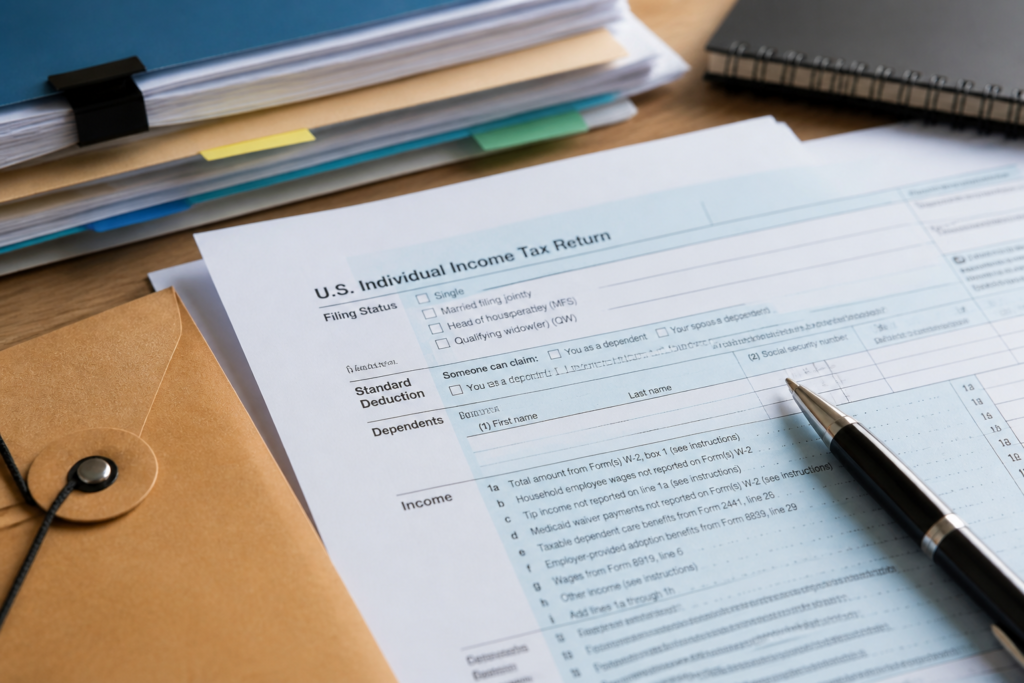
Form 3911, Taxpayer Statement Regarding Refund, is used to provide the IRS with information needed to trace a refund that was already issued but not received, or a check that was lost, stolen, or destroyed.
Download the current Form 3911 instructions and use the state-specific mailing address or fax number listed by the IRS. Send a separate form for each refund you want traced. The form asks for information such as the taxpayer’s identification number, address, tax period, refund amount, filing date, payment method, and bank details if the refund was meant for direct deposit.
View the official Form 3911 information page Download the official Form 3911 PDFComplete the form carefully and make sure the address matches the information the IRS can use to contact you. If you moved, include your current address and the address shown on the tax return when the form asks for both.
Joint returns can require a different process. Married taxpayers filing jointly generally cannot start a refund trace through the automated system alone. Instead, call the IRS and speak with a representative, or submit Form 3911.
Both spouses must sign Form 3911 before the IRS can begin a trace for a joint-return refund. If only one spouse signs, the IRS may be unable to process the request.
Review the official IRS refund inquiry optionsThe IRS also can’t disclose refund information belonging to another taxpayer unless the person requesting it has proper authorization. This matters when a spouse, tax preparer, representative, or family member is trying to ask about a refund that is not legally theirs to access.
A CP53A notice means the IRS tried to deposit the refund, but the financial institution could not process it. The IRS may need time to research the account and determine the next step. If the notice says to wait, calling earlier may not produce additional information.
Keep the notice, your filed return, bank records, and any correspondence from the financial institution. If the IRS notice says to contact the agency after a stated period, use the phone number printed on the notice and have those documents available.
Under the IRS’s current payment guidance, some taxpayers may receive a CP53E notice asking them to provide bank information through their IRS Online Account. If you receive one, use only the secure IRS account reached through IRS.gov. The notice says taxpayers generally have 30 days to respond.
The IRS states that employees cannot take new direct-deposit information over the phone or in person for this process. After you submit the information online, the account status may take around two to five business days to update. If you do not respond, the IRS may issue a paper check after six weeks when there are no other problems with the return.
Sign in to the official IRS Online AccountNever send bank account numbers, passwords, or identity documents in response to an unsolicited text, email, or social-media message. The IRS uses official notices and secure IRS.gov services for refund-related account requests. Scammers may use a refund problem as an excuse to ask for payment, gift cards, login codes, or remote access to your computer.
The timing depends on the payment problem. A replacement for an uncashed paper check may arrive within four weeks after the IRS issues the replacement. A cashed-check investigation can take up to six weeks. A direct-deposit trace involving incorrect bank information may take up to 120 days to resolve.
These are processing guidelines, not guaranteed delivery dates. A refund can also be delayed by return corrections, identity verification, offsets for other debts, amended-return processing, or additional review.
Use Where’s My Refund? to confirm the status and issue date, then contact the bank if the payment was sent by direct deposit. If the bank cannot locate the money after five calendar days, use the IRS Form 3911 process. For a joint return, make sure both spouses sign, and for any IRS notice, follow the instructions and deadline printed on that notice.
A. If the return has not yet posted to the IRS system, you may call the IRS at 800-829-1040 and ask whether the direct deposit can be stopped. Once the deposit has been accepted by another account, you generally must work with the financial institution to recover the money.
A. Yes. The IRS Form 3911 instructions say to complete a separate form for each refund for which you are requesting information.
A. The Bureau of the Fiscal Service may send a claim package and a copy of the cashed check. You must complete and return the package so the claim can be reviewed. The IRS cannot automatically replace a check when the circumstances show that the taxpayer endorsed it and someone else cashed it.
A. No. Amended-return refund information is handled through the IRS Where’s My Amended Return? service rather than the standard Where’s My Refund? tracker. Check the official Where’s My Amended Return? status tool