Welcome to KnowHow Daily!
Practical guides, money-saving tips, tech solutions, government benefits, and useful information for everyday life.
Welcome to KnowHow Daily!
Practical guides, money-saving tips, tech solutions, government benefits, and useful information for everyday life.

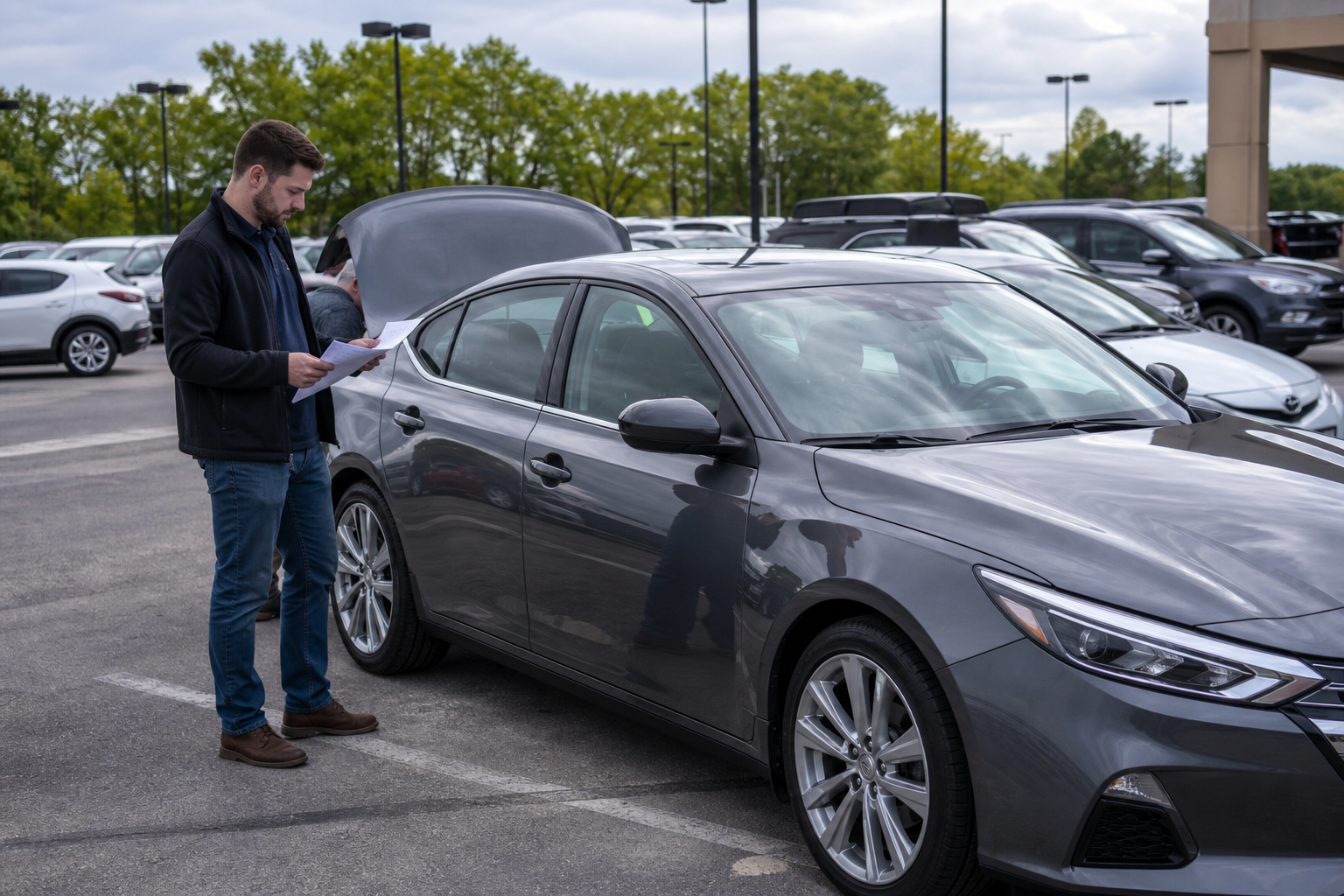
A practical U.S. and Canada guide to buying a used car from a dealer, including the Buyers Guide, independent inspection, financing, warranties, add-ons, and return policies.
The safest way to buy a used car from a dealer is to separate the decision into four parts: the vehicle’s condition, the warranty, the total purchase price, and the financing. Dealers often present these pieces together, which can make a car seem affordable because of a low monthly payment even when the overall deal is expensive.
For U.S. shoppers, the most important document is the FTC Buyers Guide. Dealers generally must display one on every used car they offer for sale and give the buyer a copy after the sale. It identifies whether the vehicle is sold “as is” or with a dealer warranty, explains which major systems may have problems, and tells you to get promises in writing.
Ask for a photo or copy of the Buyers Guide before you visit if you are shopping online. Make sure the vehicle identification number, warranty information, and any negotiated changes match the contract you eventually sign.
Read the official FTC used-car Buyers Guide guidance
Request an itemized out-the-door price in writing. It should show the vehicle price, dealer fees, taxes, registration or title charges, documentation fees, add-ons, trade-in credit, down payment, and any other amount that affects what you will pay.
This written quote gives you something useful to compare. It also makes it easier to spot a last-minute protection package, reconditioning fee, theft-deterrent charge, or other product that was not part of the original discussion.
Confirm that the advertised vehicle is actually available and that discounts or rebates shown in the advertisement apply to you. If a dealer will not provide a clear price before you arrive, treat that as a warning sign rather than a minor inconvenience.
“As is” does not mean the same thing as “warranted.” If the Buyers Guide says “As Is—No Dealer Warranty,” you may be responsible for repairs immediately after the sale, subject to applicable state law and any written promises in your contract.
A limited warranty may cover only certain systems, for a specific period, and may require you to pay part of the labor or repair cost. Ask which components are covered, where repairs must be performed, whether there is a deductible, and whether towing or rental-car costs are included.
Spoken assurances such as “we’ll take care of that noise” are difficult to enforce. If a dealer promises a repair, replacement key, tire, accessory, or change to the warranty, have it written on the Buyers Guide and the purchase documents before signing.

A vehicle history report can reveal reported accidents, title problems, odometer issues, flood damage, and some maintenance records. It cannot reliably tell you everything about the car’s current mechanical condition.
Find approved NMVTIS vehicle-history-report providers
An independent inspection fills that gap. Pay a mechanic who does not work for the dealer to examine the vehicle and provide a written report. Ask the mechanic to include the VIN, the condition of major systems, immediate repairs, likely upcoming maintenance, and estimated costs.
A dealer’s inspection or “certified” status does not replace an independent inspection. If the dealer will not allow the car to be inspected by a mechanic you choose, ask whether a mobile inspection service can examine it on the lot. If the dealer refuses any independent inspection, consider walking away.
Use the inspection results to make a decision, not just to negotiate. A lower price does not necessarily make a vehicle with serious brake, transmission, structural, or electrical problems a good purchase.
Before signing, enter the vehicle’s 17-character VIN into the National Highway Traffic Safety Administration’s recall lookup. An unrepaired safety recall may require a free repair, but the lookup does not show every type of manufacturer campaign or every older recall.
Ask the dealer to explain who will arrange the repair and whether the vehicle can be delivered before the recall work is completed. Save a copy of the result with your other purchase documents.
Financing increases the cost of the vehicle because you pay interest and other credit costs over time. Compare the annual percentage rate, amount financed, loan term, finance charge, number of payments, and total of all payments.
A longer loan can reduce the monthly payment while increasing the total interest and keeping you in debt longer. For example, a payment that looks manageable over 72 months may cost substantially more than a shorter loan with a higher monthly payment.
Get a preapproval or quote from a bank or credit union before visiting the dealer. You can still accept dealer financing if it is genuinely better, but an outside offer gives you a reference point for the rate and terms.
Keep the vehicle price and financing separate while negotiating. First agree on the car’s price and trade-in value. Then compare the loan. If the discussion stays focused only on “How much can you pay each month?”, you may miss a higher interest rate, longer term, or extra products rolled into the loan.
Common add-ons include GAP coverage, extended warranties or service contracts, window etching, paint or fabric protection, roadside assistance, tire-and-wheel protection, and theft-deterrent products. Some may be useful in a particular situation, but they are not automatically a good value.
Ask these questions for every add-on:
Do not sign a blank form or accept an add-on because someone says it is already included. Optional products should be listed separately, with your approval. If you decline one, make sure the price and payment are recalculated correctly.
There is no general federal three-day right to cancel a used-car purchase from a dealer in the United States. Some states provide specific cancellation rights, while others leave a return option entirely to the dealer. A dealer’s “return policy” may also include mileage limits, restocking fees, deadlines, or conditions about the vehicle’s condition.
Ask for the policy in writing before signing and read the actual contract. A vehicle sold with a return promise should have the deadline and requirements stated clearly. If the contract does not provide a return right, do not assume you can bring the car back simply because you changed your mind.
For Canadian shoppers, the rules are different because vehicle sales and consumer protections are largely governed by the province or territory. There may not be a cooling-off period after both parties sign. Check your provincial or territorial consumer affairs office before signing, especially if the dealer is offering a warranty, financing, or an online purchase process.
Review Canadian vehicle-buying protections
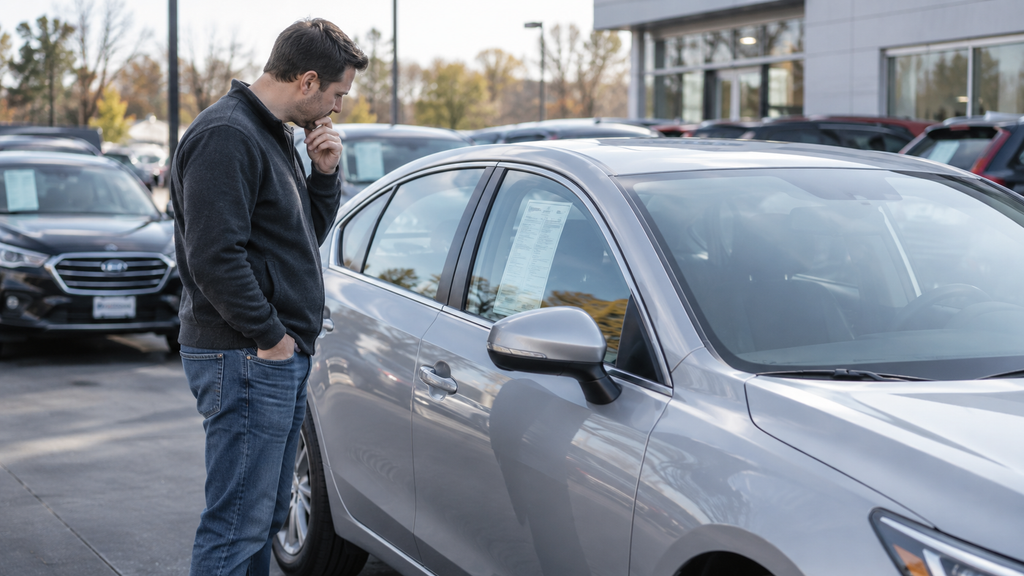
Take a few minutes away from the sales desk and compare the documents line by line. The VIN, mileage, vehicle price, trade-in amount, down payment, taxes, fees, add-ons, warranty terms, interest rate, loan term, and total payment should all be clear.
If the dealer rushes you, changes the numbers, refuses an inspection, or cannot explain a fee, pause the transaction. A dependable dealer should be able to show you exactly what you are buying and how much it will cost.
A. Federal guidance encourages an independent inspection, but the practical rule can depend on the dealer and applicable state law. Ask to take the vehicle to a mechanic you choose or arrange a mobile inspection. If the dealer refuses any independent inspection, consider another vehicle or dealer.
A. No. A history report may show reported accidents, title events, flood damage, or mileage records, but it usually does not identify every mechanical problem. Use it together with an independent mechanical inspection and a recall check.
A. Optional add-ons generally are not required simply because you are buying a car or arranging financing. Ask the dealer to remove any product you did not request and confirm that the loan and payment were recalculated.
A. Read the contract carefully before taking delivery or signing additional documents. Ask whether the loan is finalized, who the lender is, what happens if financing is rejected, and whether the dealer can change the rate or payment later. Keep copies of every document.
A. No. The FTC Buyers Guide is a U.S. requirement. In Canada, vehicle-sale rules and disclosure requirements vary by province or territory, so check the applicable consumer affairs office before signing.