Welcome to KnowHow Daily!
Practical guides, money-saving tips, tech solutions, government benefits, and useful information for everyday life.
Welcome to KnowHow Daily!
Practical guides, money-saving tips, tech solutions, government benefits, and useful information for everyday life.

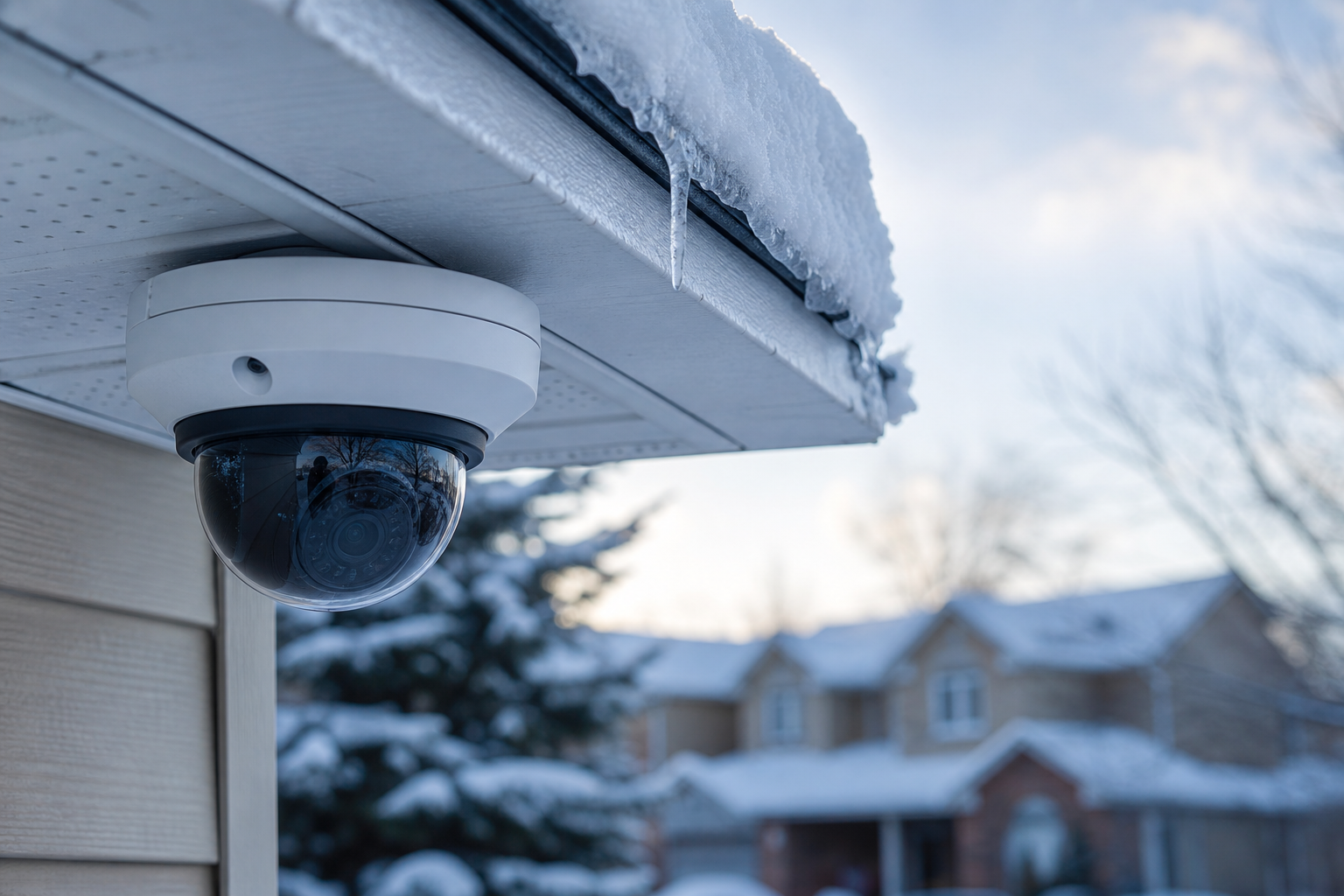
Compare the best outdoor security cameras for Canadian winters, including cold-weather ratings, battery limits, solar options, local storage, and installation advice.
The best outdoor security camera for Canadian winters is not necessarily the one with the highest resolution. Cold-weather reliability depends more on the camera’s published operating range, whether its battery can be charged below freezing, how well the housing handles snow and moisture, and how dependable the connection is at the installation point.
Based on current manufacturer specifications and feature comparisons, these are the strongest options to consider:
| Camera | Best for | Cold-weather specification | Power and storage highlights |
|---|---|---|---|
| Reolink Argus 4 Pro | Severe cold and local recording | -10°C to 55°C; IP66 | Battery or solar; microSD support |
| eufy SoloCam S340 | Solar-assisted wireless coverage | -20°C to 60°C | Built-in storage; removable solar panel |
| Arlo Pro 5S 2K | Premium image quality and smart features | -20°C to 45°C | Battery; optional hub and subscription features |
| TP-Link Tapo C425 | Value and local microSD recording | -20°C to 45°C; IP66 | Battery or optional solar; microSD support |
| Ring Outdoor Cam Battery | Homes already using Ring | -20°C to 50°C | Battery, plug-in, or solar options |
The Reolink Argus 4 Pro is the most convincing all-around choice when cold-weather performance is the priority. Its published operating range extends from -10°C to 55°C, and its IP66 rating provides strong protection against dust and water jets. It also supports both 2.4GHz and 5GHz Wi-Fi, which can help in homes where the less-congested 5GHz band reaches the mounting location reliably.
The camera records to a microSD card and can use Reolink’s cloud service where available. That gives buyers more flexibility than cameras that depend heavily on a monthly subscription. Person, vehicle, and animal detection can also reduce the number of alerts caused by blowing snow or passing wildlife.
The main limitation is the integrated battery. Reolink specifies a charging range of 0°C to 45°C, so the camera can continue operating in colder conditions but should not be charged while it is frozen. In practice, mount it where the solar panel receives useful winter light or plan to bring it indoors for charging during extended cold spells.
The eufy SoloCam S340 is a strong choice for a driveway, side yard, or detached garage where running power is difficult. Its removable solar panel is designed to provide ongoing assistance, and eufy lists an operating range from -20°C to 60°C. The camera combines a wide-angle lens with a telephoto lens, which is useful when you want a broader view but still need detail around a gate, vehicle, or front door.
It includes built-in storage and can operate directly over Wi-Fi without requiring a HomeBase hub. That can keep the installation simple and avoids making a hub mandatory for basic operation. The camera also offers person and vehicle detection, colour night vision, and pan-and-tilt coverage.
Solar performance is the key trade-off. Short winter days, snow-covered panels, shade, and frequent motion events can reduce the energy available. Position the panel where it receives unobstructed light, keep snow and ice clear, and do not assume that “solar-powered” means unlimited power in every Canadian climate.
The Arlo Pro 5S 2K is a good fit for buyers who want a refined app, 2K video, HDR, a wide 160-degree field of view, and a bright integrated spotlight. Its operating range of -20°C to 45°C makes it suitable for many Canadian regions, although it has less cold-weather headroom than the Reolink Argus 4 Pro or eufy SoloCam S340.
Arlo is especially appealing if you already use other Arlo cameras or want a more integrated home-security system. It supports local storage through compatible SmartHubs, while advanced detection and recording features may depend on an Arlo Secure plan.
Its biggest drawback is ownership cost rather than winter capability. The camera is weather-resistant and rated for cold conditions, but buyers should check which features work without a subscription and whether a hub is included in the exact package they are considering.
The TP-Link Tapo C425 is one of the more practical wireless outdoor security cameras for cold weather when you want a lower-cost setup with local recording. TP-Link lists an operating range of -20°C to 45°C, an IP66 rating, person, vehicle, and pet detection, and support for microSD cards up to 512GB.
The camera uses a rechargeable battery and can be paired with an optional Tapo solar panel. Its 2.4GHz Wi-Fi connection generally offers better range through walls than 5GHz, although local network strength still matters. A built-in siren and two-way audio are useful for basic deterrence and communication.
There is an important winter limitation: the stated charging temperature is 0°C to 45°C. During a deep freeze, the camera may operate but should not be charged until the battery warms into the approved range. If your property routinely drops below -20°C, choose a sheltered location or consider a wired PoE camera instead.
Ring Outdoor Cam Battery, formerly sold as Stick Up Cam Battery in some documentation, makes the most sense when your doorbell, alarm, and other cameras already run in the Ring ecosystem. The published operating range is -20°C to 50°C, and the camera can be used with battery, plug-in, or solar power configurations depending on the model and accessories.
Its ecosystem makes it easy to view cameras and manage alerts in one app. The trade-off is that some recording and advanced detection features may require a Ring subscription, and the exact capabilities can vary by generation and package.
For a new installation, carefully confirm the model name and accessory compatibility. Ring has renamed some products over time, so an older Stick Up Cam listing may not describe the same hardware or included accessories as the current Outdoor Cam range.
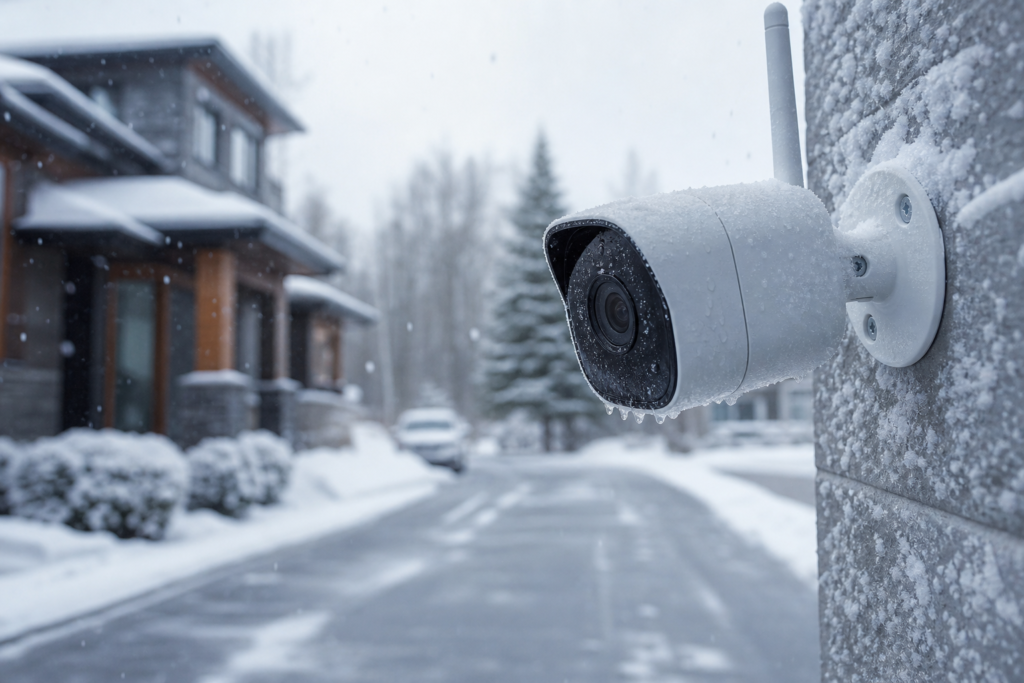
A camera rated to -20°C is not automatically suitable for every winter installation. Check the separate operating, storage, and charging temperatures. Rechargeable lithium-ion batteries commonly have a narrower charging range than their operating range, which means the camera may keep recording in freezing weather but cannot safely recharge outdoors until conditions improve.
If you can safely run power, a wired camera avoids the battery drain caused by cold weather, frequent motion alerts, and short winter daylight. Power-over-Ethernet cameras are particularly attractive for detached garages, barns, and long driveways because one Ethernet cable can provide both network connectivity and power.
Wireless battery cameras are easier to install, but they need a realistic maintenance plan. A camera aimed at a busy street or snow-covered driveway may trigger far more often than the manufacturer’s advertised battery estimate assumes.
Cloud recording is convenient, but it depends on both an internet connection and an active service. A microSD card or compatible hub can preserve recordings during an internet outage, although local storage does not help if the camera is stolen or the card fails. For important coverage, use a camera with a secure mount and consider more than one storage method.
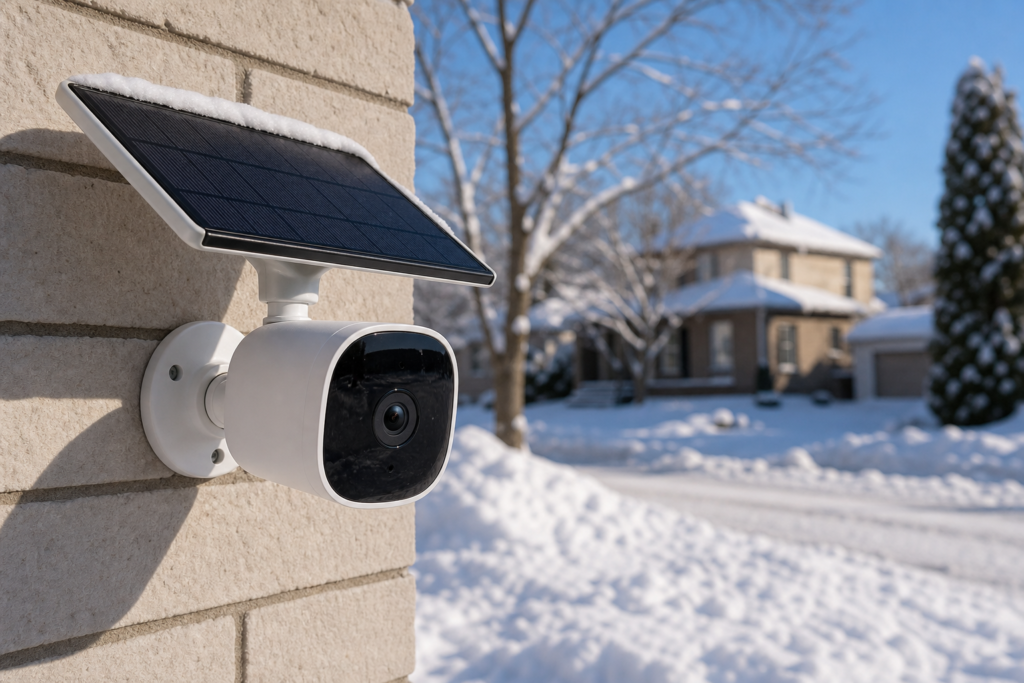
Choose the Reolink Argus 4 Pro if your priority is strong cold-weather coverage, local storage, and flexible Wi-Fi. Choose the eufy SoloCam S340 if solar assistance and built-in storage are more important than a fully wired setup. The Arlo Pro 5S 2K is the better premium ecosystem choice, while the Tapo C425 offers a sensible balance of price, local recording, and winter specifications.
If your property regularly experiences temperatures below -20°C, or if you need continuous recording rather than motion-triggered clips, skip most battery cameras and look first at a wired outdoor model. A well-installed wired camera is usually more dependable through a long, dark, snowy season than a battery camera that must be removed for charging.
A. Some models are rated for temperatures below -20°C, but many popular battery cameras are not. Always compare the manufacturer’s operating-temperature rating with your local winter conditions. Also check the charging range, which is often warmer than the operating range.
A. Yes. Cold temperatures can reduce rechargeable battery performance, while frequent motion alerts, live viewing, weak Wi-Fi, and short daylight hours can increase energy use. A sheltered mount, lower motion sensitivity, reliable Wi-Fi, and wired or solar-assisted power can reduce the problem.
A. IP66 generally provides stronger protection against powerful water jets than IP65, but neither rating means the camera is completely immune to ice buildup, wind-driven snow, or poor installation. The rating should be considered alongside the temperature range and mounting location.
A. They can be practical when the panel receives unobstructed winter sunlight and is kept clear of snow. However, short days, shade, cloud cover, and heavy activity can reduce charging. For critical coverage, use solar as an energy supplement or choose a wired camera.