Welcome to KnowHow Daily!
Practical guides, money-saving tips, tech solutions, government benefits, and useful information for everyday life.
Welcome to KnowHow Daily!
Practical guides, money-saving tips, tech solutions, government benefits, and useful information for everyday life.

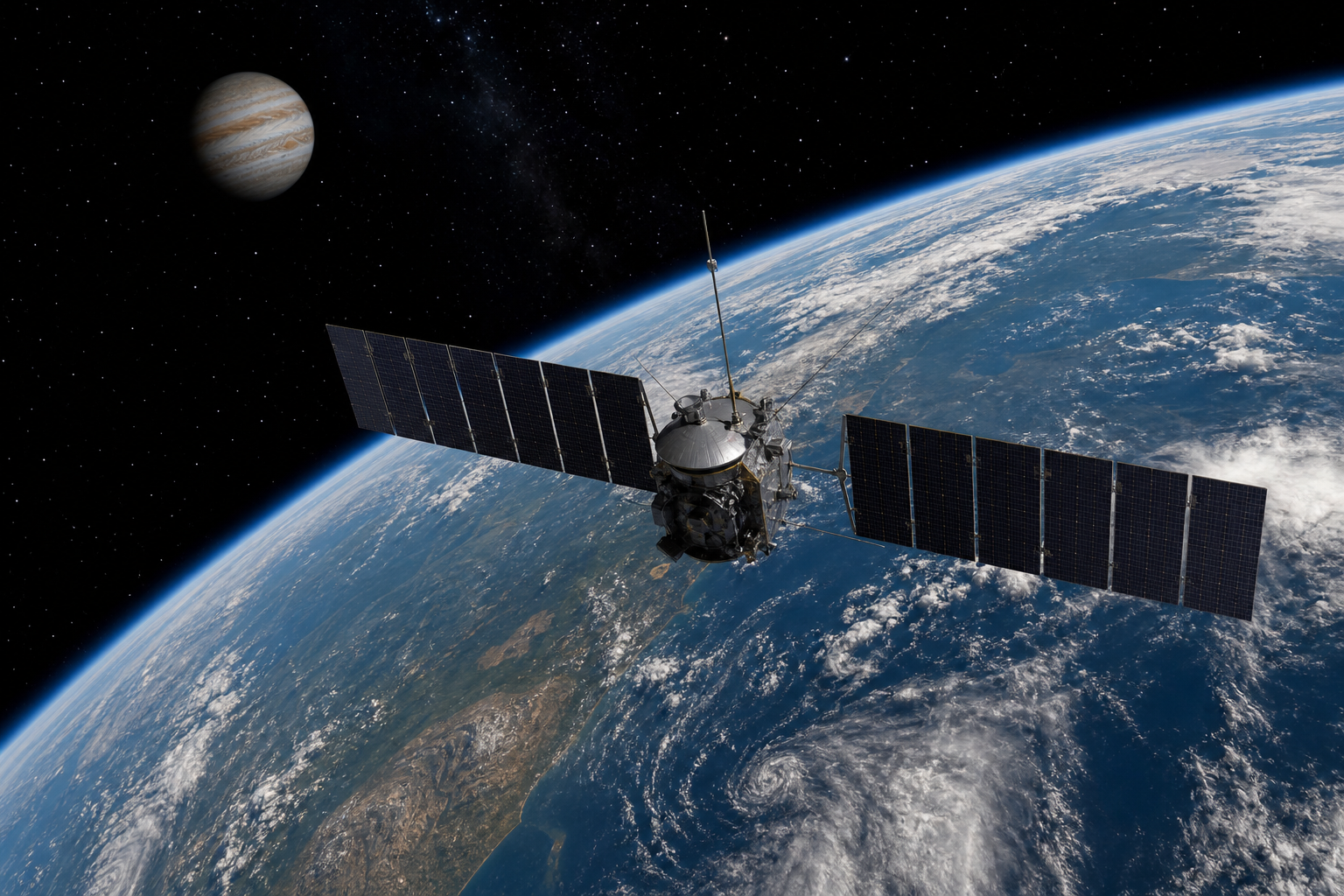
NASA’s Europa Clipper will return near Earth in December 2026 for a gravity assist. Here’s what the flyby does, why the date may shift, and how to follow updates.
NASA’s Europa Clipper is scheduled to swing back near Earth in December 2026, using our planet’s gravity to reshape its path and gain the energy it needs for the next leg of its journey to Jupiter. NASA’s official planetary-events calendar lists the Earth flyby for December 1, 2026.
There is one timing detail worth watching: NASA’s Europa Clipper mission page currently points to December 3, 2026 in its interactive tracking reference, while the NASA planetary-events calendar lists December 1. That difference does not change the mission’s purpose, but it means readers should treat the exact encounter date as subject to trajectory updates rather than a locked public event time.
This is a navigation maneuver, not a public flyby visible from Earth. The spacecraft will pass thousands of miles above Earth’s surface, then continue toward the Jupiter system.

Europa Clipper launched on October 14, 2024, aboard a SpaceX Falcon Heavy from NASA’s Kennedy Space Center in Florida. Its route to Jupiter uses planetary gravity assists rather than relying entirely on onboard fuel.
The spacecraft completed its first major gravity assist at Mars on March 1, 2025, passing roughly 550 miles, or 884 kilometers, above the Martian surface. The planned Earth encounter is the second major assist on the mission’s route.
NASA’s mission timeline describes the spacecraft passing about 2,000 miles, or 3,200 kilometers, from Earth. That distance is close in spacecraft-navigation terms, but it is far beyond the altitude of crewed orbital spacecraft such as the International Space Station. The flyby is also carefully planned to avoid any risk to Earth.
NASA has not announced a final public broadcast schedule specifically for the 2026 Earth flyby. Any live coverage, briefing, or mission update will need to be confirmed closer to the event.
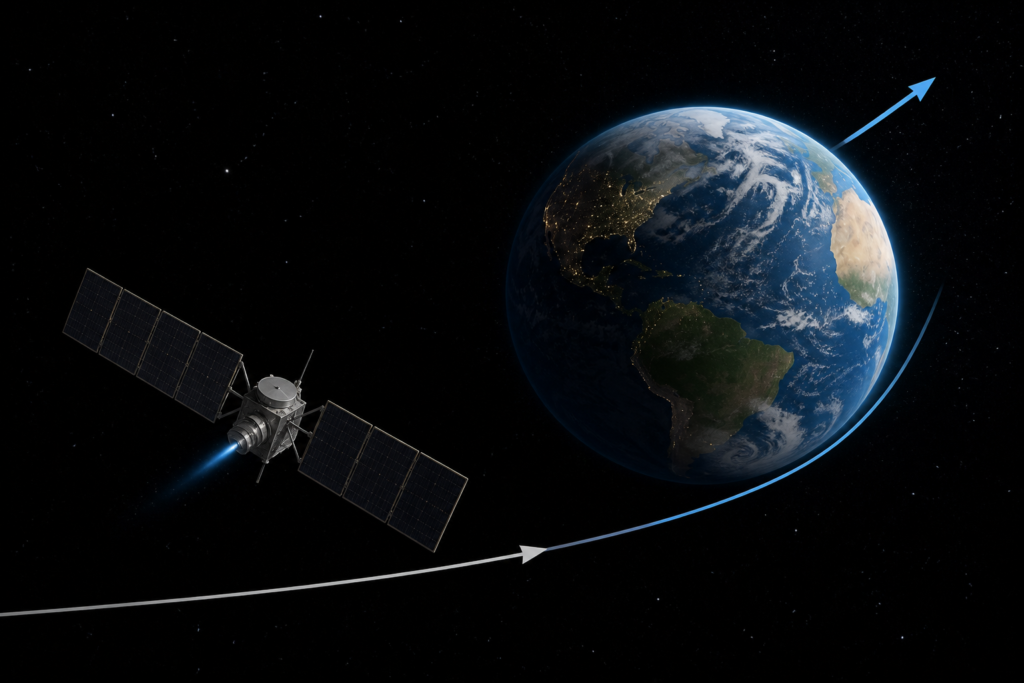
A gravity assist lets a spacecraft borrow a small amount of orbital energy from a moving planet. As Europa Clipper approaches Earth, Earth’s gravity will bend the spacecraft’s trajectory. Because Earth is moving around the Sun, the maneuver can also change the spacecraft’s speed relative to the Sun.
The result is a more efficient route to Jupiter. Instead of carrying enough fuel to make the entire trip through engine burns, Europa Clipper uses the motion of Mars and Earth to help place it on the correct trajectory.
That is why this flyby is not primarily about collecting new data from Earth. The mission’s key target remains Europa, Jupiter’s icy moon. The Earth encounter is a spacecraft-operations milestone that helps make the later science campaign possible.
NASA currently expects Europa Clipper to reach Jupiter in April 2030. The spacecraft will then use its engines and additional encounters with Jupiter’s large moons to shape its orbit around the planet.
The mission is designed to conduct 49 close flybys of Europa. During those passes, its nine science instruments will study the moon’s icy surface, thin atmosphere, interior structure, and suspected subsurface ocean. The main scientific question is whether Europa has environments that could support life.
The first Europa flyby is currently listed for spring 2031, with the first major science campaign beginning in May 2031. Those dates are mission planning milestones and can change if spacecraft operations or trajectory requirements change.
Most people should not expect to see the spacecraft with the naked eye, binoculars, or a typical backyard telescope. Europa Clipper will be moving through deep space, and its apparent brightness will be extremely faint compared with ordinary visible satellites.
The practical way to follow the encounter is through NASA’s online mission coverage and tracking tools, not by looking for a streak in the sky. NASA’s Eyes on the Solar System tool can show the spacecraft’s position and let users move forward or backward along the mission timeline.
Track Europa Clipper in NASA’s Eyes on the Solar SystemNASA’s Europa Clipper mission page is the best starting point for confirmed milestones, mission status, science information, and links to official coverage. NASA’s Watch Online page is the place to check for briefings, video coverage, and on-demand recordings if programming is scheduled.
Because the exact Earth-flyby date and any public broadcast plans may be refined later, avoid relying on old social posts or unofficial countdown pages. Check the official NASA pages again as December 2026 approaches.
Follow the official NASA Europa Clipper mission page Check NASA’s official Europa Clipper Watch Online scheduleThe December 2026 event does not mean Europa Clipper is arriving at Europa or beginning its main science investigation. It is a carefully timed Earth gravity assist on the way to Jupiter.
Its importance is easy to underestimate because nothing dramatic will happen from the ground. The spacecraft will use Earth’s motion and gravity to conserve fuel, adjust its course, and remain on schedule for its much longer mission at Jupiter. If the flyby goes as planned, the next major destination milestone will be Jupiter orbit insertion in 2030.
A. NASA’s planetary-events calendar lists December 1, 2026, but NASA’s Europa Clipper mission page currently references December 3 in its interactive tracking information. The month and purpose are clear, but the exact encounter date should be rechecked as NASA updates the trajectory.
A. NASA has not announced a dedicated public imaging plan for the Earth encounter. The flyby’s confirmed purpose is to provide a gravity assist that changes the spacecraft’s trajectory and helps it reach Jupiter.
A. NASA currently lists April 2030 for arrival at Jupiter. The spacecraft will then spend additional time shaping its orbit before beginning its first close Europa flyby, currently planned for spring 2031.
A. NASA has not yet published a final 2026 Earth-flyby broadcast schedule. The official Europa Clipper Watch Online page is the best place to check for future livestreams, briefings, and on-demand recordings.