Welcome to KnowHow Daily!
Practical guides, money-saving tips, tech solutions, government benefits, and useful information for everyday life.
Welcome to KnowHow Daily!
Practical guides, money-saving tips, tech solutions, government benefits, and useful information for everyday life.

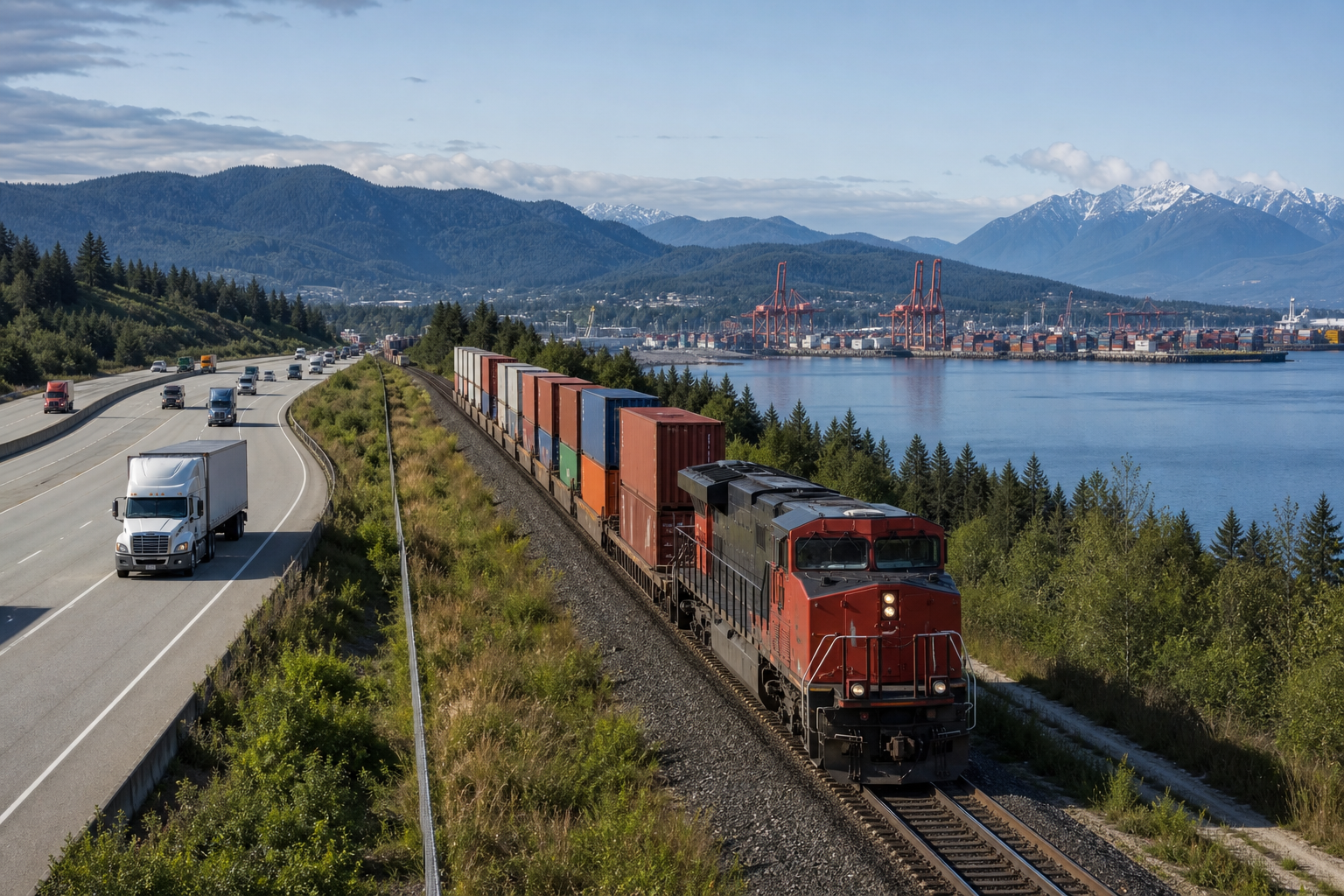
Preparing a Trade Diversification Corridors Fund Stream 3 proposal? Check eligibility, funding limits, required documents, GCKey access, and the September 25, 2026 deadline.
Updated official information: 2026-10-02

The program is officially called the Trade Diversification Corridors Fund, although it may sometimes be described informally as a trade corridors development fund. Transport Canada launched the $5 billion federal program on March 4, 2026, to support transportation infrastructure that improves Canada’s connections to domestic and international markets.
Stream 3, called Supporting Regional Growth, is the open-call stream. It targets projects that address trade-enabling transportation gaps holding back regional growth. Projects may involve roads, rail, ports, airports, bridges, logistics infrastructure, or related digital systems, provided they support the program’s trade and transportation objectives.
As of September 14, 2026, the Stream 3 project-proposal deadline is September 25, 2026, at 5:00 p.m. Eastern Time. No formal invitation or expression of interest is required. Transport Canada lists October through December 2026 for proposal assessment and March through April 2027 for funding decisions, approval-in-principle letters, and letters of regret. Those dates may change.
Open the official TDCF Applicant Portal
Stream 3 applicants must fit an eligible Canadian organization category. The guide lists:
The proposed project must be located in Canada. Unlike Streams 1 and 2, Stream 3 does not require the project to sit on one of the four designated core corridors, although the proposal still needs to show how the project supports trade and regional economic growth.
A strong Stream 3 project should solve a specific transportation or logistics problem that limits regional trade. That might mean removing a bottleneck, adding capacity, improving access to a port or airport, upgrading a trade-related road or rail connection, or deploying digital infrastructure that improves transportation coordination.
The proposal must connect the project to measurable trade results. Applicants should identify the markets, commodities, or goods involved and estimate the expected increase in annual throughput, such as tonnes or twenty-foot equivalent units. The guide also asks applicants to provide evidence that additional trade volumes could flow to non-U.S. markets and that demand for the added capacity exists.
Transport Canada may generally contribute up to 50% of a project’s eligible expenditures. Arctic and northern transportation projects may qualify for up to 75%, while public-private partnership projects may be subject to a 33% maximum. The maximum federal contribution per project is $500 million.
For Stream 3, Transport Canada says it will prioritize projects requesting less than $25 million. A strong application should also explain why the project needs federal support and how it could proceed with minimal government funding.
| Funding point | What applicants should know |
|---|---|
| Standard maximum | Up to 50% of eligible project costs |
| Arctic and northern projects | Up to 75% in defined northern regions |
| Public-private partnership projects | Up to 33% of eligible costs |
| Stream 3 priority | Requests under $25 million |
| Maximum federal request | $500 million per project |
Funding is not guaranteed. Contributions may be non-repayable, conditionally repayable, or unconditionally repayable, depending on the project’s revenue potential, public benefits, and financial circumstances. Applicants should not treat approval-in-principle as the same as a signed contribution agreement.
The proposal may be written in English or French and must be no longer than 50 pages, excluding appendices. Number the pages and use the section headings in the applicant guide. A practical preparation list includes:
Open the TDCF Applicant GuideStream 3 proposals are submitted through Transport Canada’s online TDCF application portal. You’ll need a Government of Canada-issued GCKey to access the service. If you don’t already have one, the portal directs new users through GCKey registration, where they create a username, password, and security questions.
Upload the completed project proposal and supporting documents through the portal before 5:00 p.m. Eastern Time on September 25, 2026. Do not wait until the final afternoon: large files, account-access problems, or missing signatures can turn a technically eligible proposal into an incomplete submission.
Transport Canada says it will send confirmation of receipt within 10 business days. During evaluation, officials may request additional information, including details needed for due diligence or national-security review. Applicants will be notified of the final outcome by email after the assessment process is complete.
The most serious problems are usually not formatting mistakes. They’re gaps in evidence.
The project must be usable for its intended purpose no later than December 31, 2031. Before submitting, confirm that the schedule, budget, approvals, partner commitments, and funding evidence all support that deadline. The safest next step is to open the current applicant guide, complete its checklist, and submit through the official portal well before September 25.
A. No. Stream 3 is part of the newer Trade Diversification Corridors Fund, launched by Transport Canada in 2026. It is separate from earlier National Trade Corridors Fund calls, which may have different eligibility rules and deadlines.
A. No. Stream 3 is an open call, so eligible applicants can submit a project proposal directly without a formal invitation or expression of interest.
A. Not as a standalone foreign applicant under the listed eligibility categories. Eligible private-sector applicants must be legally incorporated or registered in Canada, and the project itself must be located in Canada.
A. Transport Canada’s published timeline lists March through April 2027 for Stream 3 funding decisions, approval-in-principle letters, and letters of regret. The guide says these dates are subject to change.