Welcome to KnowHow Daily!
Practical guides, money-saving tips, tech solutions, government benefits, and useful information for everyday life.
Welcome to KnowHow Daily!
Practical guides, money-saving tips, tech solutions, government benefits, and useful information for everyday life.

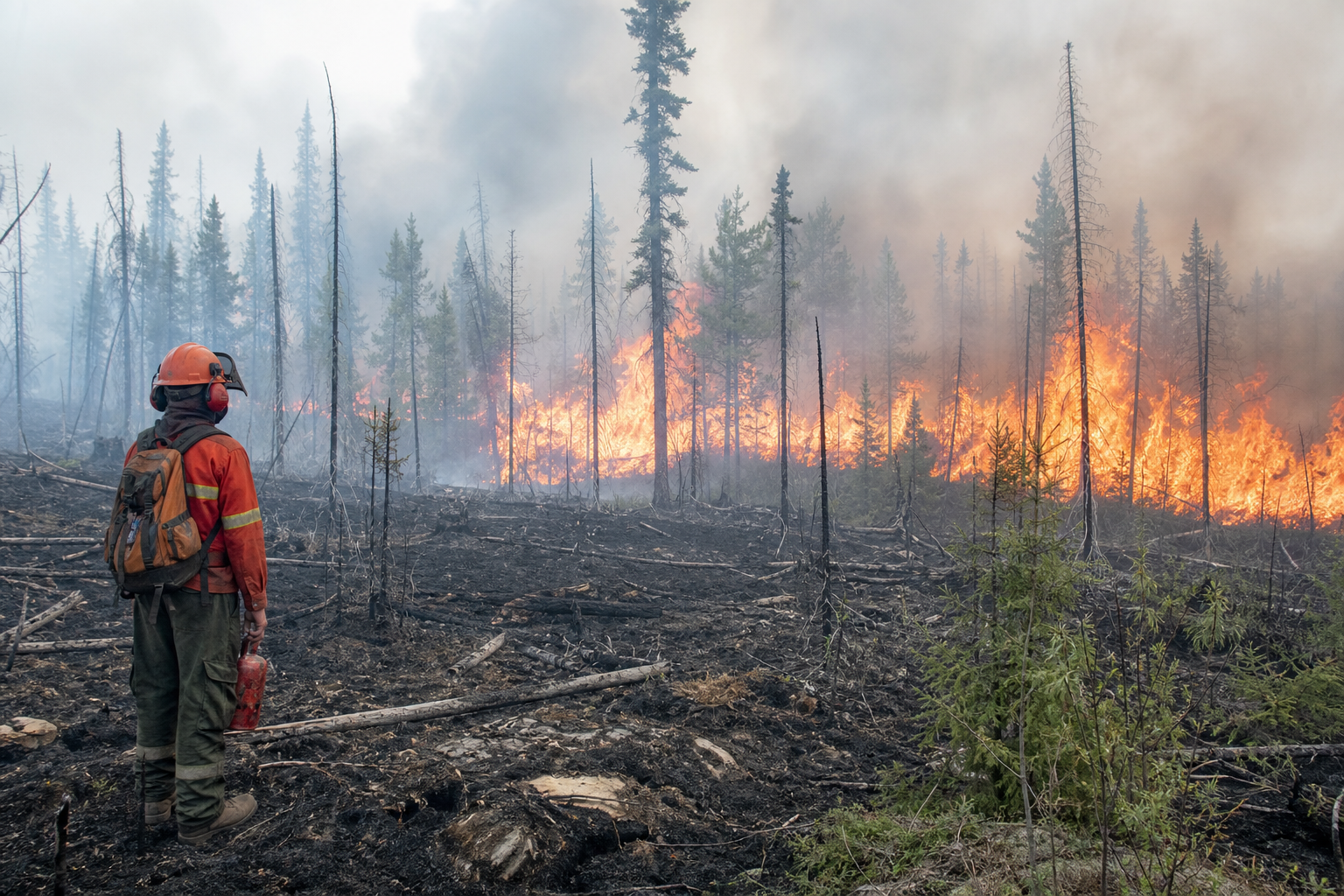
Ontario wildfire update for September 7, 2026: current fire activity, evacuation information, travel checks, smoke safety and official resources.
Ontario continues to manage significant wildfire activity, particularly in the northern part of the province. The latest provincial update, issued on September 6, reported eight active wildland fires in the Northeast Region and 57 in the Northwest Region, for a combined total of 65 active fires.
No new wildland fires were confirmed in either region during the September 6 update. In the Northeast, two fires were under control and six were being observed. In the Northwest, six fires were being held, 14 were under control and 37 were being observed.
Ontario also reported 780 wildland fires inside the province’s fire region during the 2026 season, compared with 531 at the same point in 2025 and a 10-year average of 664.

Evacuation orders and alerts are generally issued by the affected municipality, First Nation or local emergency-management authority. They can change quickly as fire behaviour, wind and road access change, so residents should not rely on an older social-media post or a general provincial update.
If you are in or near a wildfire-affected community, check your local authority’s emergency notices and follow any evacuation instruction immediately. An evacuation alert means you should be ready to leave; an evacuation order means you should leave as directed and use the route identified by emergency officials.
Ontario’s provincial wildfire page also directs affected residents to 211 Ontario for non-emergency information about available supports and services.
Contact 211 Ontario for local support and services
Check Ontario wildfire activity and local evacuation information
Ontario’s latest provincial update reported that there were no provincial Restricted Fire Zone restrictions in effect as of September 6. That does not automatically mean every campfire or outdoor burn is permitted.
Municipalities can impose their own bans or restrictions, and those rules may remain in place even when the province has no Restricted Fire Zone. Provincial parks may also issue park-specific fire bans or restrictions.
Ontario’s legislated fire season runs from April 1 through October 31. During that period, anyone lighting an outdoor fire is responsible for tending, controlling and fully extinguishing it. In areas where the provincial rules apply, fires generally must be started no earlier than two hours before sunset and extinguished no later than two hours after sunrise, unless different requirements apply.
Before lighting a campfire or burning brush, check both the provincial fire-restriction page and your municipality’s rules. When conditions are dry or windy, the safest choice is to avoid an outdoor fire altogether.
Check current Ontario outdoor fire restrictions

Wildfire activity does not automatically close every highway or cancel every trip, but conditions can change with little notice. Smoke can reduce visibility, and fires may lead to temporary road closures, restricted access or evacuation-related detours.
Before travelling, check Ontario 511 for highway closures, construction, collisions, cameras and other travel information. If officials close a road, do not drive around barricades or use an unverified back road as an alternative.
Travellers heading to a provincial park, lodge or remote campground should also confirm that the destination is open and that any local fire ban has not changed. A provincial fire update is useful background, but it is not a substitute for checking the specific community or park you plan to visit.
Check Ontario 511 road conditions and closures
Smoke conditions can be poor even when a fire is far away. Wind may carry smoke into communities that are not directly threatened by flames, and conditions can improve or worsen during the same day.
People with asthma, heart or lung disease, older adults, pregnant people, children and anyone who develops symptoms from smoke should reduce outdoor exertion when air quality deteriorates. Move strenuous activities indoors, keep windows and doors closed when practical, and use a properly fitted N95 respirator if outdoor exposure is unavoidable.
Air quality maps can help, but local conditions may vary between monitoring stations. Check the location closest to you rather than relying only on a regional colour or a report from another city.
Check wildfire smoke and air quality near you
Leave immediately when emergency officials issue an evacuation order. Do not wait for visible flames or for conditions to become smoky at your home.
If you see a new wildland fire, report it promptly. In northern Ontario’s fire regions, call 310-FIRE. South of the French and Mattawa rivers, call 911.
Ontario’s wildfire situation can change with weather, wind and new fire discoveries. The province’s fire page provides updated regional activity reports, active-fire mapping and information about restrictions. Local emergency authorities remain the best source for evacuation orders, reception centres and community-specific instructions.
For September 7, the practical next step is simple: check the fire map and local emergency notices before travelling, confirm road conditions if you are driving, and monitor air quality if smoke is present.
A. Ontario reported 65 active wildland fires in its September 6, 2026 update: eight in the Northeast Region and 57 in the Northwest Region. Fire numbers and status can change with each update.
A. No province-wide Restricted Fire Zone was reported in the latest update, but local municipalities, provincial parks and other authorities may have their own bans or restrictions. Check the specific location before lighting any outdoor fire.
A. Check your municipality, First Nation or local emergency-management authority for community-specific evacuation orders and alerts. Ontario’s wildfire information page and 211 Ontario can provide additional support information, but local authorities issue the instructions for affected communities.
A. Call 310-FIRE in Ontario’s northern fire regions. South of the French and Mattawa rivers, call 911. Do not approach a fire to take photos or investigate.
A. Travel may be possible, but road closures, smoke, evacuation routes and local access restrictions can change quickly. Check Ontario 511 before leaving and follow all barricades and emergency directions.











FDA Infant Formula Standards Proposal: What Parents Need to Know About Nutrient Changes and the Comment Deadline